
We previously had Florent Maurin on the first few episodes of Tales from the Devs to discuss the early days of the Ithaca*project. In the meantime, The Pixel Hunt released *Wednesdays*, Pierre Corbinais’s game about memory, sexual violence against minors, and their journey-first on PC and then as a free mobile version, and won two Pégases along the way. Today, the studio is preparing its next game, Ithaca: a narrative road trip exploring eco-anxiety and political action. Except this time, rather than launching a traditional Kickstarter campaign, Florent is hitting the road. An electric car, stops from Lournand all the way to Greece, and along the way, meetings with European female video game creators. We sat down to discuss the project, and the conversation eventually veered far off course into the legitimacy of video games, game feel, newsletters as an alternative to social media, and what it means to make games that aren’t just entertainment.
Point’n Think: To go in order: between the last interview and now, there was Wednesdays. How did that go this year? And the mobile port, it’s no coincidence that The Pixel Hunt releases all its games on mobile.
Florent Maurin: We’d been talking about Wednesdays for quite a while. The first prototype Pierre had me test was written in Ink, just text, and that’s when you realize this guy knows what he’s doing: it’s almost exactly the same as what we released. He said something that really struck a chord with me: “I want to make this game, no matter what it costs.” Literally, he was ready to put up his own money. A year earlier, he’d published a text-based game where he was already talking about his assault. I’d played it; I thought it was incredibly well-written and terrible. All the more terrible because he’s a friend. When he reached out to me a year later with his V2, it was totally in line with the studio’s editorial direction. I told him: the limited resources at our disposal are yours, on one condition, I won’t interfere with the creative process. You’re making a game about something extremely personal; I’m not directly involved, so it’s crucial to maintain that authenticity.
We put together a proposal for Arte, which greenlit both pre-production and production. We were in a co-production with Pierre as an individual. Pierre handled creative direction; he brought in Christophe Galati for development, Hexaeva and Nico Nowak for the graphics, and Virginia B Fernson for sound design. I took care of the contracts and production. When it launched on PC, I already had the idea that we were targeting a broader audience than just gamers. Arte was easy to convince about the mobile version. We ported it with Viviane Cooper, offering a completely free version with an in-app purchase to support the developers if you wanted to, you can play 100% of the core game without paying a cent. The bonus scene is a roundtable discussion in the game’s language, where you can ask questions to Pierre, Hexaeva, Virginia, and Chris. We have way more players on mobile than on PC; the feedback on Google Play is mind-blowing. By the way, we won two Pégases and the audience award at the IFV. That’s partly why I created The Pixel Hunt. But all that time is time I spent away from Ithaca.
PnT: You posted on LinkedIn after your search for publishers, explaining that everyone sees what you want to do but no one wants to get involved. Is crowdfunding the logical next step?
Florent: To be perfectly honest, I doubt we can raise enough money on Kickstarter to make the entire game. We’re looking for three things. One, initial enthusiasm, a community. Two, financial backing that allows us to continue developing the prototype. Three, being able to go back to publishers and say: “See, there are actually people interested in this; maybe it would be worth putting some money on the table.” But above all, I got caught up in the idea, thinking: we’ve been making games for years that resonate with a certain audience, why not bring players into the adventure earlier than usual? Rather than waiting for the game to be finished, bring them in midway, because we already have a prototype that’s not bad and that we’re going to make available to the public during the Kickstarter.
PnT: We often hear about video game Kickstarters where you just get a promise of a game, some concept art, a story, and a team. Here, being able to actually play it is very reassuring.
Florent: We should clarify that the demo represents between 30 and 40% of the final features. You can’t stop on the side of the road yet, it’s a road trip, and we’re planning encounters and mini-games, but we don’t have the budget for that right now. We haven’t even developed manual driving yet. But the demo as it stands already establishes a world, a philosophy. I pretty much agree with you about Kickstarters being basically glorified PDFs: “Give me 500,000 euros and I’ll make you something awesome, and then I’ll disappear.” I get it if you don’t have the means at first, just a great idea. But we’ve already received public funding to build a prototype. The least we can do is show you what your tax dollars have helped pay for. You’re already sort of backers without even realizing it.
PnT: You mentioned that you envisioned this crowdfunding campaign in a unique way. How do you see it?
Florent: I asked myself: what would a The Pixel Hunt Kickstarter campaign look like? If we do things like everyone else, ticking off every item on the indie studio’s to-do list, it just doesn’t work for us. Out there, there are games that are pure entertainment and make you dream. We, on the other hand, regularly invite you to grapple with the saddest aspects of humanity, always with a hopeful approach, but it takes a bit more energy after work to launch a The Pixel Hunt game than it does for a game where you go out and blow everything up. But there’s one thing that comes up regularly: people really like the story behind what we offer, that almost naively quixotic side of making video games to fight windmills. Maybe it would be worth putting that on display a bit.
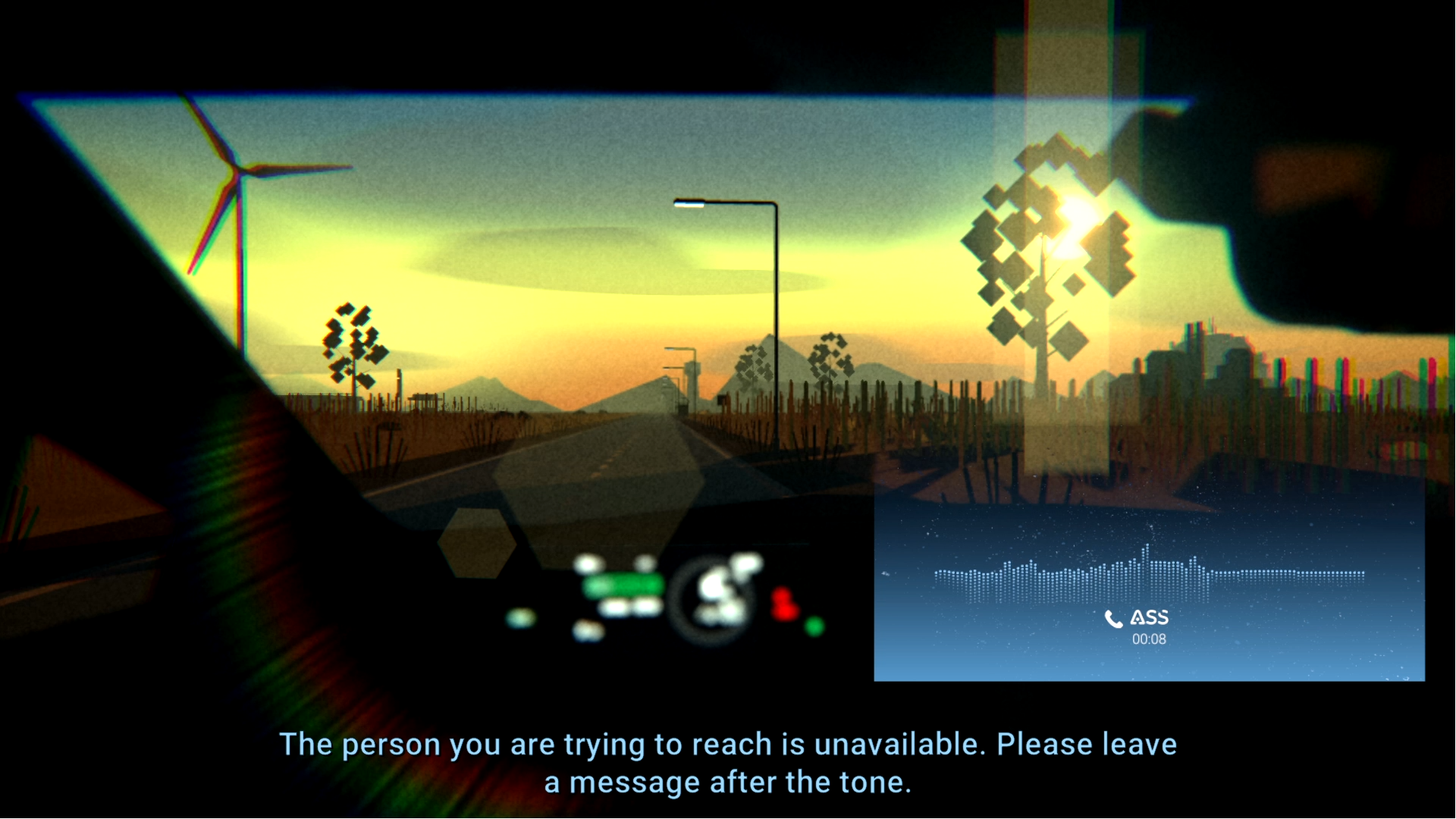
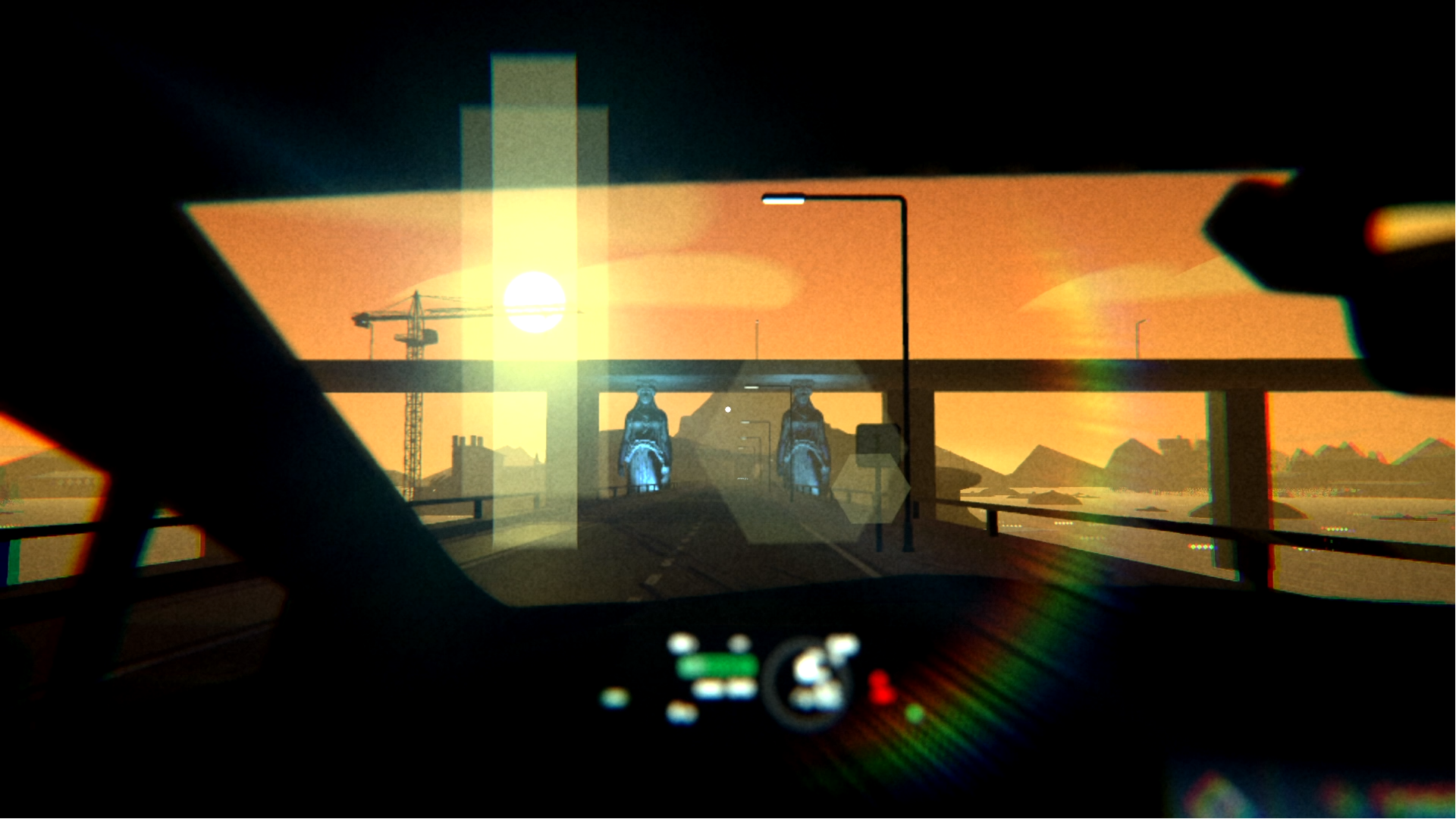
And it just so happens that Ithaca is a road trip in which Penelope heads to Ithaca to join a small group of environmental extremists for an action that may push the boundaries of what we consider reasonable. What better way to inspire people to fund a project about taking back control in the face of a system headed for disaster than by taking a road trip to Ithaca? I’ll be on the road for the entire month of the Kickstarter campaign, starting from my home in Lournand, Saône-et-Loire, in a small electric car with a 200-km range. I’ll be making 200-km stretches all the way to Ithaca, passing through Switzerland, Germany, Austria, Croatia, Serbia, and Greece, and returning via Italy. I’ll try to meet video game creators, and not just video game creators, to discuss creativity, commitment, and why we do this work. I won’t have any hostages in my trunk, normally. But I will have these encounters, which I hope will shed light on the question from a slightly different angle than just “because it’s cool.”
PnT: And how are you going to document these encounters? A written log, audio, video?
Florent: I’m going to try to use the same format as the short videos I sometimes make when I’m out walking in the countryside, day by day. And maybe longer interviews if I meet people, I bought some gear so I can interview on the go. It’s all still experimental. I’d like to turn it into a book too, but that’s on the back burner: if I commit to a book, it’s no longer experimental, it’s a production. Worst-case scenario: the Kickstarter flops, the people I meet are annoying, and I’m a total bore myself, but I drove all the way to Ithaca, and that’s fun. Best-case scenario: I get to share interesting things with a community.
I think the idea of making a game that’s not just the finished product, but also everything we document along the way, is really cool. For me, this Kickstarter is part of that process. It’s not “we’re asking you for money to make our game”; it’s “we’re asking you for money, and at the same time we’re going to try to give you something, even during the process.” I started interviewing people I wouldn’t be able to meet in person because they live in England. I spoke with Joseph Humphrey from Inkle, the creative director on Highland Song. At the end, he told me, “That’s cool, it felt like I was halfway through therapy, because I never ask myself why I do what I do.” We’re in such a rat race that I don’t get the chance to stop. “Video games aren’t culturally legitimate enough for us to often have the chance, except when you’re interviewed by Point’n Think (laughs), to look at what we’re doing from an angle that isn’t just ‘what’s the hook, what are the KSPs, what’s the best pricing?’”
PnT: I ordered their book not long ago, Kaleidoscope, and the approach is interesting: they asked about a hundred narrative designers to contribute short essays. It’s a question I’m hearing more and more often: the place of video games. I recently interviewed a co-founder of the Distraction collective, and we came to the same conclusion: we need game studies in France that don’t just come from the humanities, that consider video games for their own sake. In the U.S., this is happening; MIT publishes extensively. Distraction, due to a lack of recognition, has started organizing its own residencies. There’s a bit of that in your approach.
Florent: I wasn’t aware of that, but it doesn’t surprise me. We’re tired of waiting for cultural legitimacy to come from the outside. It’s our responsibility as creators to produce resources that allow us to say: “Here it is, when we talk about the cultural legitimacy of video games, this is what we’re talking about: creators, memories that last a lifetime, everything that makes art art.” At some point, we don’t need to wait for institutional recognition to take ourselves seriously.
That’s why when Joe told me, “I never ask myself that question,” he seemed almost embarrassed. Yet he was fascinating. We talked at length about the perception of a place, about how sometimes the memory of a place shapes the design of a game, even though the designer knows he won’t be able to recreate the reality of that memory, but will instead create something else inspired by it. He told me about running through the hills of the Highlands as a kid—that’s what shaped Highland Song.
PnT: This ties in with what more and more game designers are looking for, not just pure game design, but the “game feel”: what you experience with a controller in your hand. It’s the structure of the video game. We’re seeing more and more experiences like this with video games played using a controller. In Wednesdays, there are dialogue choice sequences where you pick one option and the opposite one responds. Highland Song is the same, once you start it, the music kicks in.
Florent: I think it’s almost a service to people to tell them: without overthinking it, ask yourself these questions anyway. It can be useful in your day-to-day design work, but it can also give you a different perspective on what you’re doing, and therefore on how you talk about it and how you embody it. It’s something we all need, including us creators ourselves.
PnT: It takes a lot of guts to do that during the funding month. You won’t be bored.
Florent: There’s a big adventure element to it that’s going to be fun. We don’t have much to lose. When you’re convinced that the experience has value, you never waste time. And besides, what we do when we follow the rules doesn’t really work, so let’s try breaking all the rules and see if it works a little better. It’s not snobbery: what we produce at The Pixel Hunt isn’t easy; every time I’ve played the prototypes, I’ve cried. So from there, we have to offer them something that isn’t easy either, but in a good way. It’s super hard to run a classic Kickstarter, but once you get the hang of it, you know that if you do it right, there’s a chance it’ll work. We, on the other hand, might come to the conclusion that the chances are very slim. So in that case, what do you do? At least the process itself will be interesting.
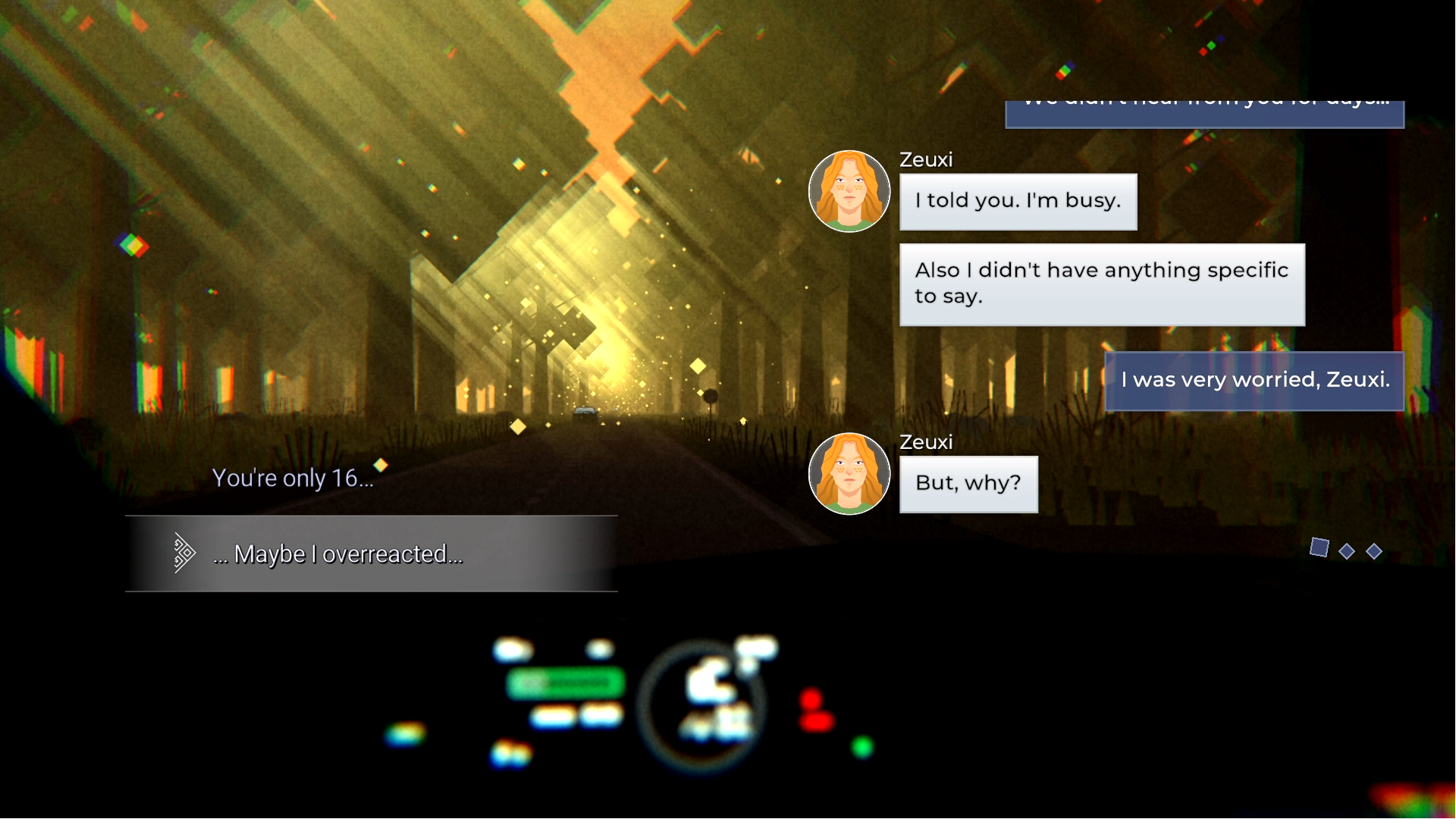
PnT: Without getting into names: how did it go with that initial feedback from publishers? I got the impression that the publishers really understood the game and its potential, but didn’t want to take the plunge because it’s not the right time.
Florent: That’s exactly it. Lots of people tell me that—you can’t tell if they’re just being polite or if they really mean it. But right now, risk aversion is very high. I can understand that: money is tight, and there are plenty of cautionary tales out there. If I were a publisher with a bottom line that absolutely has to be profitable, I probably wouldn’t go looking for a game that’s potentially divisive or depressing, when people are mostly looking for entertainment. There aren’t many publishers who do that. Fellow Traveller, maybe. Arte, of course, but we’ve made three games together now; they might want to work with others.
During this round, I pitched to people who nodded along and said, “Yeah, I see,” but for whom the approach wasn’t fun, cool, or trendy enough. No one said, “Oh, we definitely want to see the build, send it to us.” Given the current climate, and because I’m a bit of a stubborn nut who doesn’t want to change the core of the proposal, I understand them. It wasn’t a surprise, but it was a bit depressing. The question is: by the time we have a more advanced prototype, will the market have turned around? And on our end, with the Kickstarter, can we prove that we’re not just a studio that makes slightly weird stuff, but also a studio that makes good games that can appeal to a wider audience?
You’re right, you can only wear so many hats. Creative director, producer, yes; marketing, less so. At some point, you’ll have to step into that role, or find someone who can do it for you while staying true to what The Pixel Hunt stands for. Sometimes I play the victim on social media, saying, “Publishers don’t like us.” But the bottom line is that after years of trying to make good games, I feel like we’re finally getting there. Now, we really need to ask ourselves how to find the audience that will appreciate these games. I’m convinced it exists, and that it doesn’t know we exist. In The Pixel Hunt’s twelve years, I plead guilty to having underinvested in this area.
PnT: Marketing, I always tell my students, is a full-time job. Not so much in terms of the skills it requires, but in terms of how time-consuming it is. Handling communications, keeping up with Steam festivals and meetups, when all you really want to do is focus on your game.
Florent: Compared to game developers who are also artists or technicians, I’ve always had an imposter complex. Coming from a journalism background, without knowing how to draw, animate, or program at first, I never wanted to put myself out there. At one point, it was trendy to stream what you were doing, me streaming my day would bore you to death; it’s not very exciting. But maybe what’s interesting is telling the story behind the process. The Kickstarter is part of that effort: that’s why I created The Pixel Hunt, to meet people, ask them annoying questions, and turn them into games.