

We had the pleasure of sharing a few insights with Yoann Gueritot, currently employed at Sega. Throughout his career, Yoann has had the opportunity to hold various positions on a range of projects, allowing him to discover the hidden side of development, from the early stages of a concept to its final conceptualization, including marketing requirements.
1) Hi Yoann, and thank you for your time! Could you start by introducing yourself to our readers?
Hi, my name is Yoann Gueritot, I’m 38 years old, and I started my career in video games in France in 2010, with the goal of one day moving to Japan to work on JRPGs, which have always been my favorite genre! In 2013, I realized that dream and joined CyberConnect2 in Fukuoka, where I worked on Final Fantasy VII: Remake and Dragon Ball Z: Kakarot, before becoming director on Fuga: Melodies of Steel 1 and 2. I then worked for a few years at PlatinumGames, and I’ve just moved to the Tokyo area to join Sega.
2) You have a very eclectic background, which shows that you ventured into the world of video games at a very early age. Before considering this path professionally, which games shaped you as a person during your childhood? Do you have an example that still serves as a model or even an ideal for you?
I played NES and Megadrive since I was very young, but it was with the first PlayStation that it really clicked, and to be honest, at the age of 11 I had already decided to work in video games (laughs). The games that shaped me would be the RPGs from the PS1 era (notably Final Fantasy and Suikoden), certain PS2 titles such as Katamari Damacy and Shadow of The Colossus, but above all Shenmue and Jet Set Radio on Dreamcast. My ideal isn’t really a particular game, but rather the whole PS1-PS2 era when we were allowed to take risks and be creative, and try new things without fear of failure.
3) You also worked as a tester early in your career. What prompted you to do that? What memories do you have of discovering what goes on behind the scenes?
My goal had always been to become a game designer, but I didn’t want to go to school (too long, too expensive). So I took a chance and applied directly as a tester at a game company, highlighting my modest experience as a freelancer and showing them the crappy little RPGs I had made with RPG Maker. I was still a long way from my dream, but at least I had my foot in the door, and all I had to do was climb the ladder by learning on the job! What I took away from it was mainly a sense of admiration for those who made the game, and the realization that playing for fun and playing for work are two completely different things.
4) What struck you most when you discovered these prototypes? How did you have to report back after your gaming sessions? And above all, did you feel like you were being listened to? Was the final result very different from the versions you were trying out?
As a general rule, prototypes are tested by the development team, and it’s usually during the alpha and beta phases that testers come into the picture. The game is therefore quite advanced at this stage, and apart from the quality of the graphics, there are often no major differences from the final product (because making major changes during development is very expensive). Bug reports are made using management tools such as Jira, where you create “tickets” containing a description of the bug, how to reproduce it, its probability of occurrence, and its degree of impact on the player experience. The tickets are then distributed to the relevant developers, who assign them a priority in order to decide the order in which to resolve the bugs (those with a low priority are sometimes never resolved for scheduling reasons, even if they are known to the team). It’s a fairly straightforward system where everyone plays their part, so yes, we are generally listened to.
5) You finally moved to Japan to work in video games. How is this medium perceived in Japan compared to France? Is it the same, or do you feel there is a difference in how it is received or how people behave?
I think it’s no secret that in Japan, video games are an integral part of the culture and are perceived much more favorably than in the West. Even without having played them, everyone knows Dragon Quest, Pokémon, Kirby, and Resident Evil, and these characters are everywhere in everyday life, on TV, in the subway, and even on cake and toothpaste packaging! In fact, it’s much easier to talk about my job in Japan, where I’m taken much more seriously than I was in France, for example.
6) Can you tell us about your role as a game designer? Do you have a particular credo that you adhere to, which would apply to all types of games?
A game designer is mainly responsible for defining the content of the game, from systems to narrative elements, including enemies, objects, skills, etc. It doesn’t require skills as specific as those of an artist or programmer, but you have to be flexible because you’ll be dealing with a whole bunch of different things as the project progresses: writing specification documents, implementing them in the game (like programmers, but at a lower level), testing and verification, balancing, schedule management, etc.
What I consider most important is the overall pace and balance of the game as a product, ensuring that it is not too long or too complicated, that certain objects or skills are not superfluous, etc., and that the player is regularly stimulated by new features.
7) Speaking of game genres, and even if you are closely linked to a particular saga (we’ll talk about that later), how do you approach the differences and constraints associated with different types? Are there any similarities you’ve noticed, or obvious differences?
I’ve mainly worked on RPGs and action games, but regardless of the genre, the question is always the same: “What are players looking for in this genre?” For example, in an RPG, you’ll make sure you have a solid narrative and strategy elements; in an action game, you’ll emphasize the feel; and in a simulation game, you’ll make sure it’s as realistic as possible. Almost all games are made with the same elements; after that, it’s a question of which elements you’re going to highlight and in what proportions.
Regardless of the game genre, there are some things I always try to prioritize: intuitive controls, content that is consistent with the scale of the game, and all the points I mentioned at the end of the previous question.
8) Let’s take a break from the professional side of things and talk about gaming. Has working in the industry hindered your passion for video games? Do you still play regularly? And if so, how do you manage to disconnect from your professional perspective, if that’s even possible?
I always try to play regularly, yes, but the lack of free time forces me to be very selective about what I play. And unfortunately, as you can imagine, working in video games makes you much more critical than when you’re playing for fun, which has even ruined my enjoyment of certain games (laughs). When you see flaws, you try to imagine the cause of the problems, ways to fix them, etc., and that kind of approach can completely take you out of the game. So what I do is mainly play series that I really like, and whose flaws I know I can excuse.
9) Is there a game you would recommend that you haven’t worked on, but which resonates with your work philosophy or the themes or mechanics you like to explore?
My two games of the year for 2025 are Donkey Kong Bananza and Once Upon a Katamari, two colorful titles that are full of energy, whose gameplay shines in its simplicity while appealing to the player’s (and indeed the human being’s) primal instincts, and which manage to innovate on a formula that we thought was already well established. A fine example of a franchise revival on modern platforms!
10) You were a level designer. What did your role involve, and how did you work with the rest of the team?
Depending on the company and the project, the level designer can be considered a subcategory of game designer, but it’s actually a separate discipline. It involves planning the game levels based on the scenario and the list of established environments, imagining the player’s path, the obstacles and situations they will encounter, etc. You start by designing your level on paper/in a document, then you create it in the game editor, and finally you place your objects, enemies, events, etc. in it. It requires a good understanding of space, some knowledge of architecture, but above all a lot of empathy and a great ability to explore the player’s psychology.
But it also requires good communication skills, because you need to know what has been done in terms of game design (to understand the player’s abilities, the enemies available, etc.), work closely with the set designers, and also the programmers, whom you will ask to prepare gimmicks, etc.
11) You worked on Final Fantasy, a franchise with undeniable global impact, and more specifically on the remake of the episode that shook up the industry. Did you have a connection to the original game, and if so, how did you experience this project?
Final Fantasy VII was my first RPG, the game that sparked my passion for the genre and made me decide to work in video games when I was 11 years old. Needless to say, when I was told on my first day of work in Japan that I would be working on the remake, I was the happiest geek in the world! At first, I was alone in creating Midgar using Unreal Engine 4 (which had just been released and no one knew how to use yet), and I spent weeks researching and digging up even the most obscure details about the original universe, in every language possible.
I’ve had many unforgettable moments in my career since then, but honestly, none of them have ever matched the euphoria I felt during my first few months working on Final Fantasy VII: Remake.

12) This collaboration with Square Enix must have been marked by constraints related to the fact that your studio did not own the IP. How do you manage the relationship between the two organizations in such a case?
Unfortunately, I’m not allowed to talk about it in detail for obvious reasons, but we had regular meetings with Square Enix about everything related to the game’s content. The characters from the original are well-known and loved by everyone, so there are certain things you can have them do, and other things you have to avoid for image reasons, etc.
13) Your baby remains Fuga, however. Can you tell us briefly about the original saga (Tail Concerto, Solatorobo, etc.) and your connection to it?
Tail Concerto, Solatorobo, and Fuga: Melodies of Steel are part of the Little Tail Bronx series, launched in 1998 by CyberConnect2 on PlayStation 1. It features “furry” characters (anthropomorphic dogs and cats) in a universe built on flying islands and riding old-school Ghibli-style robots.
To be honest, I knew about Tail Concerto from ads in magazines at the time, but I had never played it before starting Fuga. It was Solatorobo on the DS that really charmed me when it came out (I played it in Japanese, convinced that it would never be released in France), and that was one of the reasons I applied to CyberConnect2. So when I was offered the chance to make a new episode in this universe, I accepted immediately, without even thinking about whether I was capable of doing it or not (laughs).
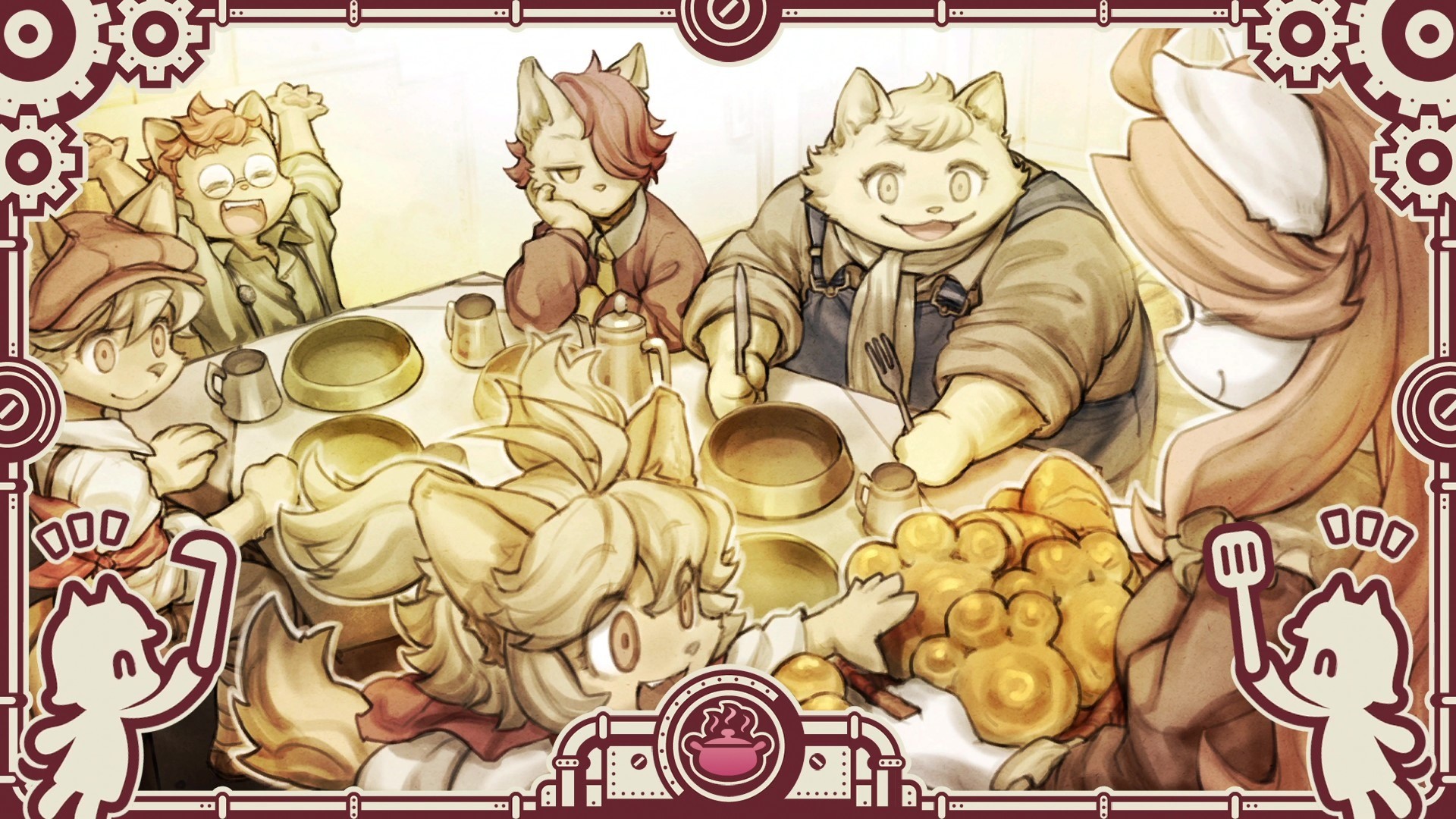
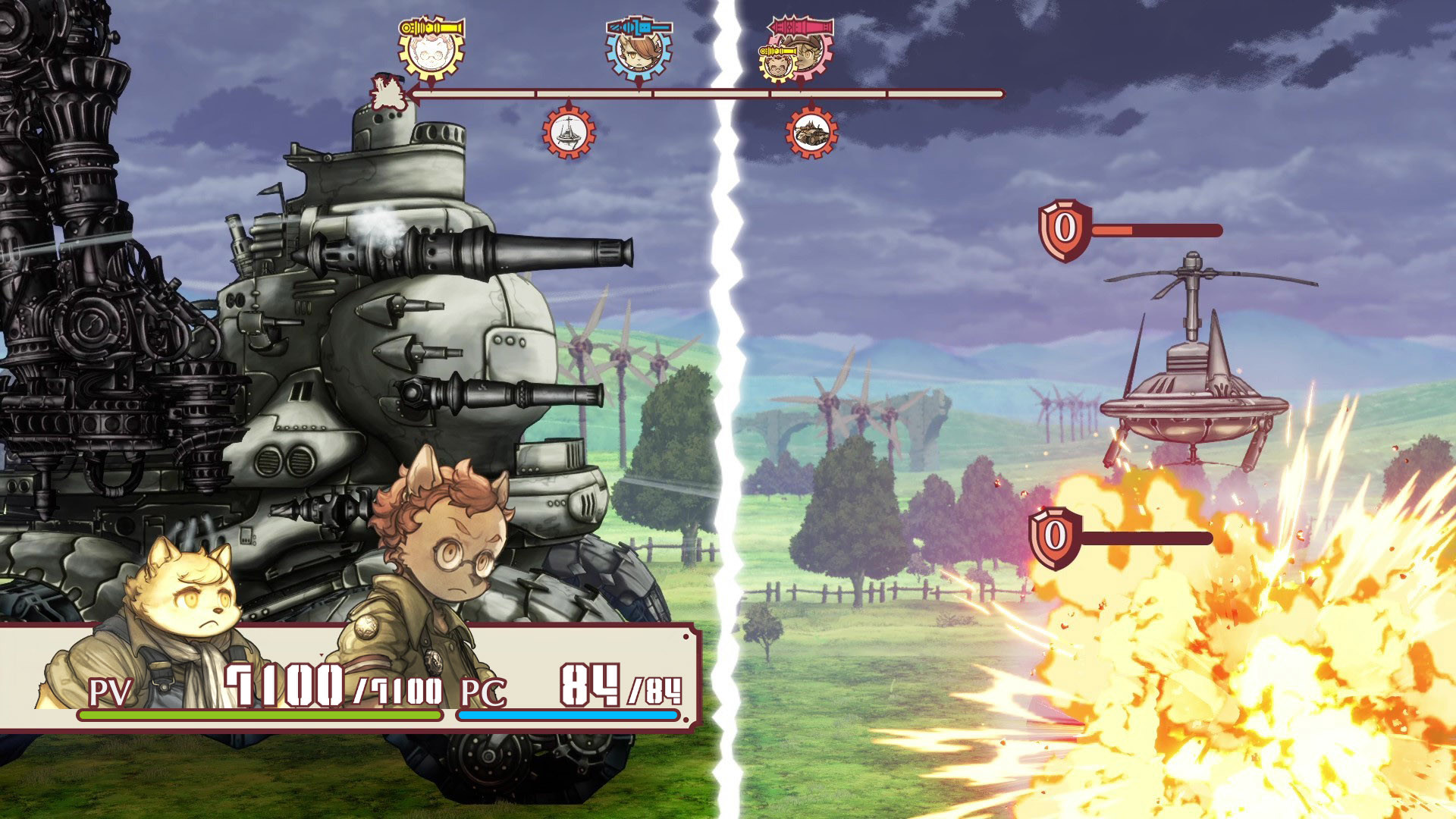
Fuga premier du nom is a tactical RPG featuring a few random elements as well as narrative and management phases between battles. Players take on the roles of twelve children traveling across the land aboard a giant assault vehicle that serves as their base. In addition to the main storyline, events are punctuated by gameplay mechanics that impact both the characters and the story: as a last resort, it is possible to use the Soul Cannon, a terrifying weapon capable of decimating enemy forces. But this action comes at a cost: each shot requires the sacrifice of a child.
14) How do you pitch such a project to management? How do you prepare for a presentation? Did you have to produce a prototype, a portfolio, etc.? Were you alone or did you have help? And how does it feel when the project is approved?
When I was assigned the project, the idea of a dozen children aboard a giant tank and the concept of the Canon of Souls were already under discussion. From there, I had to think about a universe, a story, systems, ways to convey the feel of France during World War II, and then put it all together to make a tangible proposal. In addition to rewriting several documents countless times, I had to put together a small team to build a prototype to test the concept and show it to my superiors.
When it was approved, I was obviously over the moon, but I had spent so much time preparing the project that, to be honest, I couldn’t even imagine it being canceled (laughs). It was my first project as a director and I had a lot of doubts (and made just as many mistakes!), but fortunately I was advised and supported by experienced people who helped me see the project through to completion.
15) From the very first episode, Fuga combines contrasting themes: childhood and death. Sacrifice has a moral weight that is essential to the gameplay. Did this idea shape the game, or did you have the universe in mind before coming up with this concept? How do the two notions feed into each other?
The theme of the game is the alternation between hope and despair, which I tried to convey through all aspects of the game. It is already illustrated by the contrast between the joyful and innocent side of the protagonists (children between the ages of 4 and 12) and the horror of the war in which they are unwittingly immersed. But it’s mainly in the gameplay that I wanted to convey this alternation, especially during combat. The player is confronted with deliberately tense situations, but I tried to balance the game so that they can always get out of trouble at the last minute, thanks to “lucky breaks” and numerous ways to escape on their own. Among these is the famous Soul Cannon, which can destroy any boss in one shot, but at the cost of one of the children’s lives.
This “hardcore but never unfair” aspect of the gameplay and the war-torn universe (and the moral dilemmas that go with it) were present from the start, and the synergy came about naturally, just as we had imagined.
16) What role do you think artistic direction plays in illustrating these themes and this story?
Art direction is extremely important in this type of work, because it’s the first point of contact with the user, even before they decide whether or not to buy the game. I think that having these cute animal children, covered in mud and soot, in a world of sepia and gray surprised and intrigued a lot of players. The goal was to surprise fans of the series (which had always been very colorful) and newcomers, while giving them a sense of the game’s tone, and Fuga’s visual style helped us enormously in that regard.
17) When you’re working on a project that must have seemed colossal to you, how do you manage to supervise the different departments and balance everything? Did you set up your own personal organization, or did the studio ask you to apply a method that was already in place?
It was certainly a huge undertaking for me, but Fuga was a very small project with an equally small team, so I’m not sure if “colossal” is really the right word (laughs). There was usually only one person in charge of each part (apart from the programmers), and almost everyone was gathered in the same room, so it was pretty easy to communicate with the team. All you had to do was turn around or take a few steps to ask for information or a change, and that’s the strength of small-scale projects. The only difficulty was that some of the animators were based in Montreal during the production of Fuga 2, which made communication difficult due to the time difference.
18) How do you know when it’s time to say, “Stop”? That’s it, the project is finished. Isn’t it frustrating to have to stop, perhaps sacrificing things or elements without distorting the basic idea?
In general, all of the game’s content must be defined and integrated (even if not finalized) in the alpha version, so that the game can be judged as a whole and budget overruns due to last-minute additions can be avoided. This alpha often comes in the middle of development; in other words, half of the production time is spent creating and integrating all the elements, and the other half is spent balancing and finalizing everything.
There are frustrations, of course, which is why it’s important to determine from the outset the “pillars” that form the foundation of the game (on which you can’t make concessions), and the rest of the more “sacrificable” content that has less impact on the nature and quality of the product. Afterwards, it’s also possible to make up for it in a sequel, as in Fuga 2 for example, where I was able to include a worthy final boss, whereas we had run out of time in Fuga 1.
19) If you had to summarize the philosophy, the message you wanted to convey behind Fuga, what would you say?
Fuga has strong themes, but it didn’t pretend to convey any real message other than “war and discrimination are bad.” Looking back on it now, I would say that the game as a whole shows that determination, enthusiasm, and solidarity can overcome any obstacle. It’s a typical shōnen principle, but it works, and I think that’s what makes you want to cheer on the young characters in the game and protect them.
In terms of game design philosophy, I think my goal was to show that you could create a strategic and moving RPG, even with limited content and few systems. In other words, it’s not about having a ton of elements in your game, but rather using them wisely, and making sure each one has real significance. To achieve this, I made extensive use of game design by subtraction, which consists of removing elements to reinforce the impact of others and make the whole more coherent.
20) Next comes the challenge of the sequel. Fuga was successful enough to warrant a follow-up. What pitfalls do you think should be avoided when working on a sequel? How can you revitalize the gameplay and the message without betraying yourself or repeating yourself?
Sales of the first episode were fairly modest, so we started from the premise that we needed to reuse as many assets and systems as possible in order to reduce costs, but we still needed a minimum of new features. The pitfall that many sequels fall into is adding lots of systems, characters, objects, etc., and extending the lifespan. It works for some games, but often you end up with sequels that are too complex, too cluttered, and poorly paced, which goes against my method of subtraction.
So I chose a different approach, based on the principle that every time we added an element or a system, I would remove another that didn’t fit in Fuga 1 (skills or items that weren’t very useful, complicated or unfun systems, etc.). It was a way to improve the gaming experience while keeping it “compact” and easy to understand. To avoid repetition, I changed the role and gameplay of certain characters (the cast remained the same, except for one character), most of their skills, the behavior of enemies and the strategies for defeating them, and I added elements of surprise in combat.
That said, I must admit that Fuga 2 is still very similar to Fuga 1, but for me it represents what Fuga 1 should have been in terms of balance, strategy, comfort, and storytelling.
21) Then comes the third installment, which you did not supervise. Professionally speaking, how do you feel about the continuation of your legacy? And personally, how does it feel when other people continue and develop a world that probably isn’t going in the direction you originally imagined?
To be honest, my vision had already begun to diverge from Matsuyama-san’s* since the end of Fuga 1. For the sequel, I wanted to stay in a sober universe where the children were just little country kids and not heroes, while he wanted something more epic and sci-fi, leaning towards Evangelion and Gurren Lagann. In the end, his vision was adopted, and I can’t say he was wrong, because this approach was indeed much more marketable and in line with the spirit of the company.
Fuga 2 was therefore the transition to this vision, with Fuga 3 being the culmination.
On a personal level, I was obviously torn between conflicting feelings. On the one hand, you want your series to have a grand finale that surpasses the previous episodes, and on the other, you secretly pray that the game will be less good than the ones you’ve made (laughs). In the end, even though I think I would have done a lot of things differently, I really enjoyed Fuga 3 and I’m grateful to the team for bringing a satisfying end to the journey of these characters who are so dear to me.
There is no “right” or “wrong” version of a work, whether it’s a sequel or not. There are billions of possible directions, and whether you like it or not, the only correct vision among them is that of the director in charge, and no other!
* Hiroshi Matsumaya is the president of CyberConnect2, a colorful character with whom Yoann developed the marketing for Fuga. The two of them came to Japan Expo 2019 to present the concept to the French public, while a let’s play of the game made by Yoko Taro was later broadcast on YouTube after Yoann suggested the idea to his boss.
22) You’ve worked in several genres and lived through decades of innovation and revolution, as well as periods of stagnation. What do you think of the current gaming landscape? Which game are you most looking forward to?
I know I’m stating the obvious, but I find the current industry rather boring, without blaming the developers or publishers. Between indie games, smartphones, subscription services, and soon AI, we now have access to so many games (sometimes even for free) that people don’t know where to start. Most people aren’t going to spend time looking for new things, but rather turn to big, well-established series that are already sure bets for them. Professionals understand this, which is why everyone is nervous about launching new franchises (far too risky) and prefers to focus on flagship franchises with multiple sequels, remakes, and remasters.
So we are now at the opposite end of the spectrum from the golden age of creativity that was the PS1/PS2 era, which makes me sick as a gamer and developer, but for now there’s nothing we can do about it. It’s not that developers don’t want to innovate, they just can’t take that risk if they want to survive in today’s market. That said, there are obviously exceptions, and history has shown that trends always end up reversing! At some point, we’ll run out of games to remaster, and the public is already starting to show signs of weariness with endless series. So I imagine that in a few years’ time, we’ll be able to welcome some innovative new licenses!
23) One last word to finish up: what advice would you give to those who want to make their video game projects a reality?
Get a job at a company. That might sound like very cold, hard advice, but if your goal is to make video games your life’s work, it’s the best way to go. I have immense respect for indie developers who spend years freely creating the games of their dreams, but you have to face reality. There are so many indie games out there these days that it’s almost impossible to stand out, get your game known, sell it, and make a living from it. The end result is that you’ve had a blast for years, but in the end you’ve lost money and you’re forced to give up your dream and return to reality. Which isn’t the goal, I imagine. Of course, there are exceptions (although they represent a tiny percentage), and if your goal is simply to make THE game of your dreams even if it doesn’t sell, then I encourage you to go for it! It’s up to you to decide whether the risk is worth it or not.
Working for a company obviously has its drawbacks too. You don’t get to choose your project, or sometimes even the part you’re going to work on, and you have to adapt to your superiors’ vision, market trends, etc. But if you spend enough time in the industry and manage to make a name for yourself, your decision-making power will increase and you’ll be able to start doing things your way. On top of that, you’ll have access to your company’s expertise and resources, while ensuring your game gets proper promotion and distribution.
In short, it all depends on your dreams, your abilities, your patience, and your long-term goals!
Thank you for your time. We wish you all the best for the future and look forward to discovering your next projects!
Sources :
Official website of Fuga : https://www.cc2.co.jp/fuga/en/
Yoko Taro’s let’s play on Fuga : https://www.youtube.com/watch?v=82umGuGedGk
Interview of Yoko Taro on Point’n Think : https://www.pointnthink.fr/en/interview-with-yoko-taro/