
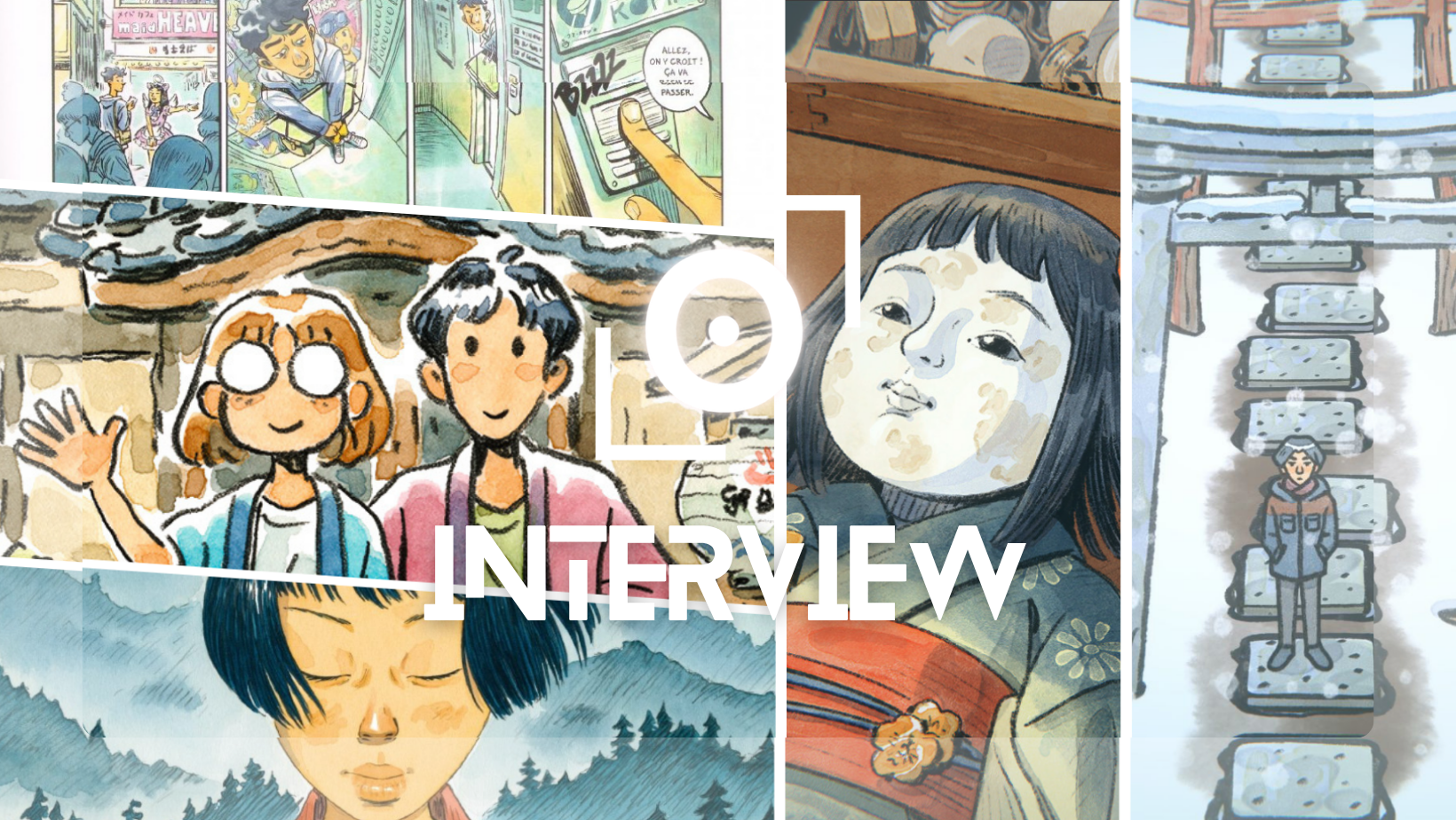
Illustrations, comics, video games – Cécile Brun and Olivier Pichard make up Atelier Sentô, a talented and versatile artistic duo. Having just announced the upcoming release of their new game, The Doll Shop, they’ve agreed to answer our questions about creativity, Japan, video games and much more!
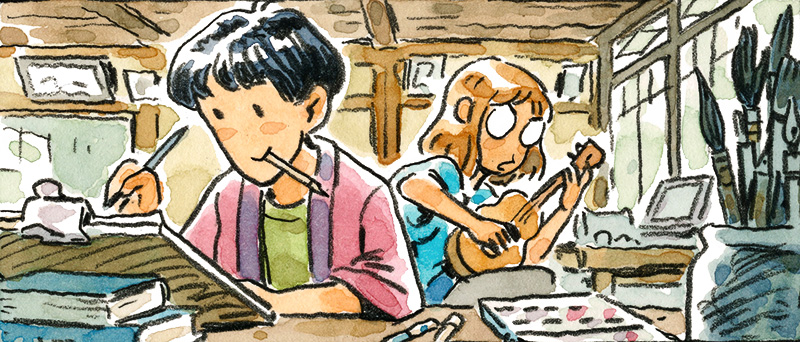
Point’n’Think: Before Atelier Sentô, what were the defining moments or encounters that cemented your desire to tell stories through pictures?
Atelier Sentô: As far back as we can remember, we’ve both always told stories through pictures. Our parents were very supportive of this. Olivier would bind his little books, typed on a typewriter, and his father would illustrate the covers. As for Cécile, her father helped her ink the backgrounds for her comic strips at secondary school. When we met, we immediately wanted to create stories together, even before we became a couple. We wanted to make a short film. In the end, we made a short film while we were living in Japan, just before setting up Atelier Sentô. It was called ‘Les 3 Dieux’ and the film was shortlisted for the Contis Film Festival, where it was screened on the big screen! That’s when we started thinking about our collaborative projects across various media.
You’ve been working together for over ten years. How would you sum up the evolution of your partnership: what has changed in the way you create, and what has remained the same?
Before each project, we think about what each of our roles will be, striking a balance between ‘having fun’ and ‘being efficient’. Our tasks have always varied with each project: from storyboarding, rough sketches, inking, colouring, backgrounds, characters, music, programming, and promotion… there’s plenty to keep things interesting! Although it’s clear that Olivier is more at home with backgrounds (he wrote his university dissertation on optics and perspective – he’s a real enthusiast for low-angle shots of Tokyo!) and Cécile has a preference for characters. The only thing that never changes is that the stories are written by Olivier, even though we exchange lots of ideas beforehand and work out the basics and what we want together: genre, format, target audience, and so on.

Your work blends comics, painting, video games, travel journals… How would you describe your artistic identity today?
Above all, we aim to develop a unique world. We don’t want to limit ourselves to a single medium or technique. We’ve always been curious to dabble in a bit of everything (film, printmaking, music…), and that’s what drives us with every project: learning new techniques. It can sometimes be difficult to bring our community together across every platform. Because of this, we always strive to make our work accessible. For example, our video game *The Doll Shop* was developed entirely on an old laptop, and we’re confident that anyone can play it without needing expensive equipment. What matters most to us is bringing a story and emotions to life for players and readers. It’s a goal that’s both very basic – the desire to share emotions with others – and, at the same time, an extremely complex process that requires us to constantly reflect on how human beings function, to put ourselves in the viewer’s shoes, and to analyze ourselves.
What makes a subject, a place or an anecdote become an Atelier Sentô project?
Hmm… That’s an interesting question! It’s true that our projects are steeped in personal experiences, little nods to the past and stories we’ve collected. We’ve been traveling to Japan for 20 years, and whenever something amuses or intrigues us, we tell ourselves it might one day feature in a story. We also keep very detailed travel journals with watercolours painted on the spot, which serve as our reference material. But Olivier writes the plot before he’s even thought about any of that. He lets himself be carried along by his moods, atmospheres and music. Then, elements of our own experiences gradually creep in and the connections form naturally. Often, we tweak these places or anecdotes slightly to adapt them to the story and give them a sense of universality.
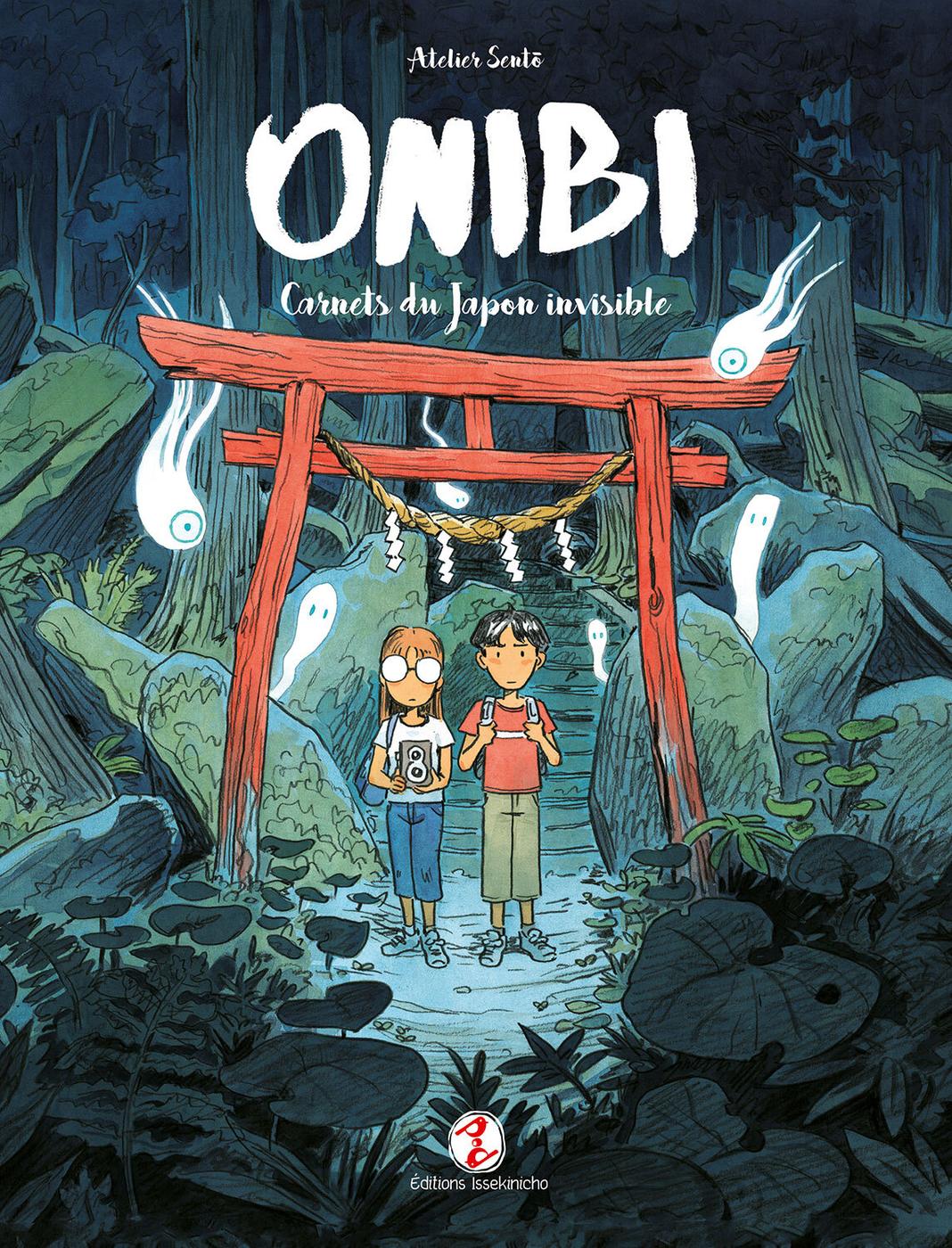
Your books, such as Onibi and La Fête des Ombres, are deeply rooted in the Japanese imagination. How has your relationship with Japan evolved since your first trips there?
A great deal has changed in 20 years, starting with the country itself. As for our relationship with the country, it’s a complex one, often influenced by passing fads. When we wrote our first book, *Onibi*, yōkai were still unknown in France, and before that, every comic book project we submitted to publishers was rejected because the theme of rural Japan ‘wouldn’t have interested’ readers. Fortunately, this interest took off just as Issekinicho, our publisher, contacted us to sign a deal for *Onibi*. And then, all of a sudden, that was all anyone was talking about: yōkai and the Japanese countryside! It’s hard to rekindle our interest in a country that’s become so trendy in France… That’s why, after *La Fête des Ombres* (a book about ghosts), we decided to go against the grain a little and rediscover Tokyo through our *Tokyo Mystery Café* series project with Dupuis. We spent two three-month stints there, exploring the lesser-known neighbourhoods, which we sketched and drew from every angle. Now we love Tokyo! And ever since, we’ve been returning to Japan each time with a different approach. Last year we set ourselves the theme of ‘Showa Retro’, focusing on all the places that evoke post-war nostalgia: little Western-style cafés, shops selling vintage toys, rice omelette restaurants, and old-fashioned bookshops in the literary district of Jimbocho…
You often talk about your interest in small towns, the countryside and the fringes of society. Why do these places inspire you more than big cities?
In France, we live in the Basque Country, in a small flat from which we can see nothing but the forest and the sea. We live without internet at home, without a car… And even though we love to immerse ourselves from time to time in the hustle and bustle of big cities like Paris or Tokyo, we need this space of tranquillity and nature to work and concentrate. We have a special connection with the Japanese countryside because we lived in Niigata in 2009–2010, and it feels a bit like home to us. It’s the sort of experience that defies all preconceptions. We’ve made some dear friends there and people we consider family, with whom we can talk about anything (they even appear in *Onibi*!).
In the comic Tokyo Mystery Café, on the other hand, your characters are set in a big city. Did you work in the same way? What did you like about this new setting?
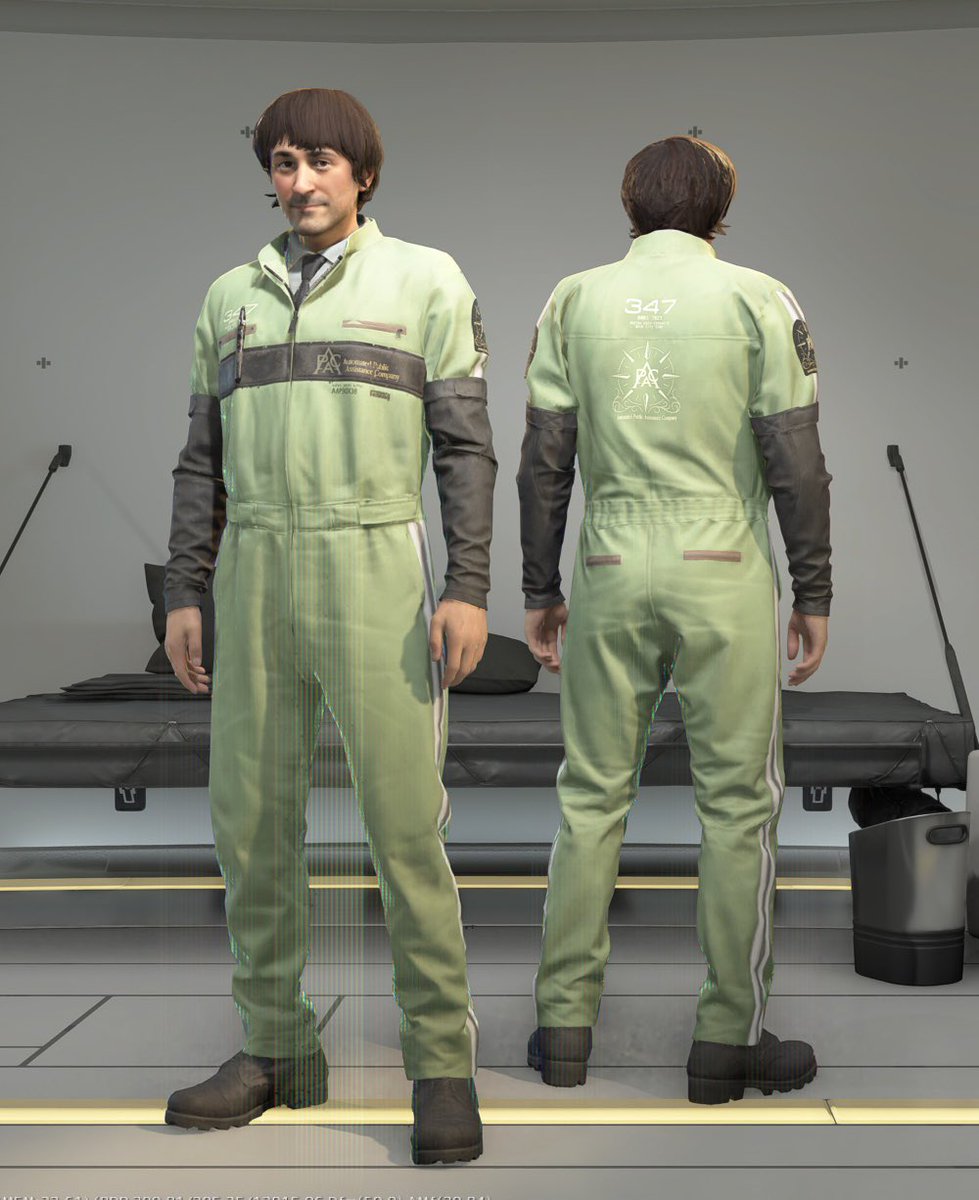
For the first time, rather than working from memory, we went to Tokyo and did some of the drawing on location. We had fun finding the exact locations where the events could take place, while staying true to the geography: when the characters move around, they actually head in the direction corresponding to each location. The settings aren’t just there to look pretty; they’re a real detective’s map! In each volume, we explore a facet of Tokyo’s pop culture, and researching the material was a great excuse to visit some incredible places: the biggest manga publishers (Kadokawa, Kodansha, Shueisha and Shogakukan), as well as Kojima Productions (Hideo Kojima gave us a very warm welcome and we were even scanned and included as NPCs in Death Stranding 2!), mangaka studios, and so on. And all of this features, or will feature, in one way or another in the series.
Folklore plays an important role in your stories. How do you choose which mythological elements to incorporate, and how do you reinterpret them?
In 2012, after the great tsunami, we travelled around Japan attending traditional festivals and searching for traces of creatures from Japanese folklore. We discovered that each region has its own slight variations on the same characters. There are red kappa and green kappa, and their behaviour varies depending on the location and the era. It’s much the same with festivals. Some are very ancient, while others are more recent, and some resemble one another, like variations on a theme. It was this variety and this freedom that inspired us. In *La Fête des Ombres*, we drew inspiration from the Festival of the Dead (Obon) but created our own variation. One of the great strengths of Japanese fantasy is that it weaves itself into everyday life without any real boundary between reality and illusion. And this extends even to cities, where urban legends of ghosts and other creatures are legion!
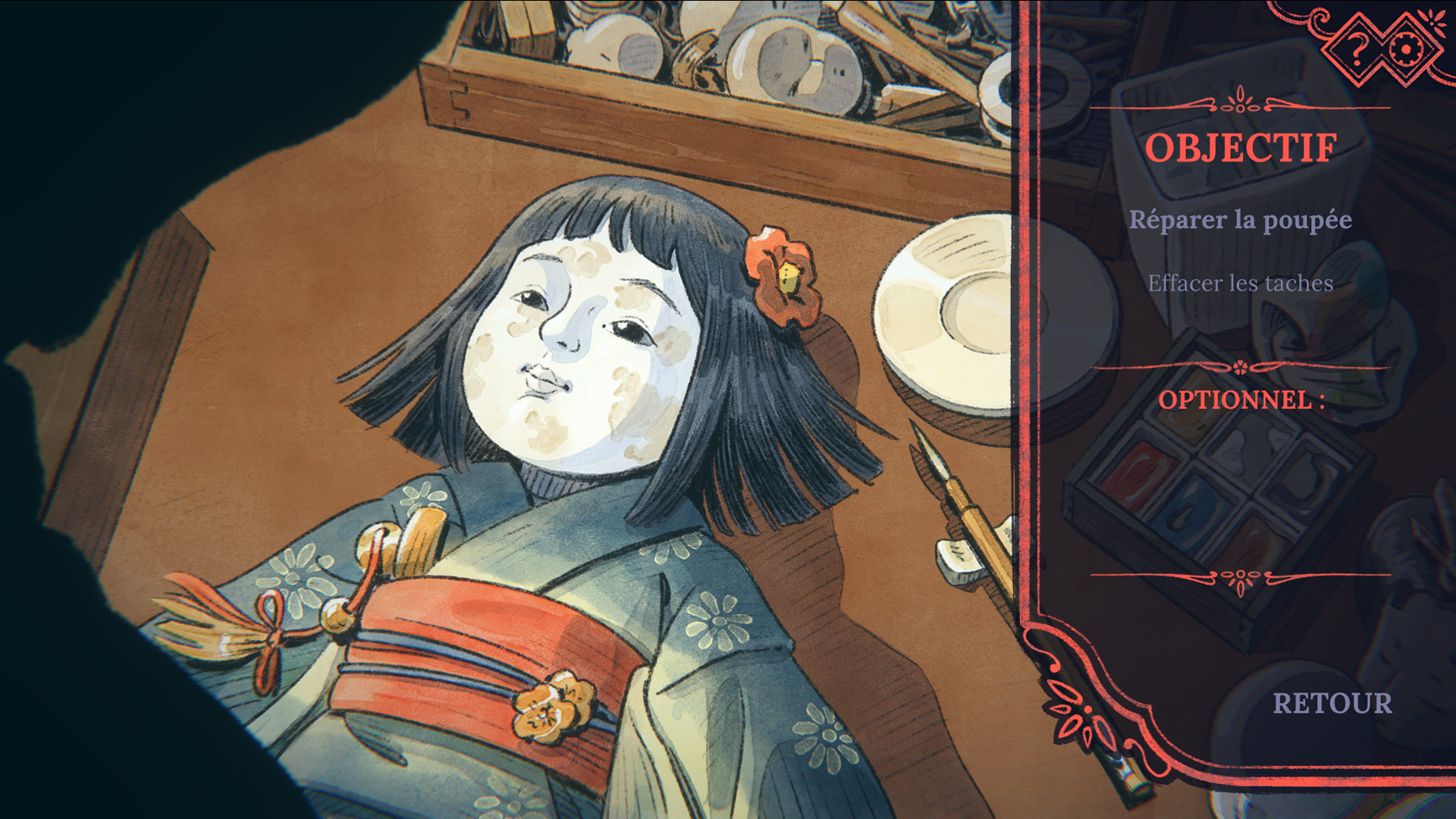
Your process is very artisanal: watercolour, pencils, painted textures. Which techniques best define you today?
Watercolour is our tool of choice. A box of watercolours is inexpensive, lasts a long time, and is easy to carry around and use. You don’t need much to do watercolour; it works on any kind of paper and is just as suitable for quick sketches and storyboards as it is for highly detailed illustrations. It’s also a fairly natural and simple technique. So that’s what we use first and foremost. But we do sometimes try out other things just for fun. Tokyo Mystery Café and The Doll Shop were drawn entirely on an iPad. We’re also big fans of linocut; we did quite a lot of it when we were starting out. Now we work with a printmaking studio in Tokyo (Mokuhankan). It’s an incredible technique for reproducing originals.
How do the two of you work together on a day-to-day basis? Are your roles (script, storyboard, colour, animation, etc.) clearly defined or do they overlap quite a lot?
Our roles are defined at the start of each project. But we remain flexible. For example, if one of us gets stuck on a detail (a perspective issue, a character’s pose, etc.), the other takes over until the problem is sorted. This allows us to make progress and learn at the same time. We also give each other feedback, of course. Cécile reads through the script and shares her comments before starting the artwork. Similarly, Olivier takes over the storyboard once a first draft has been completed. We try to strike a balance between providing an outside perspective and not holding up the project’s progress. All of this is built on a relationship of trust, mutual appreciation of each other’s work, and acceptance of minor flaws!
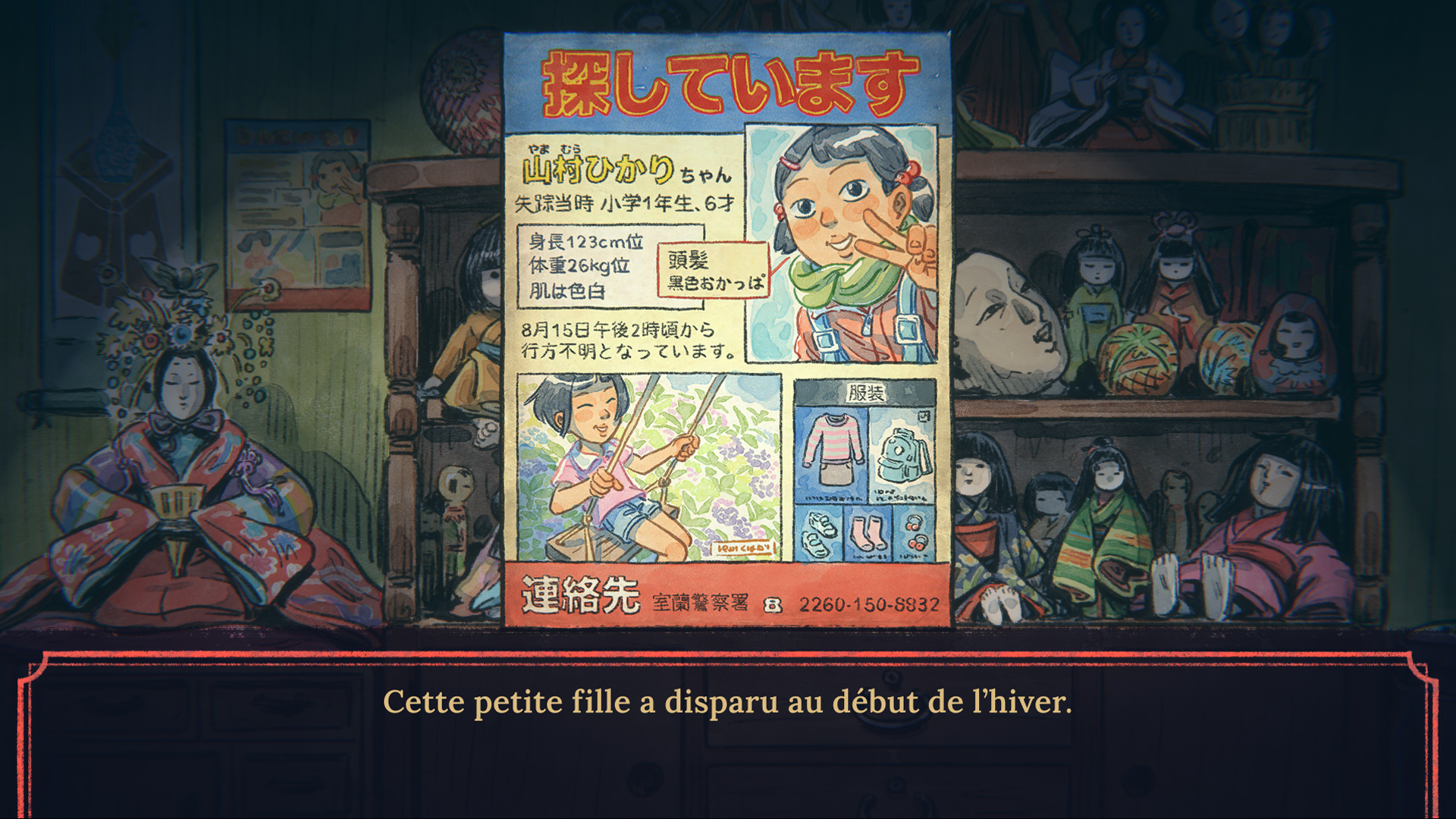
Have you ever been tempted to go fully digital, or, on the contrary, to return to even more traditional techniques?
Tokyo Mystery Café and The Doll Shop were created entirely on an iPad. It was a great experience that allowed us to try out lots of things and take a break from the tedious work of scanning and colour restoration that we have to go through when drawing on paper. But we’re reaching the point where we’re getting a bit fed up with digital art and can’t wait to go back to watercolours for our next projects. Variety is important for keeping things enjoyable. Even though we still make a point of practising watercolour regularly. This year, we went on holiday to Catalonia and we’ve just come back from Iceland. It was the perfect opportunity to take our sketchbooks with us and do loads of watercolour sketches!
Comic books remain a cornerstone of your work. What does sequential storytelling offer that other media do not?
Comic books have the advantage that you need almost nothing to create them: just a pencil and some paper. It’s a medium that doesn’t require any money, and you can get started with it from a very young age. I think that’s what drew us to it so quickly. Furthermore, the book in general is one of the last silent, tranquil media, allowing the reader to set their own pace, and even to go back and re-read! Sequential storytelling is also truly fascinating: the passage of time between two panels is in itself a subject for reflection and an infinite field for experimentation. Our only regret is that very few countries in the world produce and consume comics. It’s hard to accept when you realise that depicting actions and stories through drawing is one of humanity’s earliest means of expression – a form of art that people have been practising since prehistoric times with cave paintings!
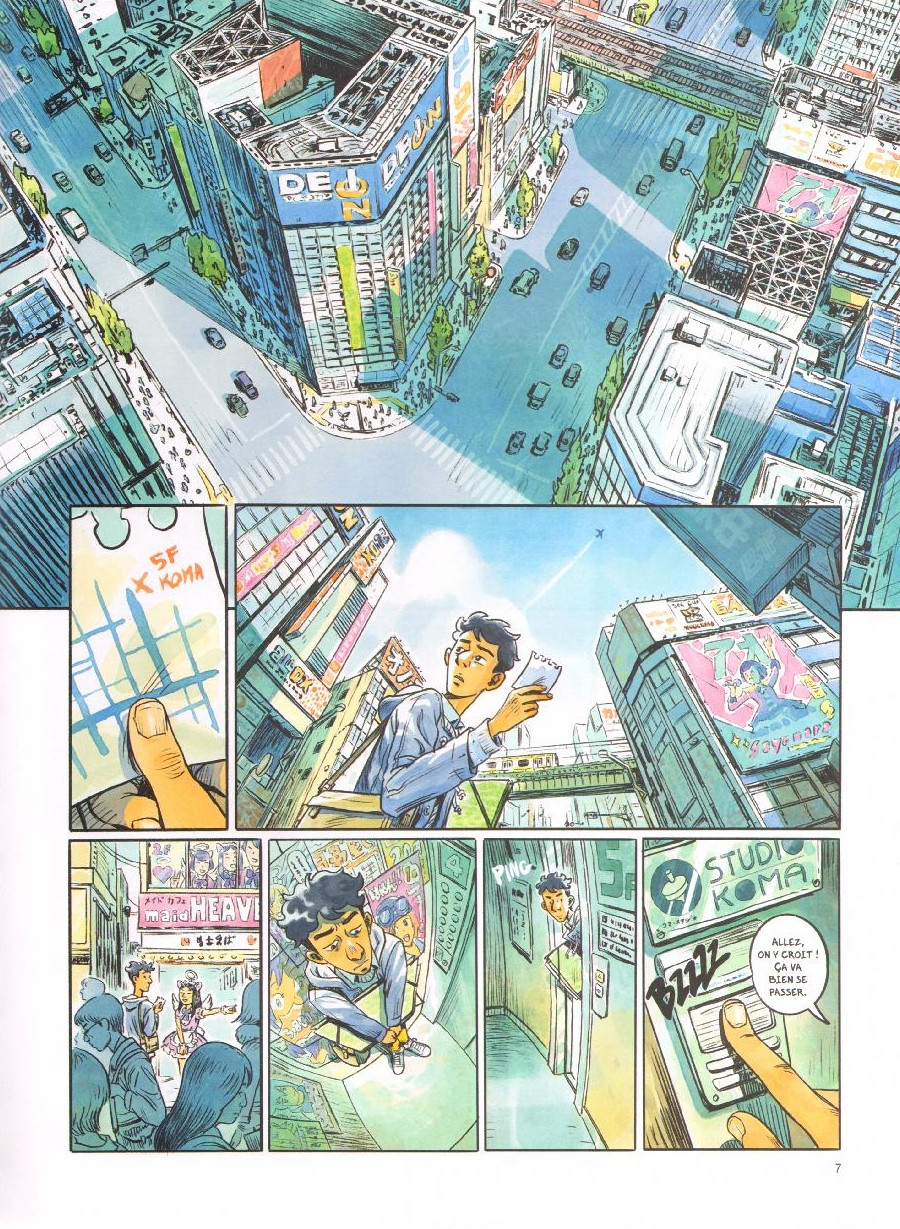
Conversely, The Doll Shop is a visual novel. Did your approach to and experience with comics influence this choice? Did it help you in crafting this adventure?
After finishing our studies, we tried our luck with comic book publishers, but we were met with rejection after rejection. At the same time, we discovered the whole indie gaming scene, including the sublime Machinarium, which was entirely hand-drawn! That made us want to give it a go. We’d never done any programming before, so we turned to software that would minimise the technical work and allow us to focus on what we were good at: drawing and storytelling. Naturally, choosing the visual novel format brings to mind an interactive comic. As with our books, we first set out to create a gripping plot and characters you can really connect with. That’s really the heart of the project, and it gave us confidence in the areas we’re less familiar with, such as programming.
How does an album come about for you: through an image, a place, an anecdote, or a broader theme (memory, loss, loneliness…)?
Often from a place. We’ve always seen settings as characters in their own right. For *Onibi*, we wanted to tell a story set in the places where we’d lived in Niigata. For *Tokyo Mystery Café*, the idea was that of a restaurant-cum-detective agency in a slightly old-fashioned spot in the heart of Tokyo. For *The Doll Shop*, it was that old wooden building where the main character lives and works – a house on the verge of collapse, through which the wind and the cold seep in. It’s a place that evokes the freezing, melancholic winter of Niigata for us. We don’t want to give too much away, but our next graphic novel will also revolve around a very special place!

The Doll Shop is your most ambitious video game project. What was the spark that sparked the game? A character, a setting, a feeling?
A bit of all three, really. We’d wanted to write a horror story for a long time. It’s a genre we’re particularly fond of. But then again, we like to tie our stories back to our own experiences, and one of our darkest experiences was that winter in Niigata! It snowed for six months and we were living in an uninsulated flat. It was a world away from the beautiful, sunny winters you might experience in the French Alps, for example: snow glistening in the sun, hot chocolate by the fireside… No, in Niigata, it was grey all the time; we had snowstorms and a constant wind from Siberia sweeping along the coast. Some of our uni mates had to melt the ice in their bathrooms every day… It was tough! And everything came to a standstill – even university lectures – because nobody could get there. We had to brave the elements to reach the little café at the end of the street where the two owners were waiting for us, ready to look after us all day long with tea, cakes, curry and pleasant chats until nightfall. A memory that’s both tough and heart-warming – that’s the feel we’ve tried to capture at The Doll Shop.
Visually, the game seems to take your analogue aesthetic even further. What specific techniques did you use to create this look?
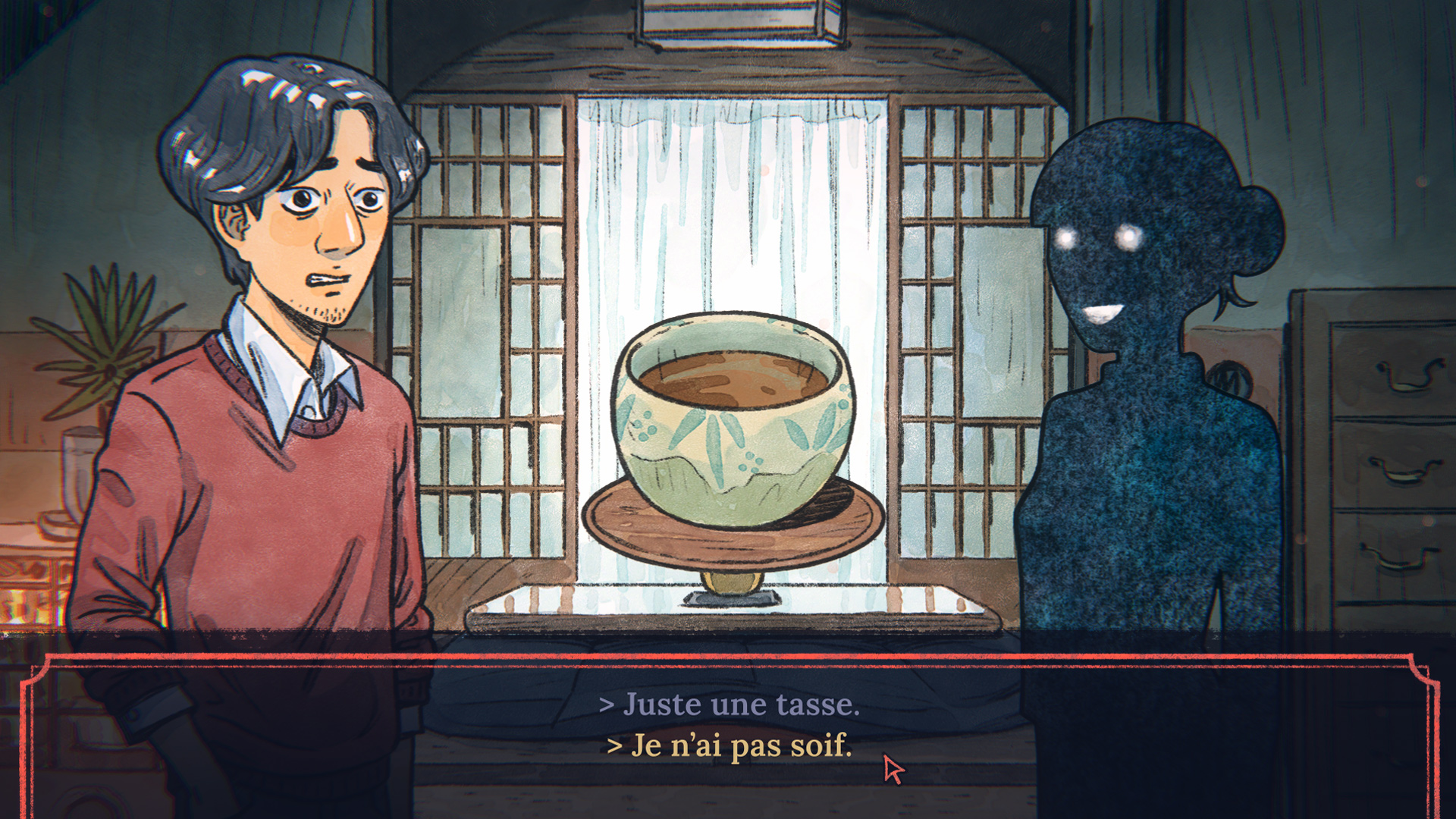
The aesthetic is pretty much always the same; we don’t really think too much about style when we’re drawing. We do our best to make sure the drawing looks right. And in the end, we end up with a fairly consistent aesthetic, whatever technique we use. Perhaps it comes down to the colours we like to use… For *The Doll Shop*, we used Procreate on the iPad for the line art (6B pencil) and ArtStudio Pro for the colouring. Mateusz Urbanowicz (set designer on many of Makoto Shinkai’s films) and his wife Kana once asked us for help with colouring comic strips. They gave us a mini set of watercolour brushes; we learnt to use them on the job and haven’t tried anything else since… We’re not really into fancy techniques or equipment. Once we’re comfortable with a tool, we stick with it for 10 years – perhaps simply out of laziness. Or perhaps because it allows us to make rapid progress on our projects.
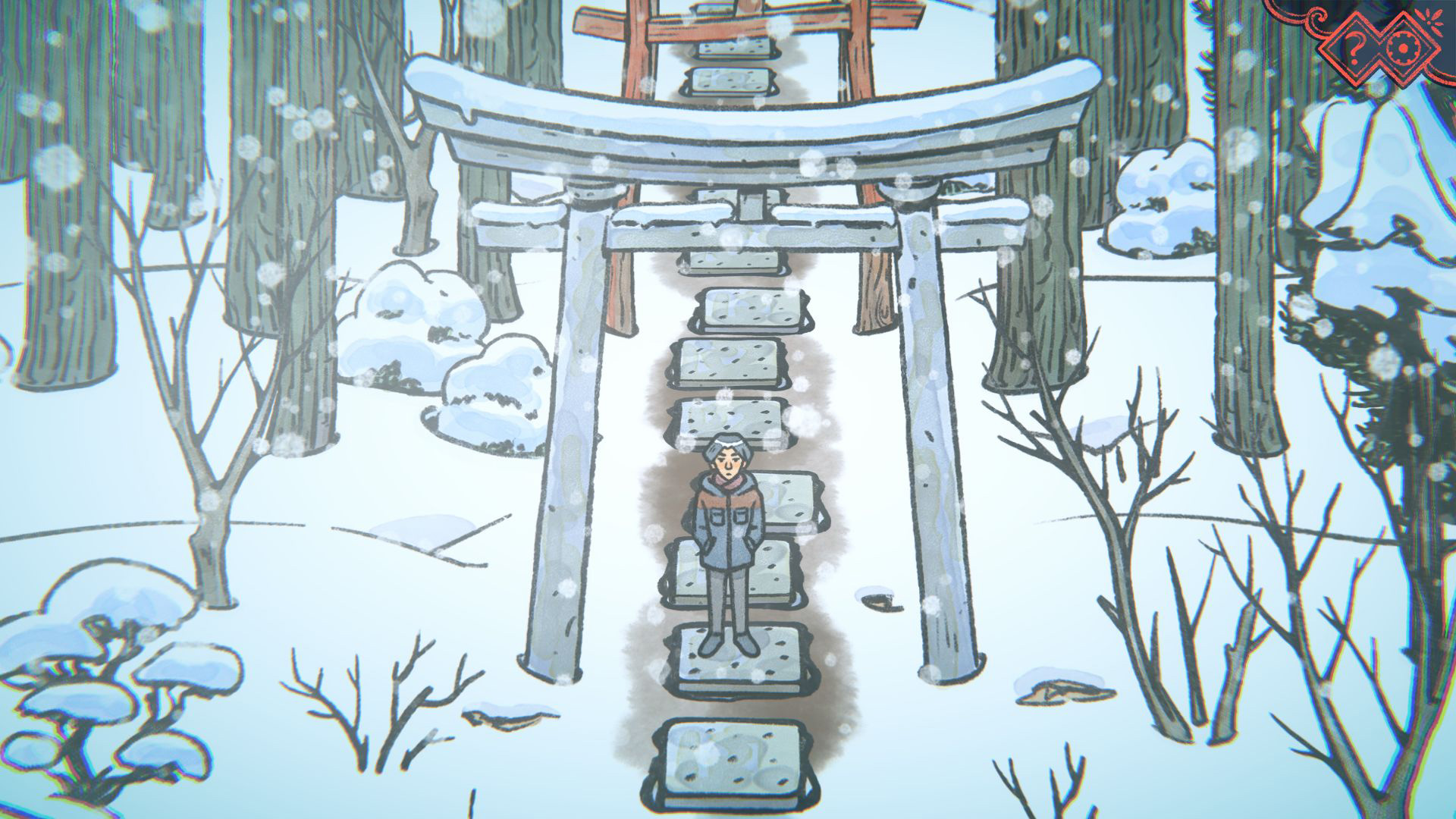
In your previous games, the player often explores a village, interacts with the inhabitants, and uncovers a personal story. How does The Doll Shop put a new spin on this structure?
The small, free games we made before The Doll Shop were created as part of masterclasses at video game schools. We found this structure simple enough to allow the students to focus on the visuals. We were mainly there to get them to paint with watercolours and get them away from their screens, haha! But with this new project, we’ve tried to develop it further. The village is less static; you discover new areas as the story unfolds. And, most importantly, the villagers are no longer passive. An investigation gets underway and the net closes in on the main character. You’ll need to be strategic to escape the suspicion hanging over them.
The game’s atmosphere oscillates between gentleness, unease and the fantastical. Which choices in terms of staging, animation or colour were key to creating this atmosphere?
Olivier is a huge film buff. Every evening we watch a film borrowed from the library, and October is definitely horror film month! Suffice to say we’re heavily inspired by cinema: David Lynch, Dario Argento, Kiyoshi Kurosawa…
The colour red regularly contrasts sharply with the bluish-white. The unsettling scenes are quite stylised in the ‘giallo’ style. We really like these visual effects that provoke both fascination and unease.
Finally: if you were given free rein tomorrow to create your ideal game, what would it be like? And what would you like to try that you’ve never attempted before?
The Doll Shop is a great learning experience because we’re creating it in our spare time with no budget at all, so we have to do everything ourselves (music, sound effects, programming, promotion, etc.). But in the future, we’d like to secure some funding to put together a small team of friends who are experts in other areas and who would give us greater freedom. Nothing too fancy – we’d still stick to short, hand-drawn games with a poetic atmosphere, but perhaps with different forms of gameplay? It’s hard to look ahead until we’ve finished *The Doll Shop* and we don’t know if it will find an audience. In the meantime, one thing’s for sure: we’re not short of ideas and we hope to release lots of comics and video games!
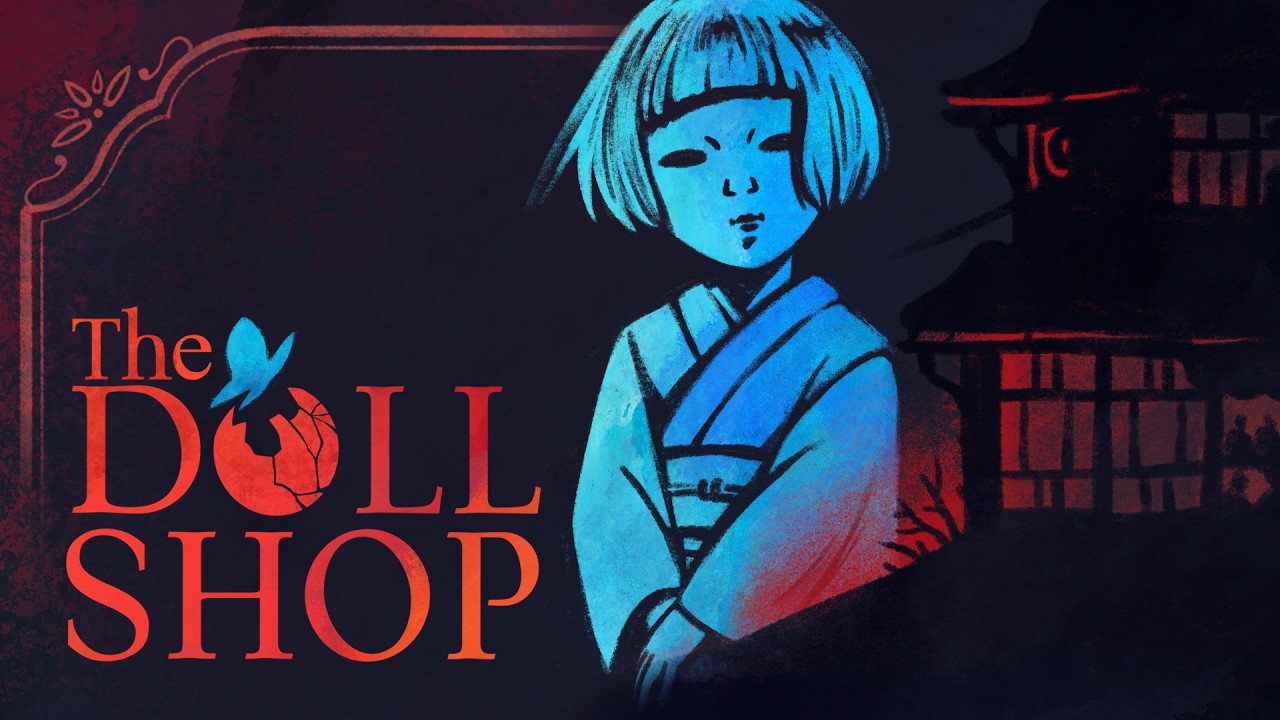
The Doll Shop on Steam (don’t forget to add it to your whislist !) https://store.steampowered.com/app/3851680/The_Doll_Shop/
Atelier Sentô website : https://ateliersento.com/