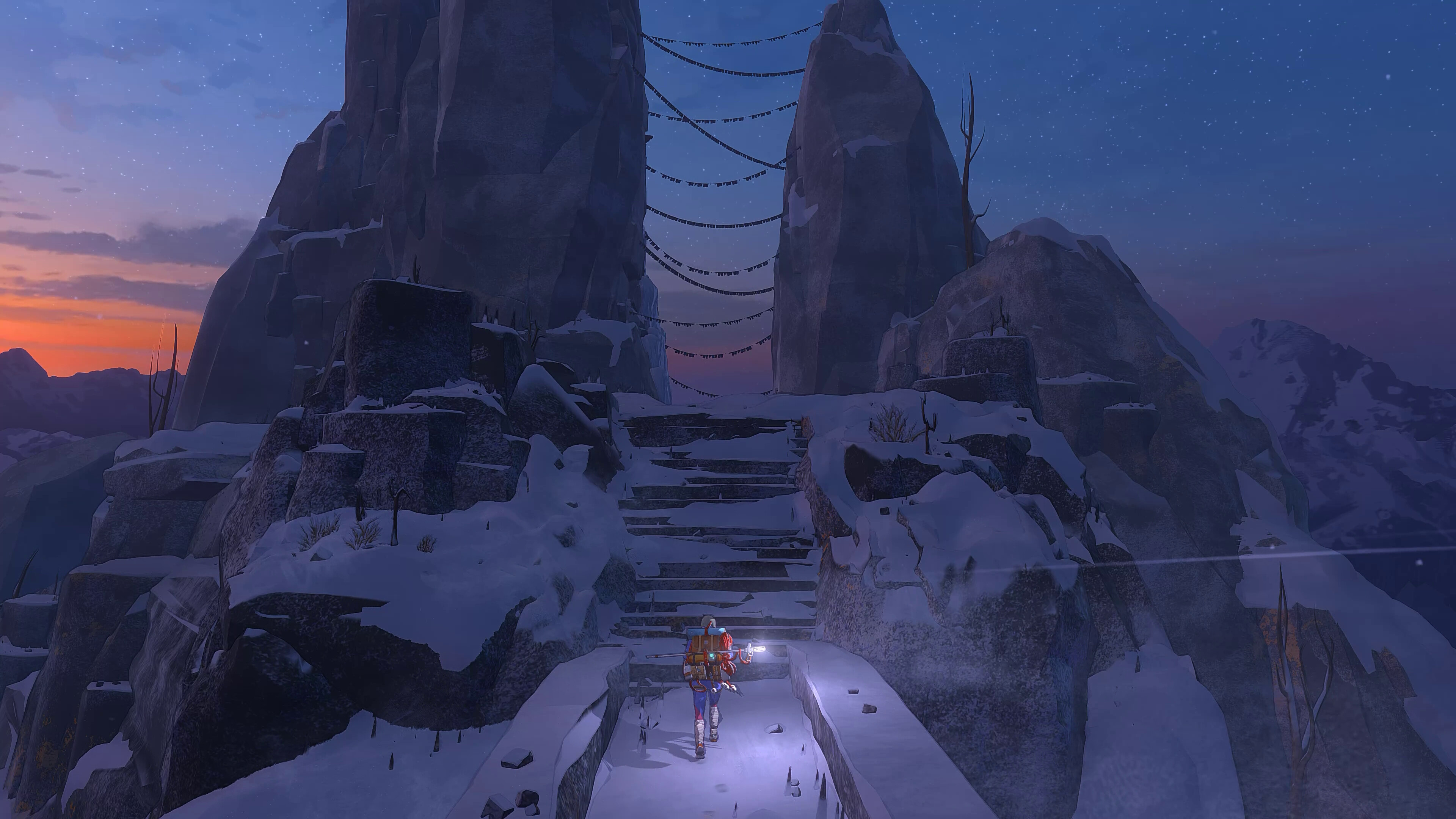
The first time my hand slipped, it wasn’t spectacular. No screams. No dramatic music. Just one finger giving way, almost imperceptibly, then another searching for a hold that wasn’t there. In Cairn, each limb is independent. Every arm, every leg, every step requires a decision. Nothing grips on its own. Nothing corrects your mistake. You don’t climb: you place a hand, you move a foot, you transfer your weight. And you hope that your body, virtual but stubbornly heavy, will hold. Fatigue comes without warning. It doesn’t manifest itself with a flashing red bar or an audible warning, except for Aava’s panting breath. It settles into micro-hesitations. In the time it takes you to choose the next hold. In that split second when you say to yourself: one more move. You feel the weight of your body pulling you down. You feel the instability. You feel that you’ve already gone a little too far.
There is nothing heroic about it. No triumphant posture, no wide shot of a sun-drenched summit. The wall does not look at you. It does not challenge you. It does not even recognize you. It is simply there, vertical, indifferent. And you are an uncertain mass trying to carve out a passage.
Then your hand slips.
It’s not a dramatic fall. It’s a logical mistake. The weight is unevenly distributed. The grip is misjudged. Your body slips. You fall. The camera doesn’t try to glorify the moment. There is no glorious slow motion. Only gravity doing its job.
And then, silence.
An almost uncomfortable silence. As if the game refuses to comment on your failure. It doesn’t punish you. It doesn’t humiliate you. Nor does it encourage you. It simply observes.
Cairn is not a power game. It doesn’t promise to make you stronger, faster, or more skilled with statistics. It’s not a fantasy of ascension. It’s a simulation of vulnerability. You’re always on the brink of falling. Always one bad decision away from failure. Always hanging on to something that could give way.
So why would you want to do that?
Why choose an experience that rejects heroism, that highlights fatigue, that constantly reminds you of your fragility? Why seek heights if they guarantee neither glory nor recognition?
Perhaps the answer lies precisely there: in the tension between control and falling. In feeling every step. In the possibility, however brief, of being perfectly aligned with your own imbalance.
I wanted to control everything
Very quickly, I found myself wanting to control everything.
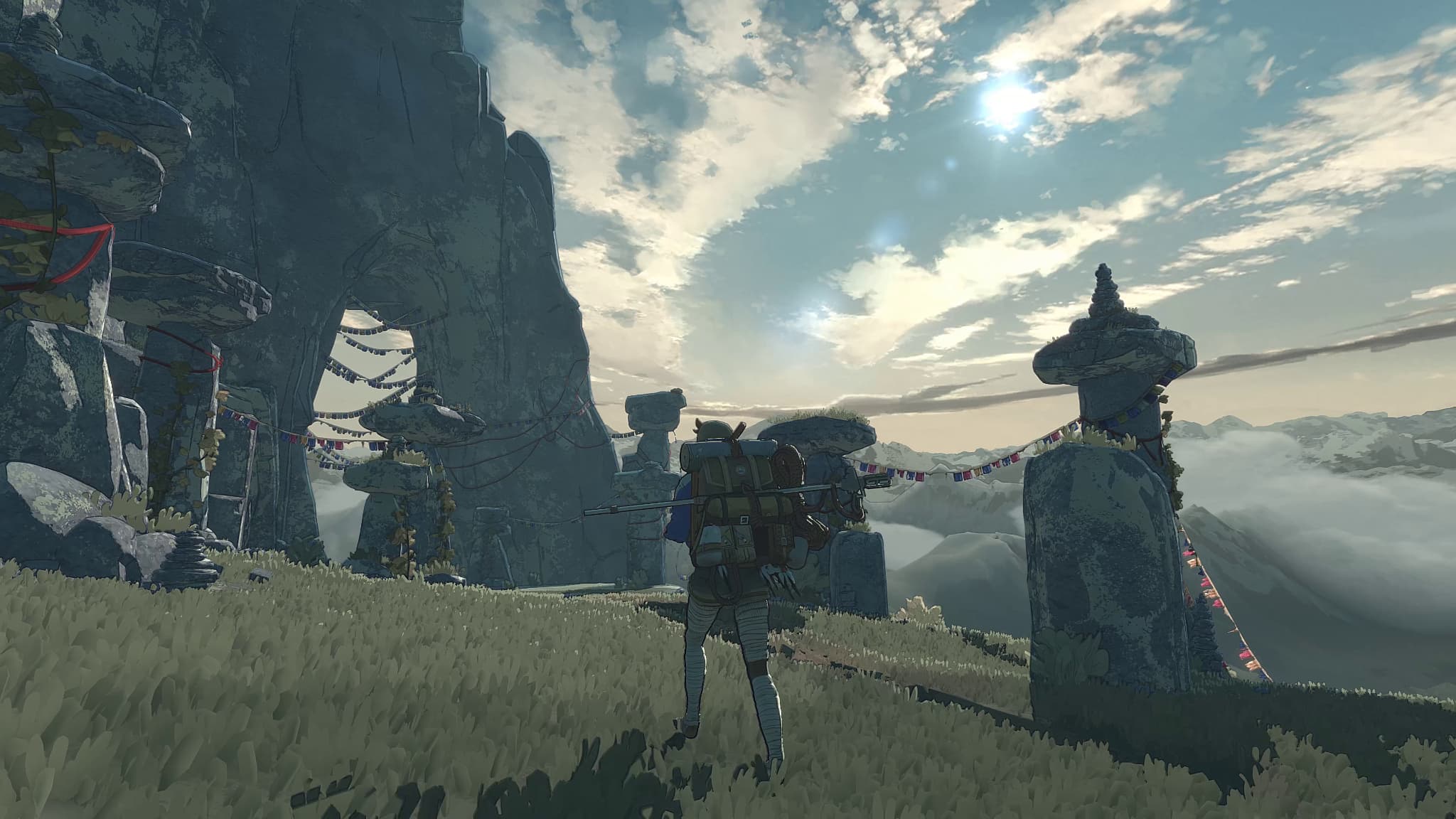
Not just to succeed in the climb. To master it. To decide every move. To place each hand exactly where I had imagined it. In Cairn, this desire finds perfect ground. No system smooths out your approximations. You don’t hold down a button to climb “correctly.” You decide which arm to extend. Which foot to lift. Where to shift your center of gravity. Each limb is a responsibility.
There is no invisible help. No algorithmic correction that turns a bad decision into an acceptable success. No skill tree that compensates for your inaccuracies over time. You are not gradually allowed to become competent. You have to be, or you fall. This rigor flatters something deeply contemporary. A discreet but tenacious obsession: to control everything. To depend on nothing. To delegate to no one. To leave nothing to chance.
We find the same phrase elsewhere, outside the game. In studios, in workshops, in bedrooms converted into offices:
If I don’t do it myself, it will be done badly.
It’s not always an arrogant statement. Sometimes it’s a fear. The fear that the vision will be diluted. That the intention will be distorted. That the result will not match what seems so clear in your head. So you keep everything. The decisions. The details. The responsibilities. As if delegating were equivalent to losing your grip on the wall. In Cairn, this control makes sense. Feeling every weight transfer, every tension in your arms, every micro-adjustment creates an almost meditative intensity. You are not carried by the system. You are the system. Success, when it comes, is unquestionably yours. But control comes at a cost.
The more you want to feel every hold, the more you have to stay focused. The more you refuse to let things happen automatically, the more energy each movement requires. There is no autopilot for obsession. There is no rest for those who want to control everything. Passion attracts this type of personality. Those who want to feel the real weight of decisions. Those who prefer exhaustion to approximation. Those who find a form of identity in total mastery. In Cairn, wanting to control everything is not a strategy. It is a temptation. And maybe that’s why we come back to it. Because at least here, control doesn’t lie. It doesn’t promise to be easy. It only promises to be accurate. And accuracy, even if brief, is terribly seductive.
There is a mode in Cairn where falling is not a parenthesis. It is an end. Free solo. No rope. No indulgent backup. No second attempt to erase the mistake. If you fall, you really fall. The body disappears. The climb stops. All that remains is the decision that led you there.
This mode is not imposed. It is chosen. Perhaps that is what makes it so unsettling. One could climb differently. With safety measures. With margins for error. With a system ready to absorb failure. But the game offers the possibility of removing the net. Of exposing oneself fully to gravity. To make every movement an irreversible commitment. Precariousness is not an accident. It becomes a posture.
There is something strangely honest about this choice. The wall does not change. Only your way of confronting it changes. By removing the rope, you remove the illusion that failure is temporary.
You transform each hold into a definitive decision. Outside of climbing, this gesture has other names: leaving a permanent job to follow your passion, launching a project with no guarantee of funding, turning down a stable career in favor of an idea that has yet to prove itself.
We could call it recklessness. We could call it pride. But that would be too simple. What free soloing seeks is not danger for its own sake. It is intensity. Without a safety net, every movement counts more. Concentration tightens. The world shrinks to the next hold. The moment becomes denser. More acute. More real. Risk creates intensity. And intensity becomes addictive. We begin to understand why some people refuse to use ropes. Why safety suddenly seems dull, almost bland. Stability protects, but it also dampens. It smooths out the peaks. It reduces the verticality.
In Cairn, as in certain life choices, the question is not: is it reasonable? The question is: does it make me feel alive? We’re not looking for safety. We’re looking for height. And height, by definition, offers no stable ground.
Survival through inventory
The inventory in Cairn is tiny. It’s almost insulting. A few slots. No magic bag. No expandable chest. Every item has a weight. Every choice takes up real space. You can’t take everything. You can’t plan for everything. You have to choose. Very quickly, the climb becomes a silent game of Tetris. Move one item to insert another. Decide if this protection is worth more than that ration. Ask yourself if that extra carabiner justifies leaving something else behind. Nothing is dramatic. But everything is final.
And sometimes you have to discard something. The game doesn’t dramatize it. It simply suggests that you abandon an object to make room. It’s not a betrayal. It’s a logistical necessity. Space is limited. Height does not forgive clutter. There is something more intimate about this mechanism than meets the eye. In life, as in climbing, inventory is limited. You can’t carry all of the following at once:
- extreme ambition
- total availability
- constant energy
- perfect balance
These elements cannot coexist without tension. Something always overflows. Something weighs too heavily. So we choose. We think we’re choosing objects. In reality, we choose existential priorities. We decide that this project takes precedence over this weekend. That this deadline takes precedence over this conversation. That this opportunity takes precedence over this presence. Sacrifice is not announced. It makes no noise. It does not resemble a dramatic breakup. It resembles a temporary adjustment. A reasonable compromise. A pragmatic decision. But the inventory does not lie.
Every new risk taken requires space. Every new ambition pushes something else out. And what we compost is not always what we wanted to lose. We don’t lose our loved ones by accident. We put them out of inventory. Not out of malice. Not out of indifference. But because space is limited, and the wall requires us to travel light.
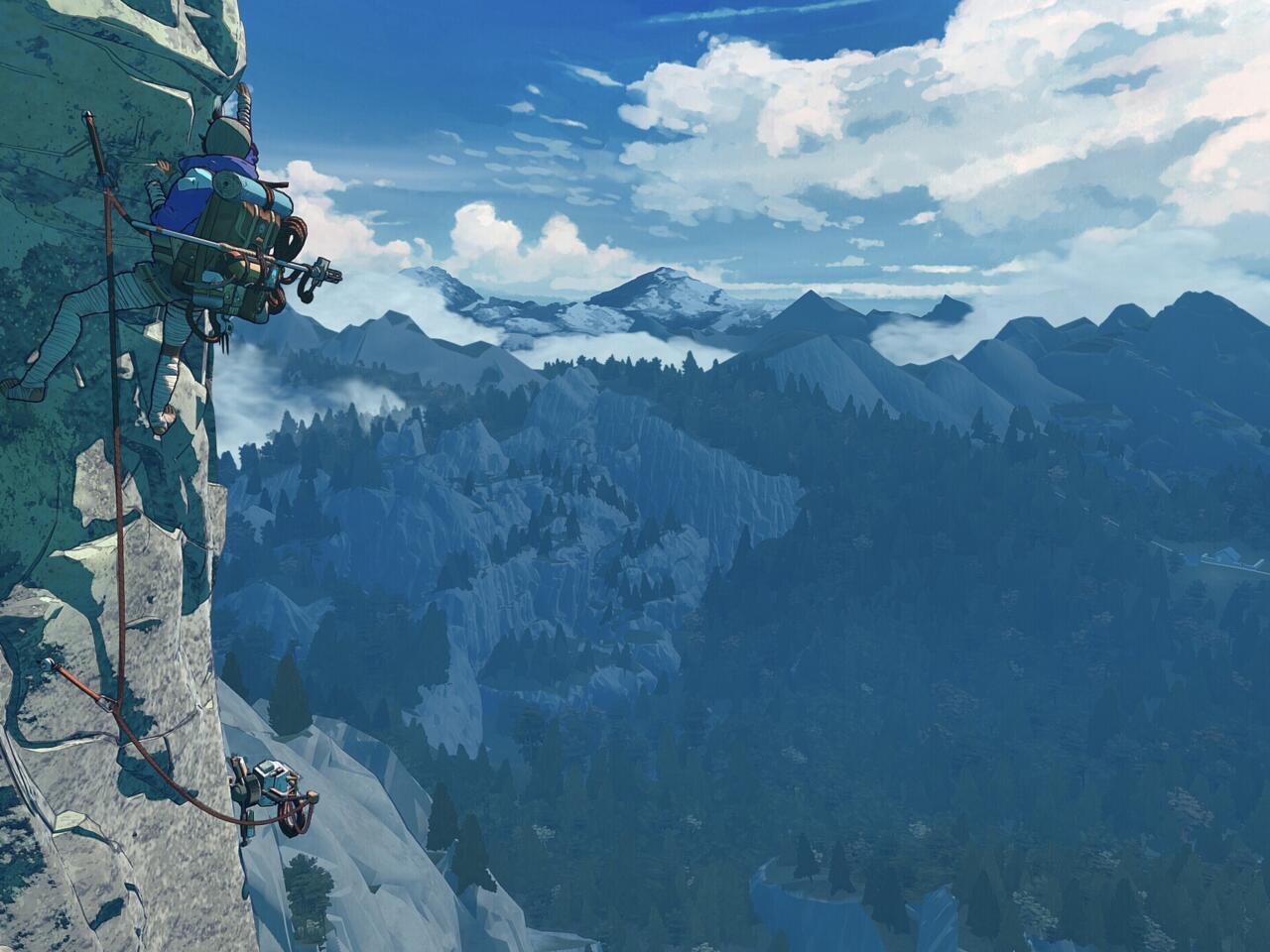
Then there’s the robot. Climbot isn’t your enemy. It’s not trying to make you fall. It talks to you through messages from Aava’s loved ones. They worry sometimes. And almost always, they do it at the wrong moment. When you’re looking for an unstable foothold. When your stamina is waning. When you’re weighing every move. Their voices pop up. They occupy the mental space you desperately need.
And the first reaction is not gratitude. It’s annoyance. It’s not rational. The robot isn’t doing anything wrong. It exists within the framework of the game. It fulfills its function of transmitting messages. But its existence fractures something: the absolute concentration that the wall demands. Messages work the same way. A call. A notification. A sentence that begins with “Do you have two minutes?” Nothing hostile. Nothing accusatory. Just an attempt to connect.
But in the state of immersion that Cairn produces, every interruption is a threat. Not because it’s dangerous. Because it breaks the thread. Concentration in this game is total or it’s nothing. There is no comfortable middle ground. You can’t climb while only half paying attention. You can’t put one foot forward while thinking about something else. The wall demands complete immersion.
Outside of the game, the dynamic is strangely similar. Ignored messages. “I’ll call you back later.” Cut short conversations. Prolonged silences. The relationship doesn’t disappear. It shifts. It becomes peripheral. An open tab that we promise to check soon. It’s not indifference. It’s misplaced focus. Passion demands total immersion. It sucks up attention. It turns the world into background noise. Outside voices are not perceived as attacks, but as interference. The interruption is not hostile. It is human.
The indifference of the mountain
As you fall again and again, one thing becomes clear: the mountain is not watching you. Nor is it testing you. It does not judge you. It does not reward you for your perseverance. You can be methodical, sincere, respectful. You can prepare for hours, calculate every move, climb with almost religious humility. The rock face doesn’t care. It doesn’t recognize effort. It doesn’t recognize sincerity. It promises nothing.
In Cairn, there is no cosmic justice. Success is not the moral consequence of virtue. It is the temporary result of a series of precise decisions in an indifferent environment. You can do everything “right” and still fall. You can make a tiny mistake and pay the full price.
Leaving the game doesn’t really change this logic. The gaming industry doesn’t always reward talent. The cultural market doesn’t always recognize sincerity. Algorithms don’t read intentions. Funding doesn’t measure enthusiasm. Success remains unpredictable, sometimes arbitrary. We work late. We refine. We doubt. We start over. And yet, there is no guarantee that the summit will be there. There is no guarantee that the climb will be visible. There is no guarantee that the effort will be recognized. Passion works like an asymmetrical relationship. We give time, energy, years. In return, there is no promise.
We love something that cannot love us back. This imbalance is not tragic but structural. We can accept that the mountain owes us nothing. We can accept that the algorithm is not a fair judge. We can accept that the market is not a moral space. What becomes more dangerous is confusion. We confuse vocation with recognition.
We believe that because we feel called, we will be heard. We confuse effort with merit. We believe that because we have worked hard, we will receive a proportional reward.
But the mountain is not an arbiter. It is an environment. And perhaps the most dizzying moment is not the fall. It is the realization that no one is waiting for you at the summit.
Who stays below
Yet there is something that Cairn hardly shows. The waiting. The ascent is visible. It is spectacular in its slowness, in its effort, in its constant tension. We see the body tense up, we see fatigue set in, and we see the fall. Everything is inscribed in verticality. But the waiting is invisible.
We don’t see the person who stays below. We don’t hear the hours passing without news. We don’t feel the silent anxiety. The play shows the effort. It doesn’t show the gaze turned toward the wall. And yet, every climb implies an absence. Someone is waiting. A partner who pretends not to think about it too much. Friends we see less of, because “it’s intense right now.” A family that doesn’t always understand but worries anyway. Colleagues who absorb the pressure while you pursue a vision.
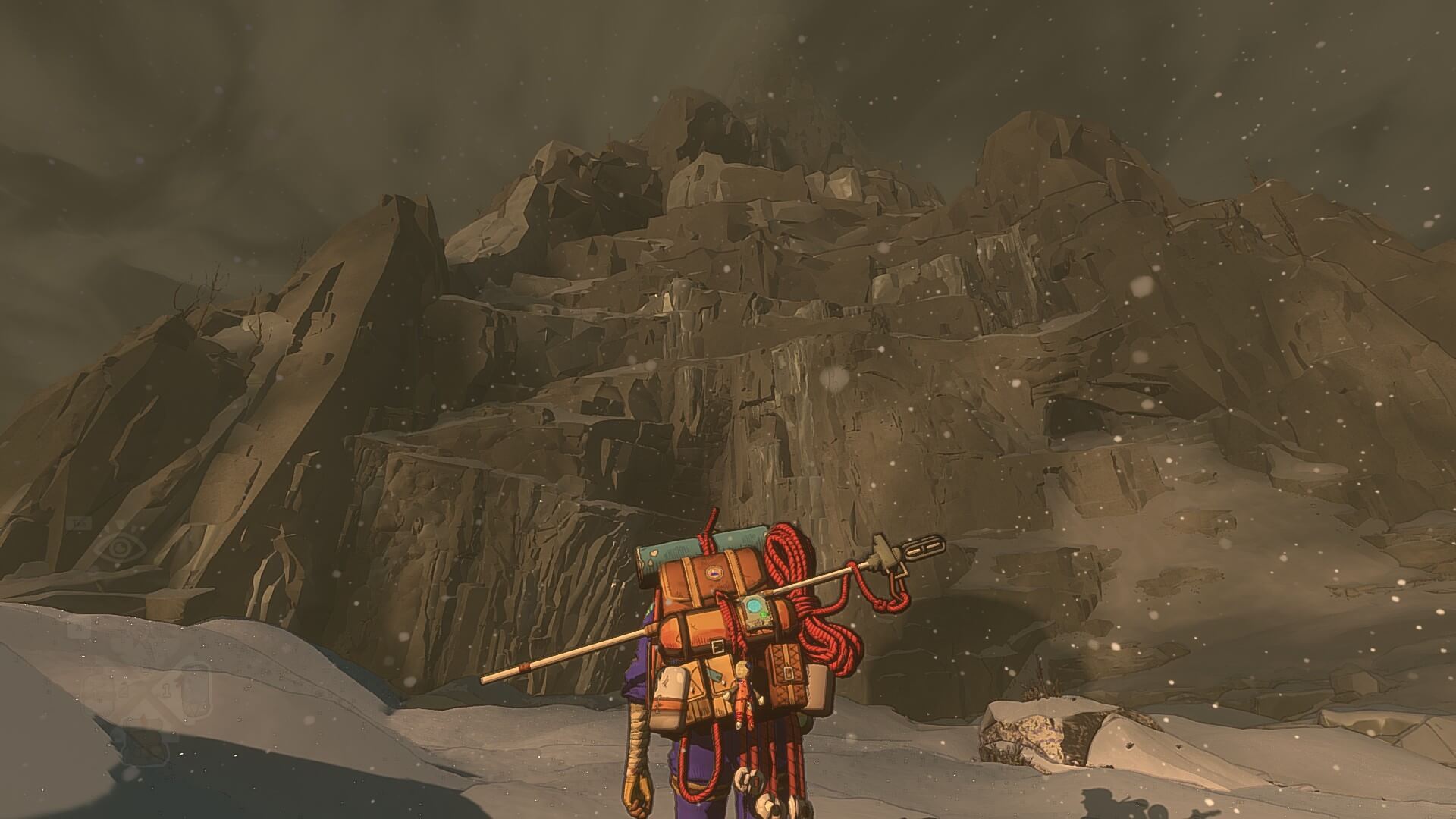
Passion creates two geographies. First, verticality. That of ascent. That of risk. That of intensity. It attracts attention. It structures narratives. It provides material for legends. And then there is horizontality. That of everyday life. That of stability. That of bonds that do not rise but hold fast. The climber experiences intensity. Those who stay behind experience uncertainty. One feels the adrenaline while the other feels the silence. In Cairn, there is no rope in free solo climbing. It’s a decision. But in life, the rope almost always exists. It takes the form of discreet support. Of balance maintained elsewhere. Of a space that continues to function while you attempt something fragile and risky.
We celebrate the summits, not those who held the rope.
We talk about success. We talk about the height reached. We talk about the vision accomplished. We rarely talk about those who absorbed the anxiety, the lack, the absence. Those who allowed verticality to exist by maintaining horizontality. Perhaps the question is not only: how high can we climb? But: what does this ascent require of those who remain on the ground?
Grace
It would be easy, at this point, to see only exhaustion. Risk. Indifference. Silent waiting. But that would be to betray what Cairn manages to capture with almost cruel precision: grace. There comes a moment when everything falls into place. A hold found without hesitation. A transfer of weight that is done without trembling. Both hands anchored, feet stable, the body ceasing to struggle against the wall to finally embrace its shape. Breathing slows. The gaze becomes fixed. The world is reduced to a surface of rock and this perfectly executed movement. It is not spectacular. It is precise.
A suspended moment where one no longer thinks about the fall. Where one no longer thinks about the summit. Where one no longer even thinks about oneself. The body and intention cease to be two separate things. They become a single gesture, accompanied by music that maintains this state of flow. That moment is worth something. It is not imaginary. It is not romanticized. It is rare, but it is real. And when it happens, it justifies almost everything else. The accumulated effort. The failed attempts. The hesitations. Even the fear.
This is what passion promises in its best moments: a perfect coincidence between what we do and who we are. A form of inner accuracy that depends neither on the gaze of others nor on an external result. Yes, it is sublime. But recognizing beauty does not oblige us to make it an absolute.
This is not about condemning passion. It is not a mistake. It is a force. It produces those moments of grace that nothing else seems capable of generating. What becomes dangerous is not the momentum. It is the idea that it should occupy all space. That it should justify all sacrifices. That it should replace everything else.
This is not a criticism of passion. It is a criticism of its absolutization.
For a suspended moment, however pure it may be, cannot become a permanent way of life. Grace cannot be commanded. It arises, then disappears. And to want to prolong it indefinitely is often to confuse the flash with the entire sky.
The descent
Climbing is magnificent. It would be absurd to claim otherwise. Height transforms perspective. It gives the world a strange clarity. Lines are redrawn. Priorities seem obvious. At certain moments, up there, everything seems simple: a body, a wall, a direction to go to touch the stars.
But staying up there is impossible. The mountain is not a place of residence. It is a passage. You can hang there, confront it, find moments of grace. You cannot live there. The body does not allow it. Neither does the mind.
You have to come back down.
And this descent is not a failure. It is not a surrender. It is part of the ascent. It is even a prerequisite for it. You don’t climb to go into exile. You climb to come back transformed, or at least to come back.
Perhaps that is where everything is at stake. Have we learned to come back down? To leave the intensity behind without despising it? To accept that the summit is only a moment and not an identity? Have we learned to warn others? To tell those who remain below how long the climb will take? To recognize that their waiting is part of the equation?
And above all: do we accept that the mountain will never love us?
That it owes us neither gratitude nor affection? That it validates neither our sincerity nor our endurance? That it will remain, no matter what, indifferent? Perhaps maturity is not about giving up climbing. Perhaps it consists of understanding what we are committing to with each ascent. Of choosing the height with full knowledge of the facts. Of coming down without shame. And of not confusing the beauty of a suspended moment with an eternal promise.
Because we never climb alone. And we should never come down without looking at who is waiting for us.