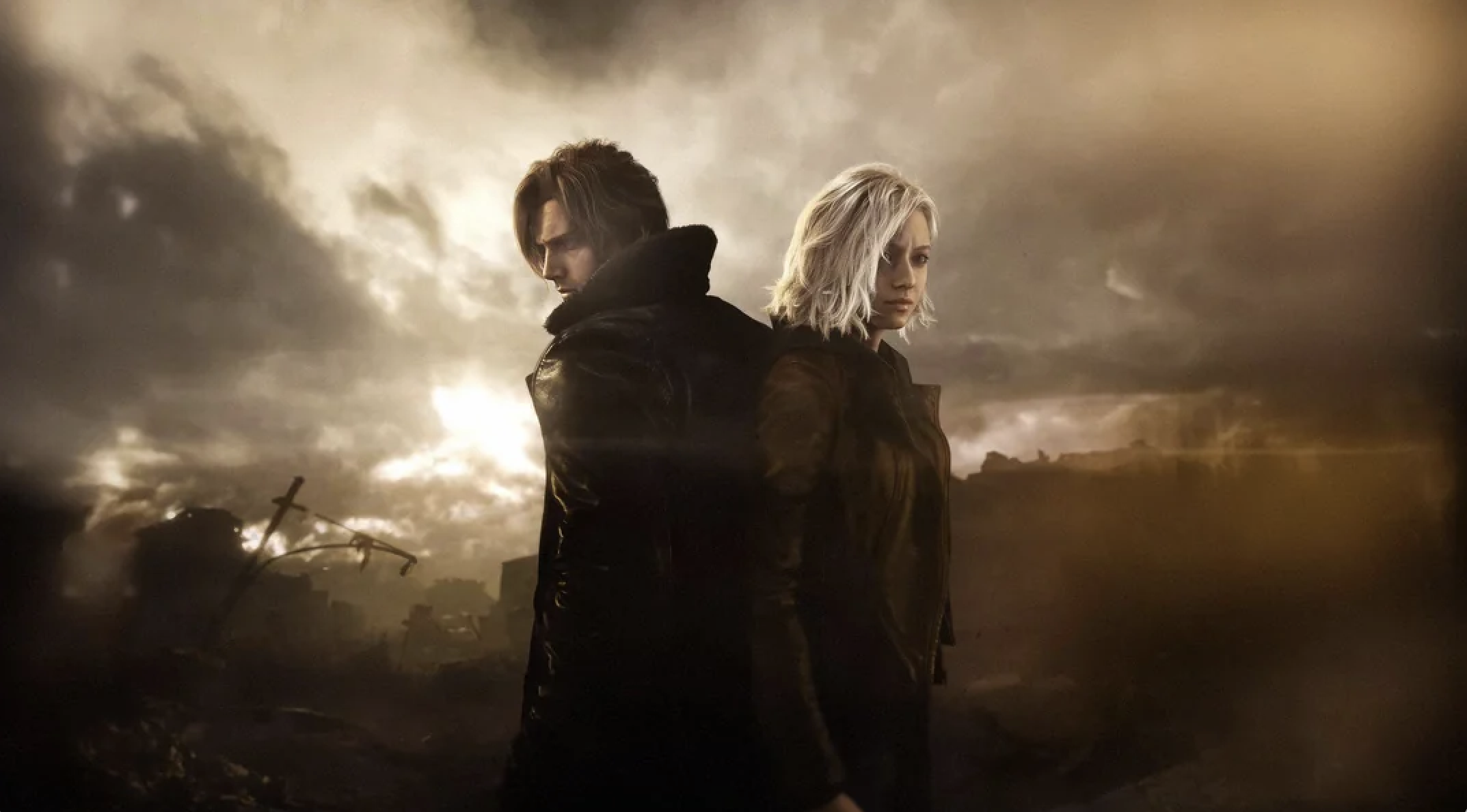
Anniversaries are always difficult moments for prestigious franchises in our beloved video game industry. Some choose merely to celebrate a legacy, while others attempt to summarize everything they have built over the years. For the thirtieth anniversary of Resident Evil Requiem, or Biohazard for the purists, Capcom has chosen the latter path with Resident Evil Requiem. This is not simply another installment added to the monument, but an attempt to condense three decades of a saga whose identity has constantly oscillated between two poles: fear and power, vulnerability and mastery. That duality takes shape here through two figures. On one side stands Grace, a character designed to embody the visceral anxiety, cautious exploration, and helplessness that long defined the series before being revitalized with the seventh entry released in 2017. On the other stands Leon S. Kennedy, the saga’s iconic veteran whose mere presence immediately evokes another face of Resident Evil: spectacle, choreographed combat, and the heroic excess first established by Resident Evil 4 before reaching its peak with Resident Evil 6.
On paper, the promise of uniting the two faces of a franchise that has never stopped alternating between survival horror and blockbuster action is an enticing one. In practice, Resident Evil Requiem sometimes feels as though it wants to embrace everything at once, even if it means stumbling into fan service that is as generous as it is clumsy. Through its references, callbacks, and familiar returns, the game constantly seems to look backward, as though it is desperate to remind players of the sheer scale of its legacy without ever truly questioning it or opening the door to what the next thirty years might become. Yet it is difficult not to feel emotionally affected when you have accompanied the series since its beginnings. Like many players of my generation, I discovered Resident Evil upon its release in 1996, at a time when video game horror was still inventing its own language. Since then, the saga has mutated through relentless experimentation, sometimes seeming lost before reinventing itself once again. Returning today, thirty years later, to a new entry conceived as a form of synthesis inevitably creates the strange sensation of witnessing a work attempting to converse with its own memory.
Behind its dual structure, Resident Evil Requiem also reminds me of a particular moment in the franchise’s history: the excessive ambition of Resident Evil 6, a game that sparked endless debate upon its release in 2012. Like that title, this ninth entry appears determined to merge several visions of the series into a single work. But where its predecessor overflowed with narrative, mechanical, and sometimes outright absurd excess, Requiem adopts a far more restrained form, perhaps too restrained. The result is paradoxical: it feels less like a complete work than a glimpse of one. As though, beneath this hybrid project, two entirely separate games are hiding. One devoted to Grace and pure terror, the other to Leon S. Kennedy and the virtuosity of action, with Resident Evil Requiem ultimately serving only as an appetizer for both. It is a sincere tribute, sometimes touching, sometimes awkward, attempting to fit thirty years of history into a single tomb. Perhaps that is precisely where all its ambiguity lies. To understand what Resident Evil Requiem accomplishes, and what it strangely leaves unfinished, one must examine how the game articulates its two faces. Because beneath the promise of a unified work lies the permanent tension of a saga that, once again, no longer entirely knows whether it wants to terrify or impress.
Grace: The Return to Fear
Resident Evil Requiem takes place in 2026, nearly thirty years after the Raccoon City incident. The grim fate of this small Midwestern town remains a trauma that continues to haunt the American people, as illustrated by our introduction to Grace Ashcroft, who is reading an article discussing the extension of the quarantine surrounding the zone erased by a nuclear warhead in order to contain the spread of the T Virus and the other horrors born from Umbrella Corporation’s secret laboratories. The young FBI analyst is interrupted by her superior, who makes the excellent decision of sending her to the very place where her mother was murdered before her eyes several years earlier. Since he is clearly an outstanding manager who definitely does not deserve to end up before the FBI’s human resources department, he naturally sends her alone and without a service weapon, considering that the handgun in her bag was purchased with her own money. Resident Evil has often accustomed us to remarkably stupid narrative premises, but Requiem immediately ranks among the finest examples.
Predictably, the situation deteriorates shortly after her arrival at an abandoned hotel. Grace encounters her first zombie before being abducted by Doctor Victor Gideon, a disciple of good old Ozwell E. Spencer. She awakens inside the Rhodes Hill Care Center. Defenseless and submerged in near total darkness, she can rely only on a lighter to progress. Her first objective is to recover a fuse in order to open a gate and escape the creature stalking the corridors, strongly reminiscent of the Xenomorph from Alien: Isolation, albeit in a more scripted form, even if the tricks are far better concealed than they were in Resident Evil 7: Biohazard and Resident Evil Village. This lengthy introduction concludes with her encounter with Leon S. Kennedy, whose investigation into the mysterious deaths of Raccoon City survivors, victims of a syndrome that also appears to affect him, has led him to Gideon. The two characters are quickly separated, and Grace inherits Leon’s Requiem, loaded with a single bullet. It is here that the true game begins, with the objective of escaping this infernal care facility. Structured like a puzzle game, this escape forms the core of the first segment, punctuated by action sequences played as Leon, who has his own problems to deal with elsewhere.
If Resident Evil Requiem works so well through Grace, it is because it rediscovers a fundamental truth of survival horror. Fear does not emerge solely from what the player confronts, but from what the player lacks. Grace does not fight, or rather, she cannot fight according to the series’ traditional standards. She cannot dodge, parry, or rely on any defensive mechanic capable of reversing a desperate situation. The only thing she can do is stab a self-defense knife into a zombie’s skull, provided she has one. This action does not kill the enemy, and if the player wishes to recover the weapon, the creature must inevitably be eliminated. Every encounter can become a problem. The fact that Grace has no mastery of firearms, something reflected in her trembling aim, only reinforces this vulnerability. Making her a person entirely unfamiliar with violence structures this entire section of the adventure. From the very first minutes, the game establishes a fragile dependence on the environment. Light is not merely present for visual atmosphere. It becomes a genuine gameplay tool. Areas plunged into darkness prevent any clear reading of space, making the lighter, and later the flashlight, absolutely indispensable. Without them, the player advances blindly, risking a fatal encounter at any moment. This remarkable handling of darkness through the RE Engine imposes a slower rhythm and forces the player to accept that certain areas can only be traversed by understanding their implicit rules.
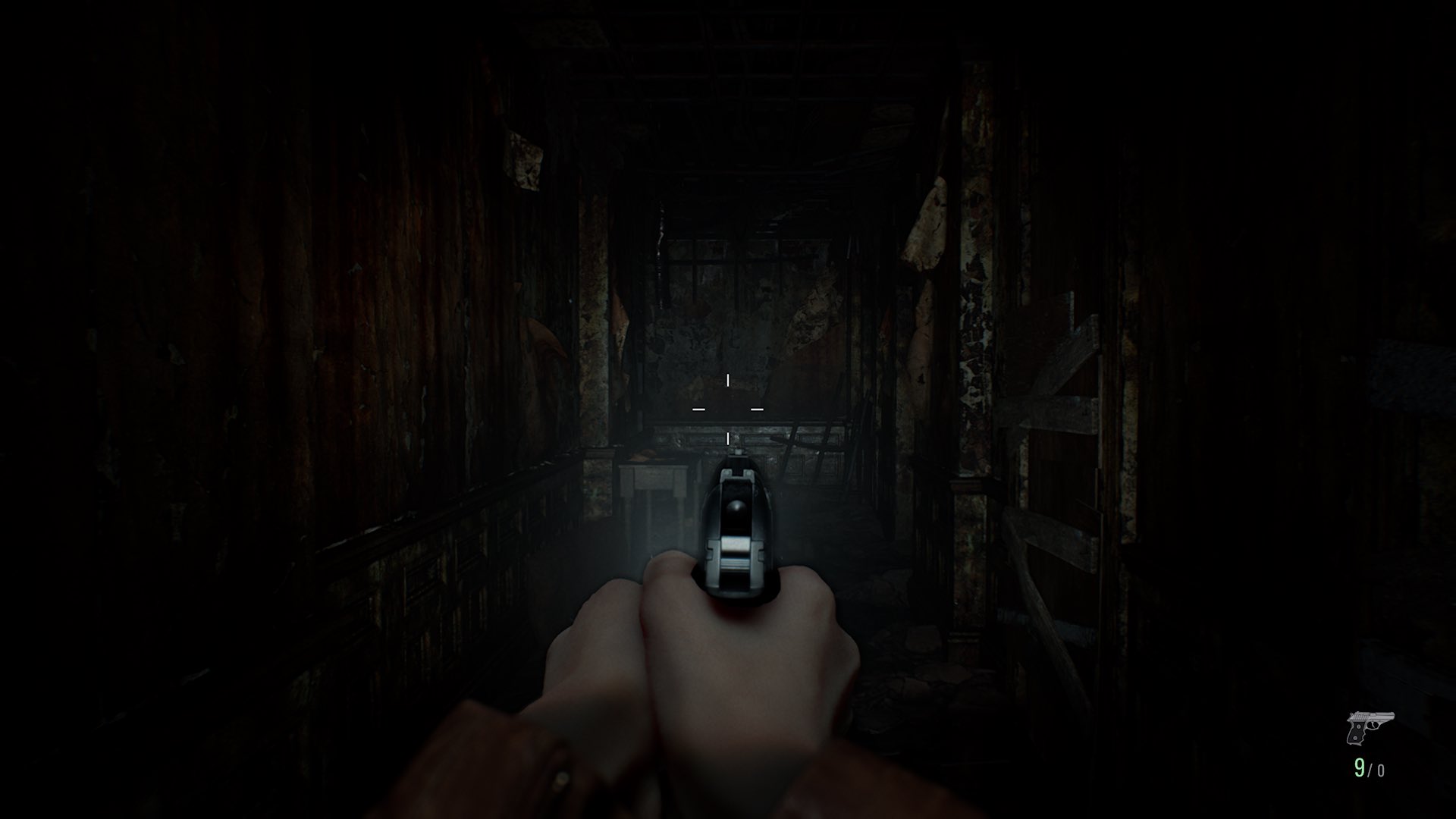
With Grace, the pressure is constant. Even when the game slightly loosens its grip, it never truly restores any sense of safety. Obtaining a weapon does not represent a rupture, but an extension of the problem. The handgun does not allow the player to cleanse the environment, only to understand it more effectively. Ammunition is far too scarce to sustain prolonged confrontations, and healing items, especially on standard difficulty, never fully compensate for mistakes. Everything is designed to keep the player trapped in a permanent state of scarcity. The experience almost begins to resemble a strategy game. There is this constant sensation that one never possesses enough to survive, even if experienced players may occasionally bend the system to their advantage. Even the mechanics that might suggest empowerment ultimately reinforce this logic.
Crafting, for instance, never overturns the balance. Producing something always implies sacrifice. To craft is to renounce. Creating ammunition or a lethal injection means accepting the absence of a potentially crucial resource later on. What dominates this first section is the reading of situations. Observing movement patterns, anticipating reactions, understanding what attracts or diverts attention. Resident Evil Requiem does not offer a fully structured stealth system, because it instead asks the player to construct solutions directly through the environment itself. A room is never neutral. On the contrary, every space functions as a device to exploit. These are arenas where every element, a light source, an obstacle, an opening, can become part of an improvised strategy of avoidance. Certain sequences crystallize this philosophy particularly well. Crossing an occupied room without triggering a reaction, exploiting enemy behavior to create an opening, sometimes accepting patience rather than forcing progress. The game imposes a slow, almost hesitant temporality that sharply contrasts with the instincts cultivated by the more action oriented entries of the series.
Within this framework, the behavior of the infected introduces some genuinely interesting variations. Certain enemies react to their environment in unexpected ways, as though fragments of their humanity still remain. They are no longer simple obstacles, but dynamic elements that the player can influence. Some are drawn toward light and may relentlessly attack a switch. Others react violently to noise, allowing the player to provoke clashes between enemies. Others appear obsessed with cleaning, leaving their designated area in order to wipe away bloodstains, fundamentally altering the player’s perception of space. Unfortunately, this idea is never fully explored, partly because of the adventure’s dual structure. These interactions enrich the experience without ever deeply redefining its rules. They feel more like promises than fully realized systems, to the point where they eventually become almost useless because the player can simply ignore them. The impression is that these mechanics were implemented without ever being pushed to their full conceptual potential.

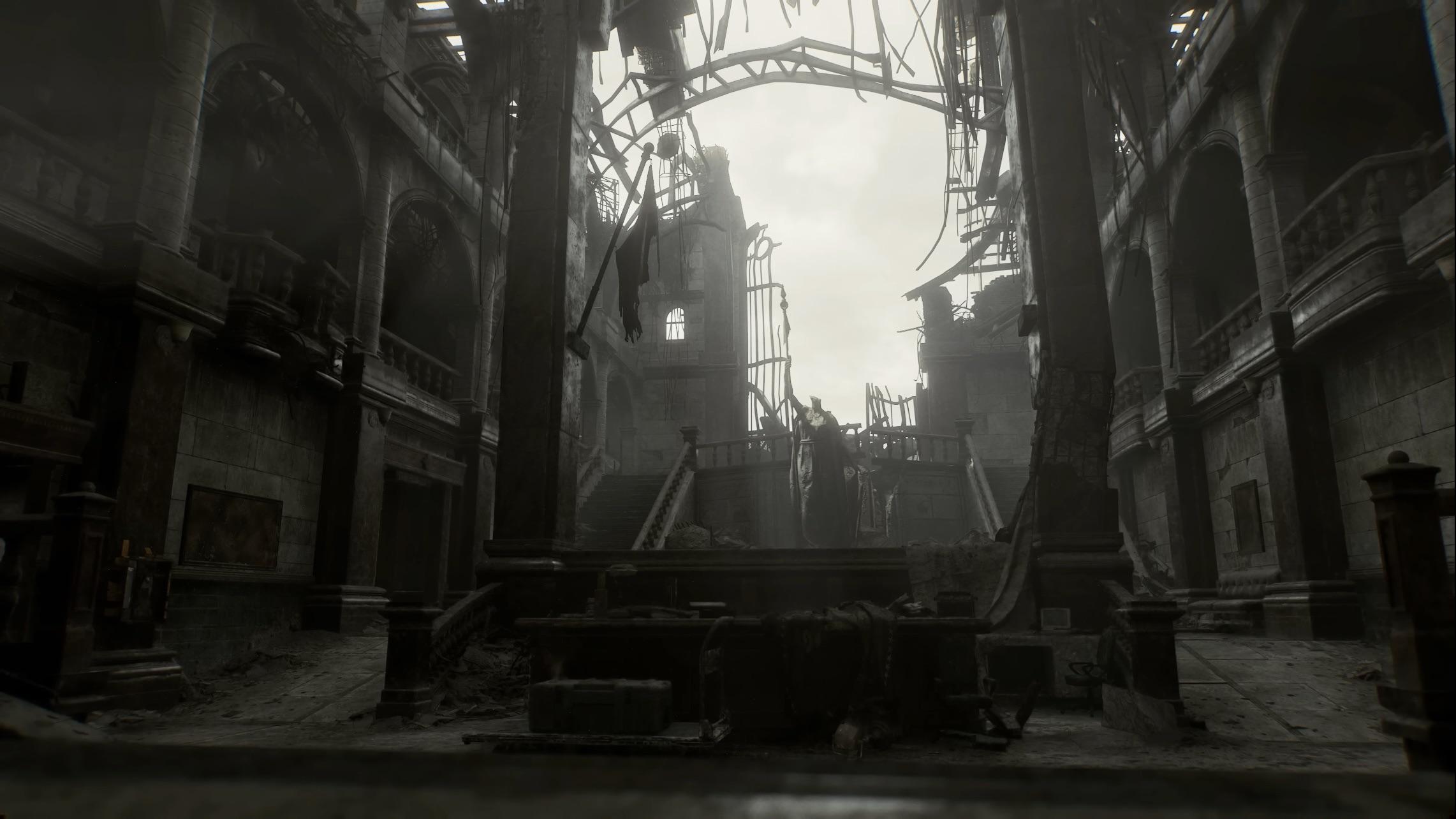
At the same time, the game’s direction reinforces this vulnerability. The RE Engine once again proves itself to be an exceptionally effective tool for interior environments. The Rhodes Hill Care Center is a remarkable location. Its structure is built around loops, shortcuts, and interconnected areas. The player does not simply move forward, they learn the space, internalize it, and rely on that knowledge with every decision. This constant movement contributes to a gradual sense of appropriation while maintaining a permanent uncertainty. Without exaggerating, the location stands alongside some of the franchise’s most iconic environments, such as the Spencer Mansion or the Raccoon City Police Department. Yet it is above all the sound design that gives the experience its full density. The absence of music during many sequences may surprise, even frustrate, considering how many memorable compositions the series has produced. And yet, this choice liberates the soundscape. Distant noises, scraping sounds, and creaking floors become constant warning signals. The slightest zombie groan immediately triggers anxiety. At the center of this environment, Grace emerges as a believable presence. Capcom succeeds in creating a tangible character, far more embodied than Ethan Winters. Her strained breathing, hesitations, slight stutters, and physical reactions fully contribute to the experience. They are not merely elements of presentation, but genuine vectors of identification.
Fear no longer emerges solely through visual perception, but through the character’s own body. That is what gives these sequences their particular intensity. They reconnect with a form of intimate horror where tension no longer stems from spectacle, but from lived experience. And yet, despite this coherence, a limitation eventually appears, tied to the absence of evolution at the heart of the formula. Where the series has traditionally excelled at creating a tangible progression, a subtle yet genuine rise in power, Grace’s segment remains surprisingly static. While this decision preserves tension, it also prevents her arc from reaching any real amplitude. Grace’s progression is almost nonexistent. Her arsenal is limited to only two weapons, and the absence of true boss encounters reinforces that impression. The confrontation against the girl resembles a puzzle more than an actual fight. In the end, this creates a half of the game that lacks scale. The desire to craft a visceral survival horror experience is obvious, but the game seems hesitant to fully exploit the foundations it has established for itself. Grace embodies a demanding and rigorous vision of the genre, one that rejects excess and easy gratification. It is a compelling vision, but by remaining so restrained, it ultimately feels as though it never fully reaches what it promises. That is where Leon S. Kennedy enters the picture, reintroducing another interpretation of the franchise’s legacy. A more direct interpretation, and one we wish had been handled with greater control.

Leon S. Kennedy and the Roundhouse Kick
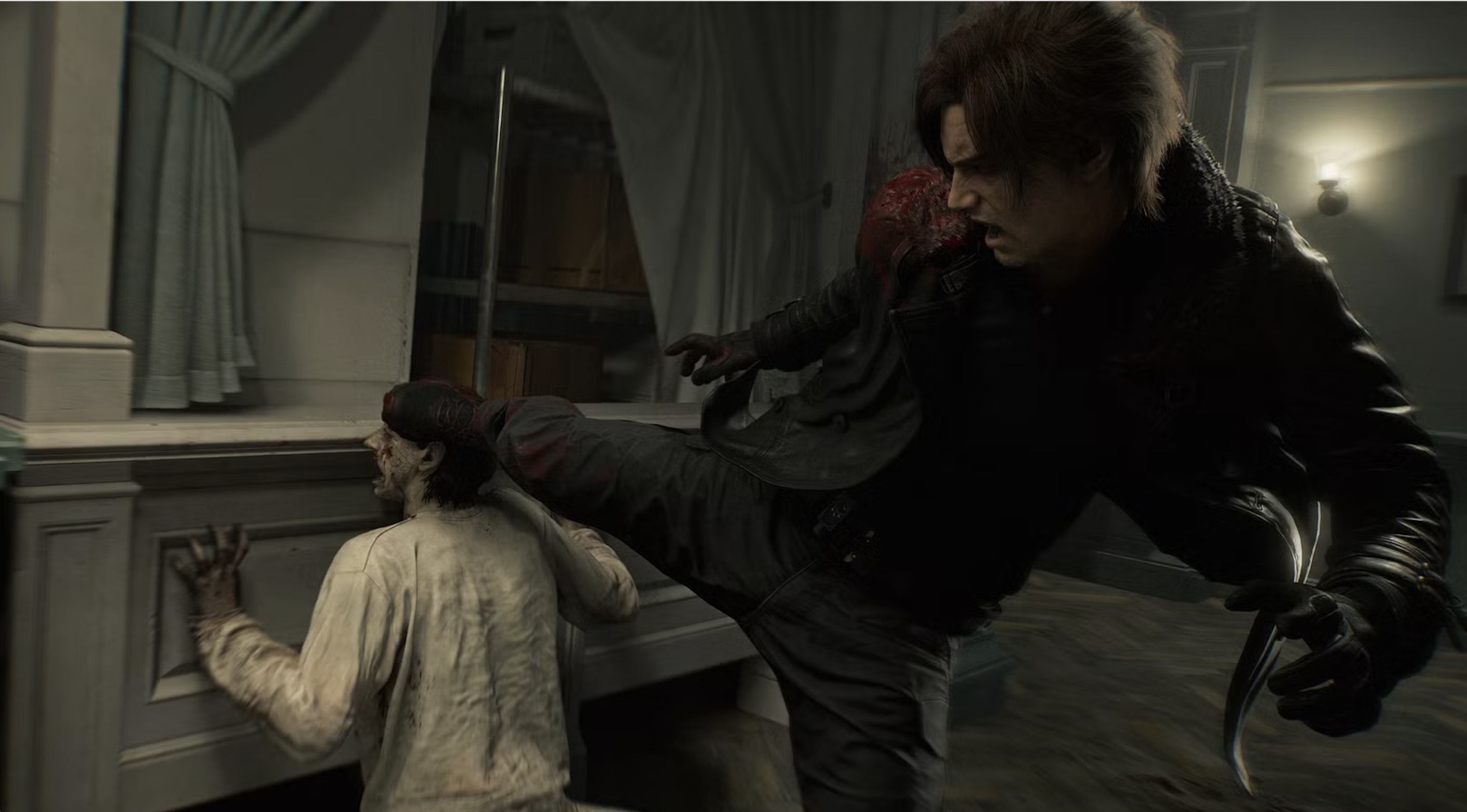
With Leon S. Kennedy, Resident Evil Requiem radically changes identity. By placing us in control of this highly trained secret agent, a central protagonist of the franchise since 1998, the game invites us to embody an entirely different way of experiencing this universe. Where Grace endures, Leon dominates. He does not avoid enemies. On the contrary, he confronts them head on. You have almost certainly seen the countless humorous edits circulating online, all built around the same idea: it is Leon who terrifies the monsters, not the other way around. With him, the gameplay shifts toward a resolutely action oriented philosophy. The pacing accelerates, the direction becomes more spectacular, almost over the top. The influence of Resident Evil 4 is unmistakable here, particularly in the way combat becomes a space of expression rooted in arcade sensibilities. Leon is a one man demolition squad.
His arsenal, which becomes remarkably generous as the adventure progresses, combined with his melee attacks and that indestructible hatchet, transforms encounters into genuine choreographies of destruction. Where every confrontation as Grace represented a setback, the exact same situations become, with Leon, moments of catharsis. Rooms filled with monsters turn into playgrounds waiting for us to unleash a bloody spectacle. In many ways, Leon embodies one of the central problems that has haunted Capcom’s franchise since the early 2000s: how can Resident Evil still generate fear or tension while continuing to rely on characters who have effectively become superhuman action heroes?
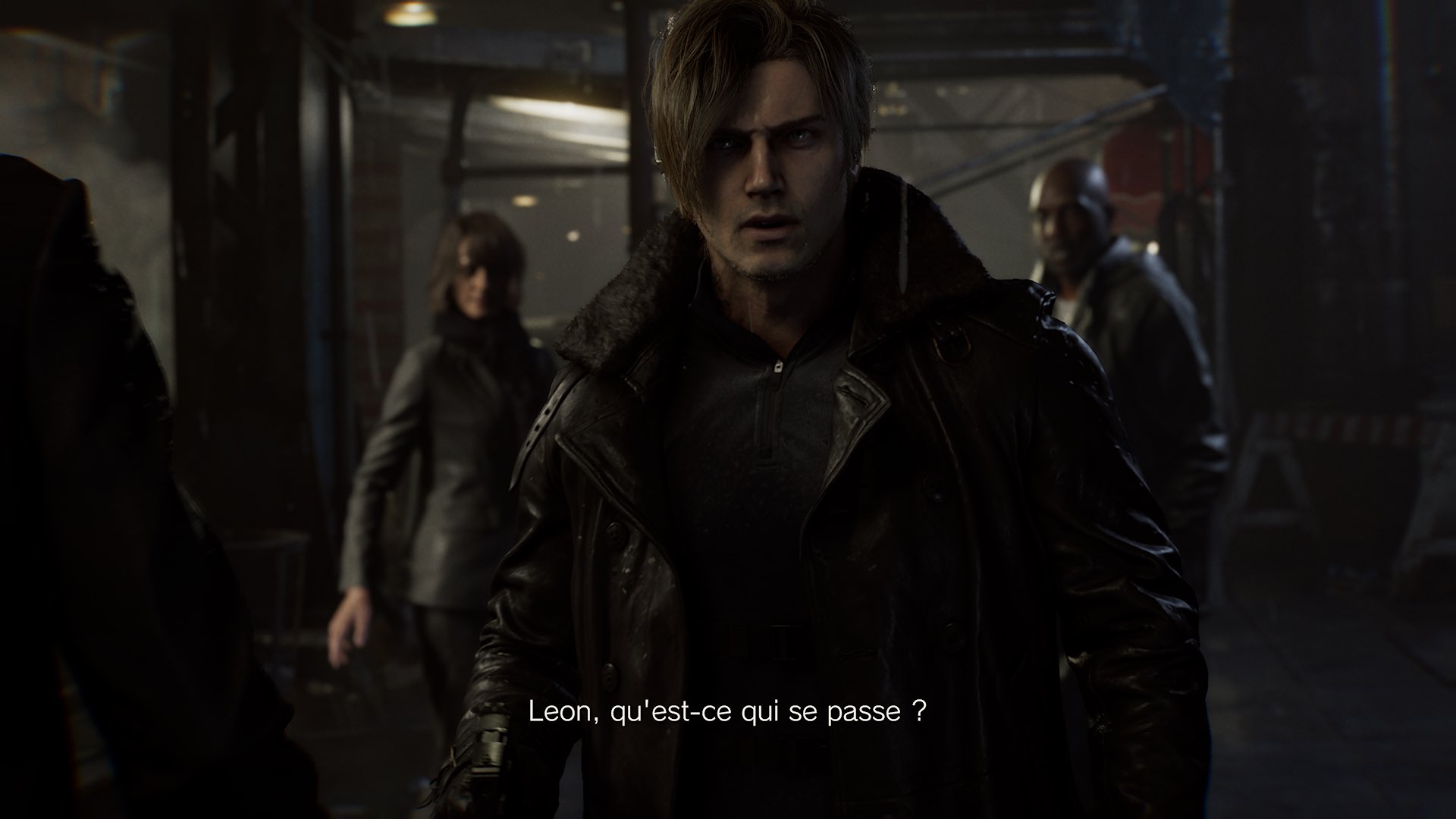
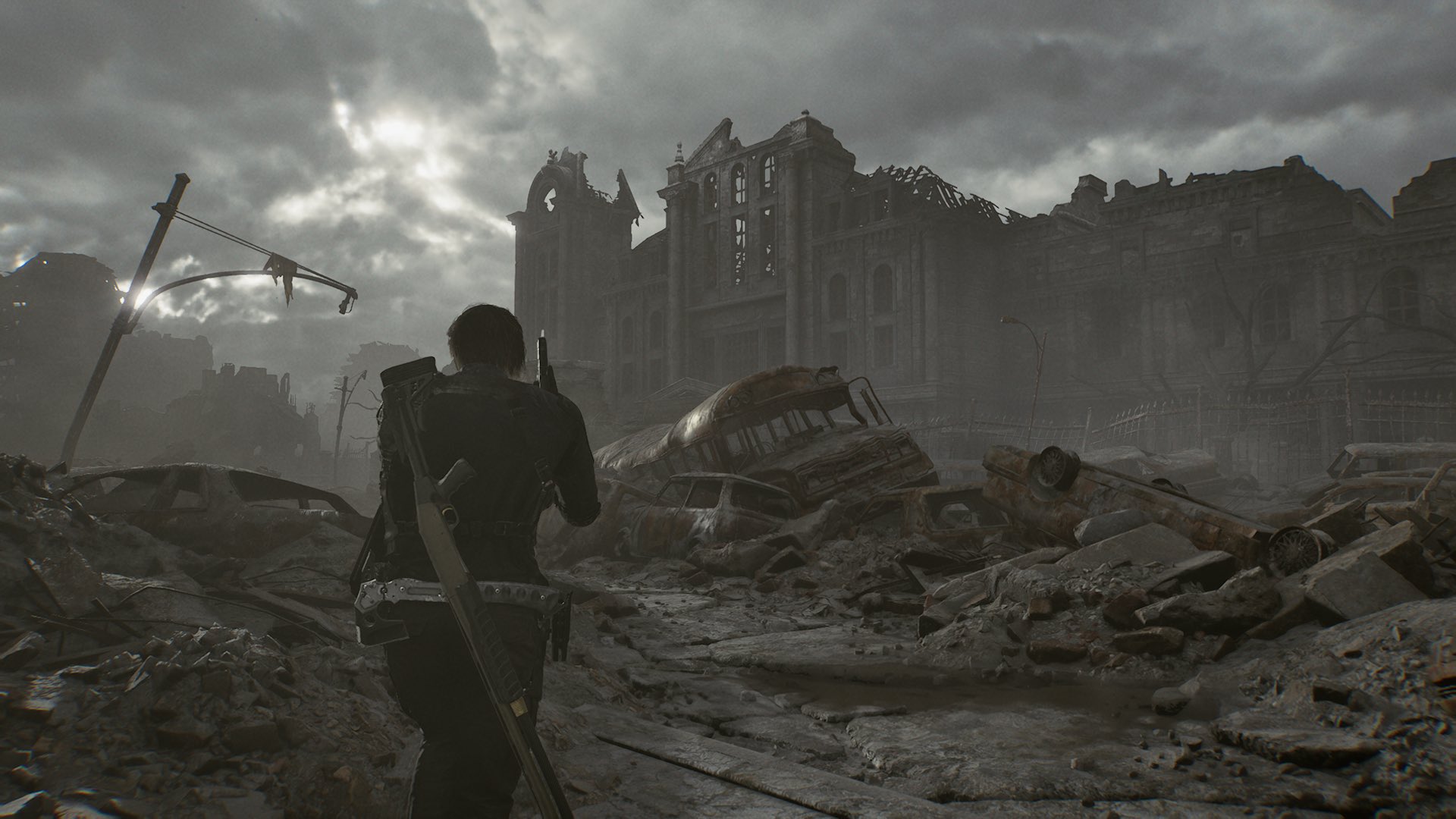
In the first part of the game, these sequences, distributed within Grace’s journey, serve to briefly relieve the experience. They ease the pressure and soften a constant tension. But this counterpoint finds its full expression in the long segment dedicated to Leon S. Kennedy, set within the ruins of Raccoon City. The change of scenery is immediate. Where the care facility confined the player within its labyrinthine level design, the ruins of the infamous Midwestern city are far more open. The streets are wide, exposed, less suited to intimate horror and much more aligned with action and exploration. The play space expands, and with it, the range of possible approaches. This shift is accompanied by new mechanics replacing those tied to Grace. Familiar systems for anyone who has traversed Resident Evil 4. Each defeated enemy grants points that can be spent to buy weapons, sell items, and upgrade equipment. Progression is less about solving puzzles and more about direct interaction with the environment, such as shooting a metal hook to collapse a structure and open a path. In this logic, level design largely abandons its loop-based, interconnected structure. The metroidvania-like approach fades in favor of a more linear progression.
While this segment impresses through its immediate effectiveness, it also leaves a lingering sense of incompleteness. Everything works, yet everything also feels slightly too superficial, as though this solid proposition is never fully explored. Once again, this “appetizer” feeling is present across both faces of the experience. I cannot help but feel it should have gone further: more locations, more variations, more memorable confrontations. The bosses in particular lack presence and dramatic weight. They do not feel embedded in the narrative in the way the series has accustomed us to with figures like Lisa Trevor, William Birkin, Nemesis, or Jack Krauser. This is perhaps where the issue is most apparent, because Leon S. Kennedy, by what he represents, demands a stronger rise in intensity and a more pronounced sense of drama. He deserved a spectacle worthy of his status and of the legend built through Resident Evil 2 and Resident Evil 4. Resident Evil Requiem brushes against that promise without ever truly grasping it. What remains is not a straightforward disappointment, but something more diffuse: the sense of an obvious potential held back, as though the game refuses to fully commit to what it could have become, like a version of Resident Evil 6 that is more controlled in form, but fatally lacking in madness.
The ghost of Resident Evil 6
A ghost has begun to haunt my mind after finishing Resident Evil Requiem. An idea that has steadily grown over the past weeks. It seems increasingly clear to me that this new installment from Capcom belongs to the wake of a work the company both seems to regret and distrust. That spectral presence is Resident Evil 6. Long dismissed, often mocked, the 2012 entry remains one of the most radical attempts ever made by Capcom to redefine the identity of its franchise. It was a chaotic, overflowing, sometimes incoherent work, yet driven by an almost reckless generosity. Everything in Resident Evil 6 leaned toward excess. Three main campaigns, six protagonists each with distinct gameplay identities, and a structure designed around cooperation. All of it layered with an abundance of situations, environments, and tonal shifts. Within minutes, the player could move from a vehicular chase to hunting a giant serpent in an urban setting, before transitioning into heavily scripted sequences that attempted to reclaim horror. The game did not seek unity, but juxtaposition, forcing together contradictory visions of the series.
With Resident Evil 6, there was an almost naïve desire to embrace every facet of the franchise, even at the cost of losing coherence. And it certainly did lose coherence. Yet within that chaotic disorder, there remained a fragile but real internal logic, carried by a narrative that, beneath its usual B-movie excess, managed to give meaning to its characters’ trajectories. The redemption arc of Chris Redfield, broken by failure after years of combat yet still willing to step forward for future generations, offered a meaningful entry point into the saga’s direction and into the broader narrative arc involving Albert Wesker. The same applied to the sense of duty and survivor’s guilt carried by Leon S. Kennedy, which found a surprisingly touching resolution in his relationship with Ada Wong. With the emergence of Jake Muller and Sherry Birkin as field agents, the series seemed ready to look forward, before later entries gave the impression of having lost any clear narrative direction. It is simple: since Resident Evil 6, Capcom has introduced a multitude of characters, organizations, conspiracies, and counter-conspiracies. In many ways, everything that followed feels comparable to the post-Thanos phase of the Marvel Cinematic Universe: each new entry opens narrative threads that are never truly followed up. While Resident Evil’s plots have always embraced absurdity, its underlying lore once maintained a genuine structural coherence that commanded respect. That architecture no longer exists, and Resident Evil Requiem, with its retcons and easy fan service, only reinforces that collapse. I am thinking here, of course, of the shameful arc surrounding Ozwell E. Spencer, which casually undermines thirty years of worldbuilding.
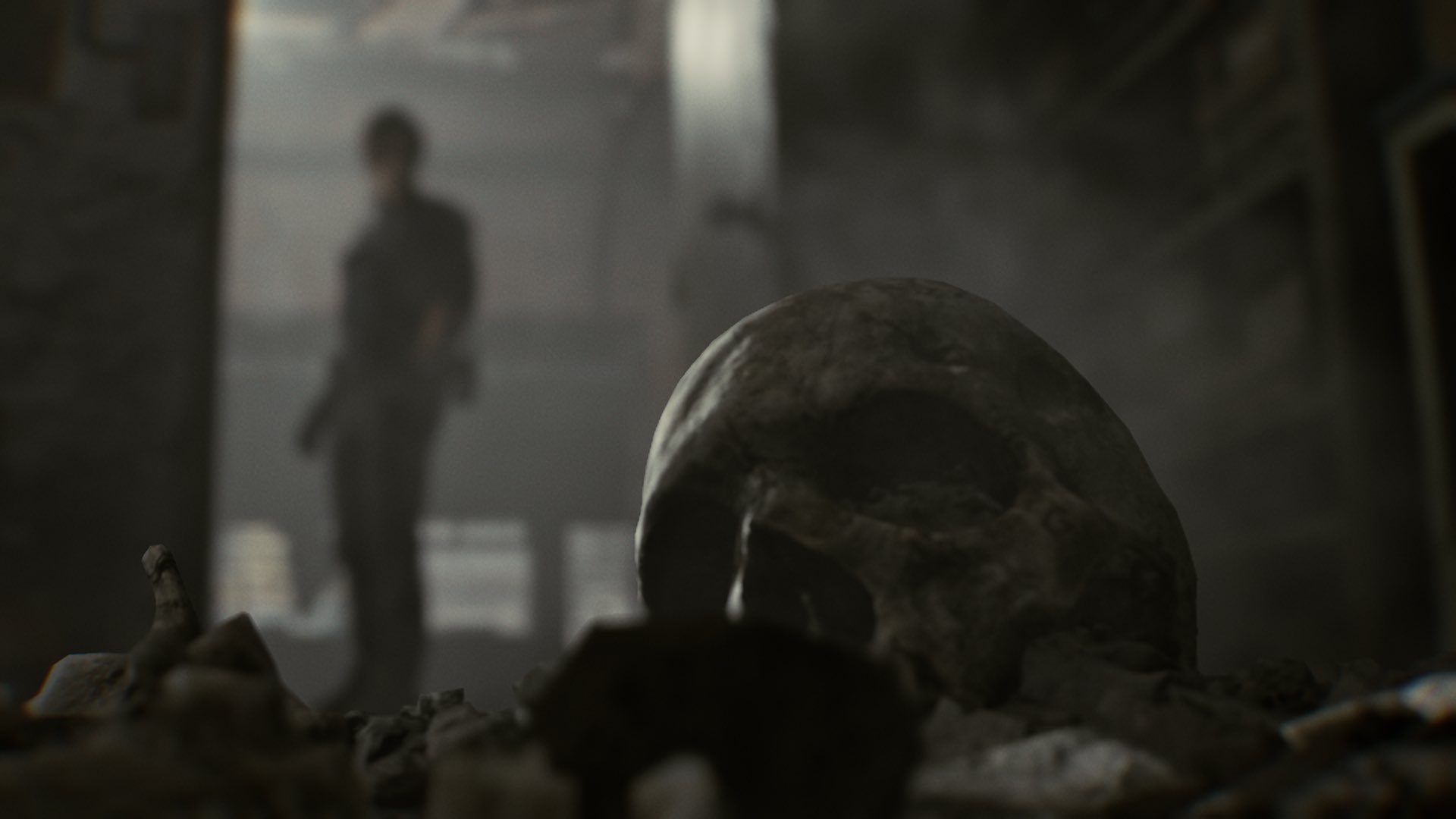
It is perhaps in its gameplay systems that Resident Evil 6 revealed its true singularity. Where Resident Evil Requiem segments its intentions, Resident Evil 6 integrated them into a single, global logic. Its bestiary, gargantuan and often grotesque, was built on a simple yet fertile idea: dynamic mutation. Enemies did not merely absorb damage, they reacted and transformed depending on how they were struck. Targeting an arm could trigger the emergence of an offensive growth, while shooting the legs might result in a lower-body mutation into a vaguely arachnid form. This system, deployed throughout the entire experience, gave combat an unpredictable, almost playful dimension. Combined with the game’s impressive movement options, it produced exceptional moment-to-moment gameplay. Yes, the pacing of the campaigns—except for Chris’s—was often uneven, but the gameplay remained a nectar for many players. Anyone who experienced the game in co-op on higher difficulties or in Mercenaries mode can attest to it. Few games deliver such exhilarating gunfights. Running toward a monster, sliding between its legs, rolling onto the ground, and finishing it with a perfectly timed burst from a submachine gun remains a kind of pleasure I will never deny.
In contrast, Resident Evil Requiem appears as a restrained work. More controlled in form, rarely missing its targets, more coherent in its direction and pacing, it corrects many of its predecessor’s excesses. But in doing so, it also seems to evacuate what made it distinctive. Where Resident Evil 6 overflowed, Resident Evil Requiem contains, carefully avoiding stepping outside its own framework. Where one embraced fragmentation, the other prefers measure. The result is paradoxical: a more readable and elegant game, but also one that refuses to risk stepping beyond its own boundaries. This impression is reinforced by its bicéphalic structure, which could have embodied a genuine ambition of coexistence. Instead of allowing its two visions to interact, however, the game merely juxtaposes them without meaningful connection. Grace and Leon S. Kennedy embody two legacies, two ways of inhabiting the series, yet never manage to produce a synthesis. Resident Evil Requiem hesitates constantly, as though constrained by the fear of destabilizing its own structure or alienating a player base that simultaneously demands more Leon while criticizing action excess outside of Resident Evil 4.
This lack of boldness extends far beyond the franchise itself. It reflects a broader shift within the industry. In an increasingly constrained economic environment, marked by rising development costs and growing dependence on commercial success, risk-taking has become rare. Experimentation and audacity, once the driving forces of major franchises, are gradually replaced by structural caution. The goal is no longer to surprise, but to secure. Resident Evil Requiem perfectly embodies this tension. It is the product of undeniable craftsmanship, technical and ludic mastery refined over many years. It has few flaws, and it is difficult to argue that it fails at what it sets out to do. But it also reflects an era in which ambition is no longer measured by the scale of a gesture, but by its ability to avoid error. By correcting the excesses of Resident Evil 6, it also erases its extravagance—the instability that, for all its flaws, made it a deeply living work. The ghost of Resident Evil 6 is therefore not only that of a reviled entry returning to haunt its successors. It is the ghost of an era in which the series still dared to put itself at risk, even at the cost of losing its way. Faced with it, Resident Evil Requiem appears as the elegant tomb of a work fully aware of its legacy, capable of quoting it, sometimes even honoring it, but seemingly unwilling to extend its momentum.
The trap of fan service
There is in this new entry a form of suspicious comfort, suggesting that the project’s aim is not so much to move forward as to remember. As though, as the saga grows older, it keeps turning inward until it becomes trapped within its own mythology. Before even starting my journey alongside Grace and Leon S. Kennedy, I recall a friend warning me that the game was to the franchise what The Rise of Skywalker is to Star Wars. A diagnosis that, in hindsight, feels unsettlingly accurate. References are everywhere and actively structure the experience. Every situation seems to summon a precise memory, a familiar image, a fossilized fragment of the player’s past. The care facility tries to reconnect with the legacy of the Spencer Mansion or the Raccoon City Police Department. The “Girl” attempts to position herself in the lineage of Mr. X or Jack Baker, among those oppressive, relentless figures that turn progression into constant flight. While this desire to anchor the experience in its heritage is not unpleasant in the first half of the game, it quickly stops functioning as homage and becomes repetition. The callbacks cease to be rewards and turn into crutches, on which the game leans with increasing instability. The return to Raccoon City fully participates in this logic. These streets, once filled with a unique tension and identity, are replayed and recontextualized, but drained of substance. They function like video game madeleines, fragments of memory meant to trigger immediate recognition. Yet this recognition never goes beyond surface level. It produces neither unease, nor vertigo, nor genuine reactivation of memory.
I would be lying if I said the first minutes in the ruined streets of Raccoon City did not affect me. The child of the 90s that I am could not remain indifferent in the face of this devastated Midwestern American city. I was genuinely moved while walking through these familiar streets still covered in Umbrella advertisements. Yet that feeling quickly gave way to the impression of moving through a generic set devoid of memory. When a game leans so heavily into fan service by allowing players to revisit iconic locations, it must go all the way, as Hideo Kojima did with Metal Gear Solid 4: Guns of the Patriots by returning to Shadow Moses. Capcom could have played with memory by staging multiple post apocalyptic versions of the city’s iconic locations, but nothing of the sort happens. Outside of the police station and the Kendo Gun Shop, Raccoon City is just a dusty urban backdrop. The suspended metro idea is even lifted almost directly from The Evil Within. In many ways, this section of Resident Evil Requiem lacks identity. It resembles a The Last of Us style environment, but less refined, layered with a muddy brown filter. Where the series once excelled at disorientation and dread, it now seems to aim for reassurance. Yet few cities are as iconic in video game history as Raccoon City. A return to it should have demanded boldness and excess, even at the risk of failure. It should have embraced danger rather than repetition. The motorcycle chase sequence perfectly illustrates this inability to break free from its own frame. It invokes the excess of entries 4 through 6, yet its complete lack of danger reduces it to mechanical emptiness, a mere illusion of intensity.
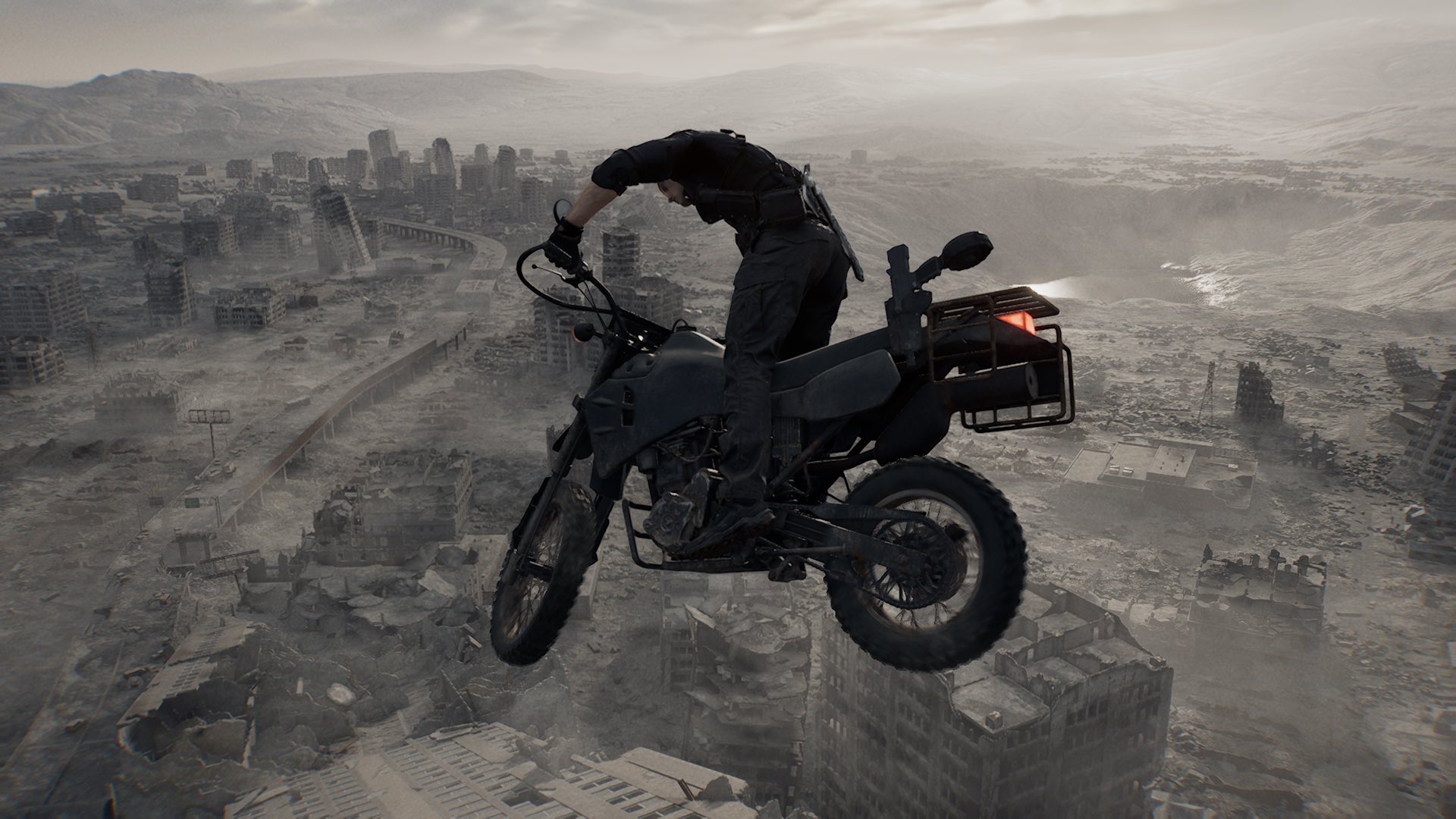
The same observation applies to the characters. Leon S. Kennedy, a central figure of the saga, appears here locked in a narrative loop from which he cannot escape. His survivor’s guilt, already extensively explored in Resident Evil 6 and in the animated films, is once again brought back without any real evolution. It is no longer a dramatic engine, but a recycled motif stripped of its original power.
The handling of antagonists and bosses further reinforces this impression. Aside from the “Girl” and Doctor Gideon, no enemy truly integrates into the narrative. Where the series once gave weight and identity to its monstrous figures, whether Lisa Trevor, William Birkin, Nemesis, or Jack Baker, Resident Evil Requiem instead accumulates presences without depth. Everything is thrown at the player in a logic of unchecked accumulation.
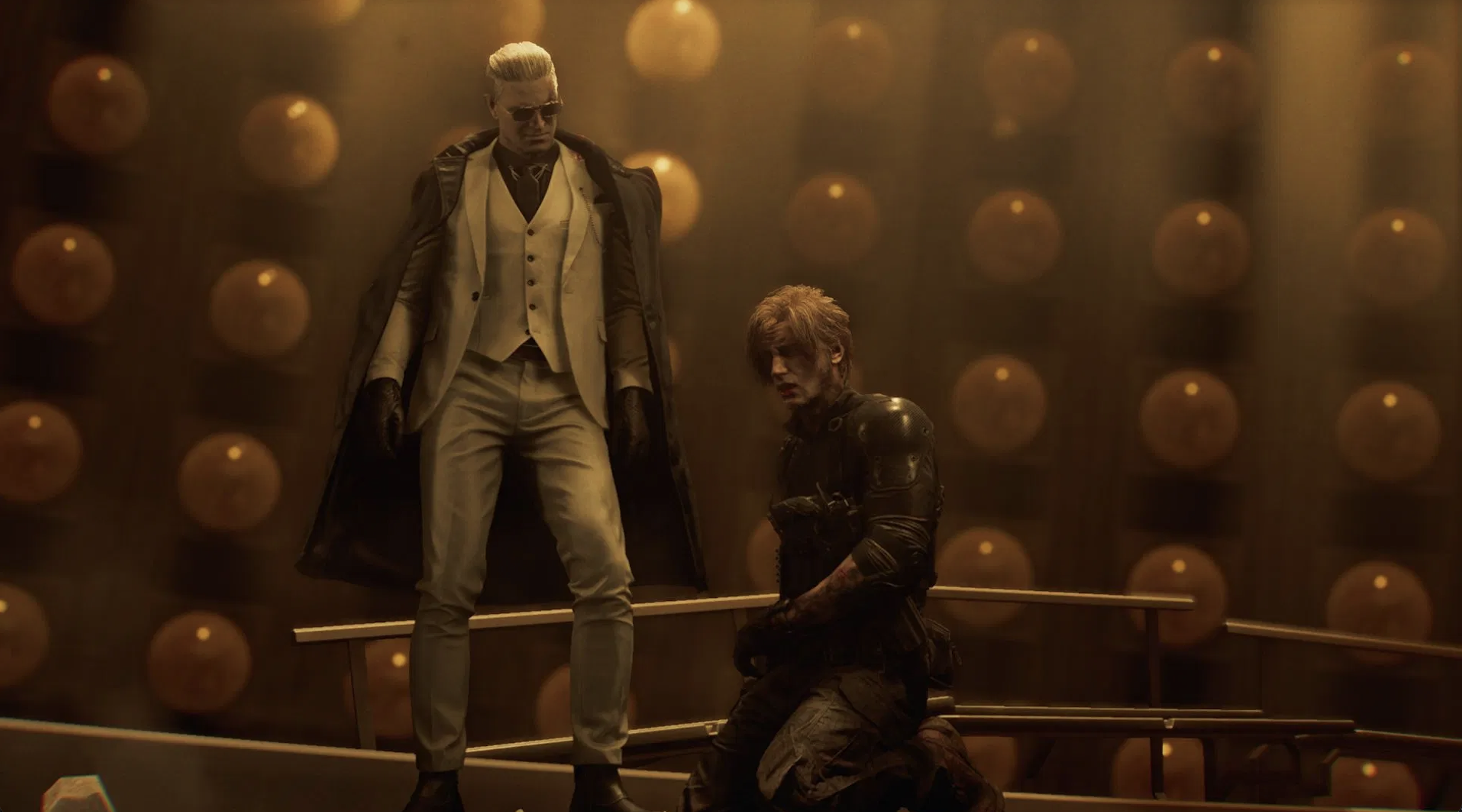
The return of Mr. X is the most striking example. His reappearance, loaded with all the symbolic weight of 1998, is dispatched in a matter of minutes, like a reflex gesture devoid of any real construction. The same applies to Hunk, exhumed from Capcom’s archives without any narrative justification for his presence. Why is he here? What does his return even mean? The game does not seem to care, as long as it can trigger a nostalgic lever. The case of Zéno is perhaps even more revealing. This character seems to exist solely to echo the shadow of Albert Wesker, without ever daring to engage with that legacy. There is something strangely meta in the fact that he is explicitly framed as a pale imitation. But this apparent self-awareness does not conceal the emptiness beneath it; on the contrary, it becomes a symptom of the inability to create new memorable figures. The past is no longer a resource, but a makeshift cover for Capcom’s difficulty in defining a clear direction for the future of its franchise.
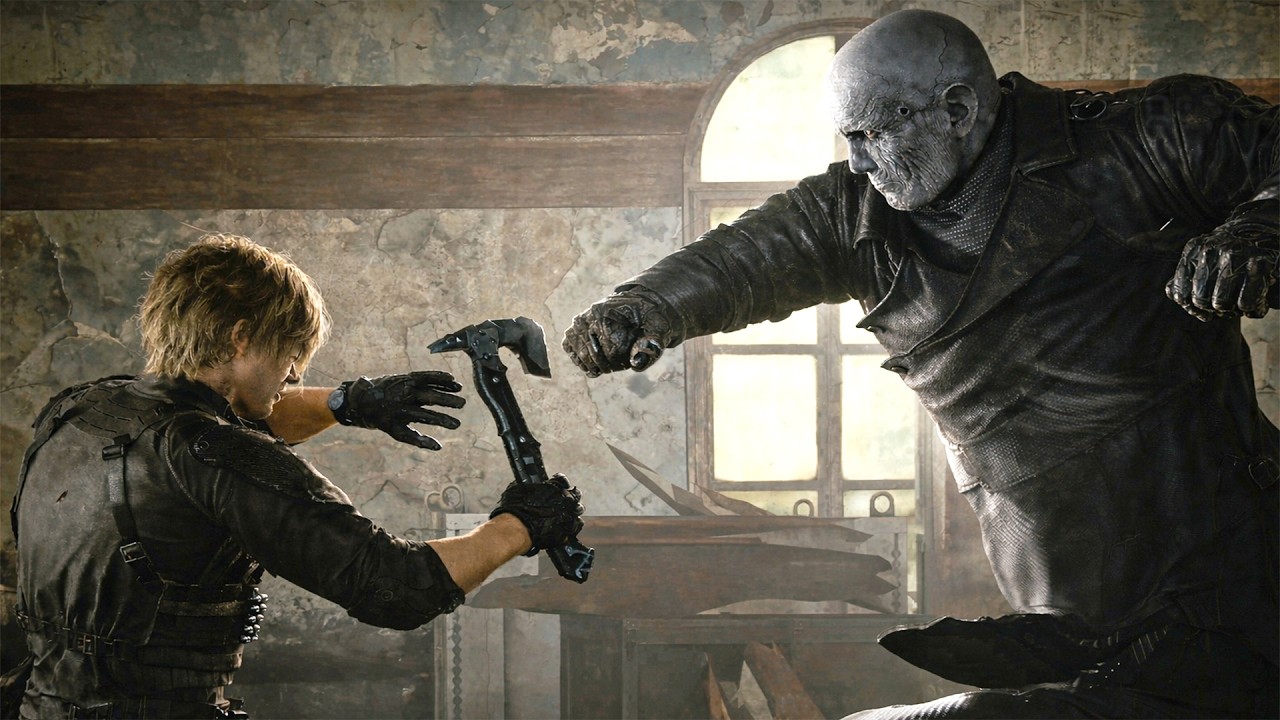
This phenomenon is not insignificant. It emerges within the context of a saga that now spans more than thirty years of history. Thirty years of success, mutations, and occasional missteps. An immense legacy that functions both as a strength and as a burden. By constantly trying to honour its past, the game ultimately becomes trapped within it. This is where the true trap of fan service lies. Not in the existence of references, which are inherent to long-running series, but in their accumulation and their purpose. When they stop being occasional touches and become the very substance of the work, they reveal a form of creative caution. They signal an inability to project forward, to invent, to take risks. Capcom seems to be evolving here within a controlled but increasingly narrow comfort zone. Nothing is truly failed, but nothing truly transcends itself either.
In many ways, Resident Evil Requiem crystallises a broader feeling I associate with Capcom’s recent output since the rise of the RE Engine. I never have a genuinely bad time, but I rarely leave profoundly affected either. With the notable exception of the Resident Evil 4 remake, these productions often lack a certain sense of madness, momentum, and risk-taking. I almost find myself missing the Capcom of the Resident Evil 6 era, of Lost Planet or Asura’s Wrath, a Capcom capable of losing itself, of making mistakes, but always with a sense of flamboyance. Here, I am faced with a work that does not merely look back, but chooses to inhabit its own past. And by living too long in its memories, it may have forgotten how to build a future.
When I finish with Resident Evil Requiem, I am left with an impression that is difficult to shake. I am aware of having spent many hours in front of a controlled, often engaging work, occasionally brilliant in the way it reconnects with forgotten sensations. I enjoyed returning to it. I enjoyed rediscovering that specific tension unique to the series, and the way it generates fear. I also enjoyed, at times, the more direct generosity of its action sequences, that immediate pleasure that comes from fully controlling a character like Leon S. Kennedy. Resident Evil Requiem knows what it is doing, and it does it well. But once the emotion fades, another, more persistent and unsettling idea takes hold. Everything feels in its place, perhaps too much so. As though every element has been carefully calibrated to never overflow, never risk breaking the balance. This precision ultimately produces an unexpected effect: it smooths out what once made the franchise distinctive. Where Resident Evil could be excessive, clumsy, sometimes even absurd, but always driven by an uncontrollable energy, Resident Evil Requiem feels contained, almost restrained, constantly aware of what it represents.
More troubling still, this restraint seems to silently echo the ghost of Resident Evil 6. As though Resident Evil Requiem were constantly trying to avoid its excesses, to never fall into its much-criticized flamboyance, but in doing so ends up producing the opposite effect. Where its predecessor erred through excess, this entry locks itself into a kind of clinical cleanliness. It sometimes edges toward the same sense of spectacle, but always pulls back at the last moment, as if it never dares fully embrace its own momentum. Perhaps this is where the real absence lies, not in what the game accomplishes, but in what it refuses to become. The experience lacks relief, like a dish whose flavours are too muted to linger on the palate. The entire project seems to forbid itself from fully exploring its own contradictions. By striving to stand perfectly upright, Resident Evil Requiem ends up missing that essential grain of madness, that necessary imbalance that transforms a solid work into an unforgettable experience. So yes, I enjoyed this ninth entry. But it leaves me with the strange feeling of having witnessed a work that looks at its past with almost excessive clarity, without ever allowing itself to break free from it. Resident Evil Requiem may be the reflection of a franchise that has learned from its mistakes, but in correcting them too carefully, it may also have lost sight of what once made it truly singular.