
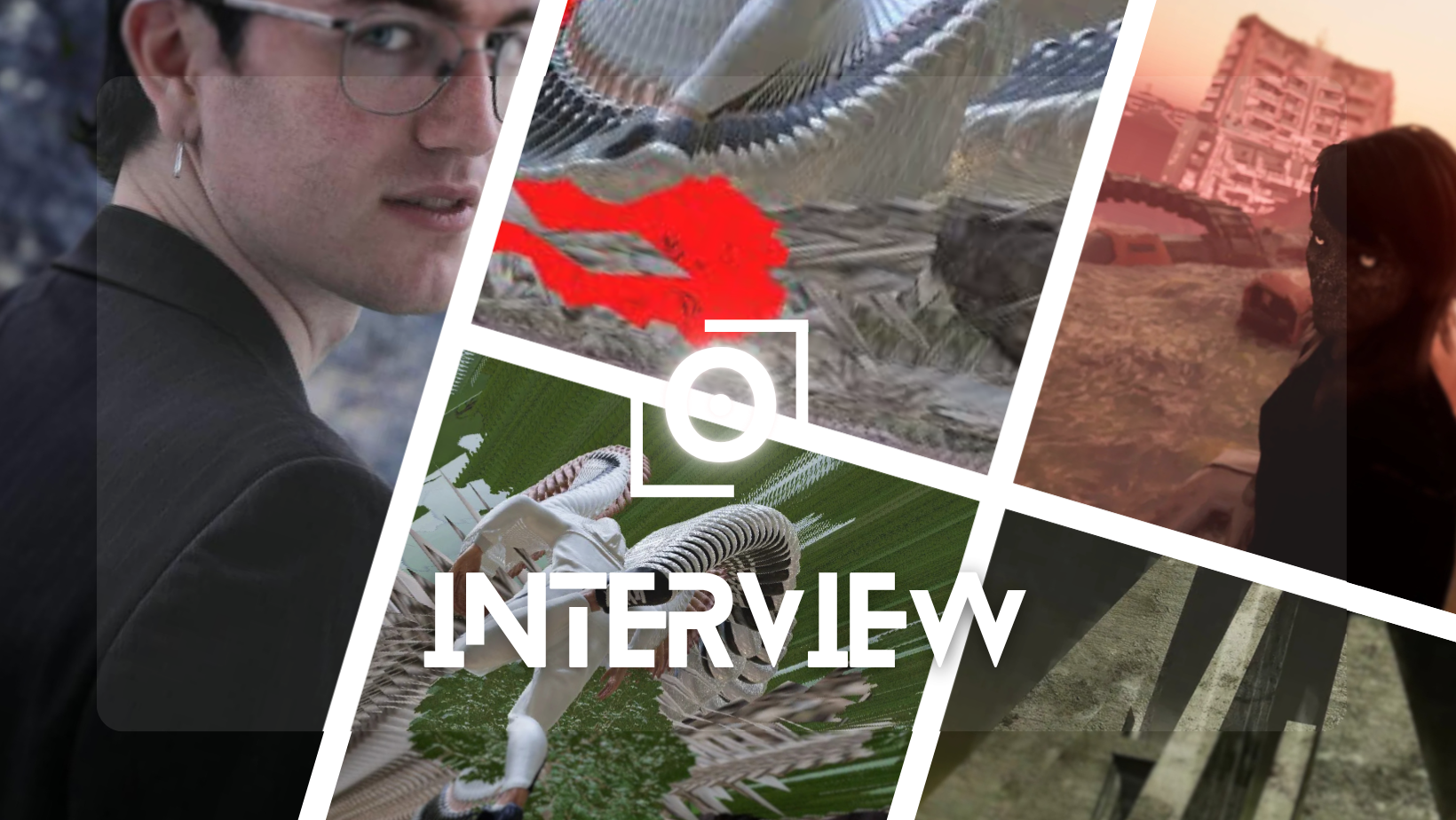
Nino Filiu describes himself as a tech artist, but by his own admission, the label is a loose description chosen to fit within a Twitter bio. A Télécom Paris engineer who spent time in Berlin, a former web developer turned technical support for 3D artists, a teacher at ICAN, and co-founder of Distraction: his journey tells a story he wishes he’d heard ten years earlier, that you can do math and art at the same time, and that it works. We sat down with him to talk about ludonarrative coherence, alternative controllers, A.MAZE in Berlin, and what it’s like to start a collective with friends rather than with a business plan.
You can also listen to this interview as a podcast!
Point’n Think: What’s your earliest memory of a video game?
Nino Filiu: Trackmania. It might come as a surprise, given that I’m kind of a gamer-intellectual type, but when I was in middle school, I’d get up at 5 a.m. because I wanted to play that game. There’s something about the camera work and the fluidity when you’re going really fast that’s incredibly addictive. And when my grades started slipping, my parents banned video games altogether.
Then there was a “video game winter” at my house. All the socializing my friends did in middle school, “let’s play FIFA during lunch break”, I missed out on. I was under the impression that it was a waste of time. I don’t really feel that way anymore. It wasn’t until much later that I got back into it.
PnT: Is there a game that’s really stood out to you in recent months, a title you absolutely loved?
Nino: Lately, as part of the A.MAZE. pre-selection process, I’ve played about twenty games. Many were a lot of fun, but few really moved me, except for one, Ruminant 4444, by an artist named Murbiu. It’s a pretty psychedelic egg-hatching simulation, hard to describe. What I loved was that when the characters are in pain, you really feel it too.
That’s something video games are sorely lacking: ludonarrative coherence. The fact that the game’s mechanics themselves perfectly align with the creator’s intended message. Often, we get mechanics like “press F to pay your respects,” where just pressing a button makes you sad, happy, or grieving. To me, that makes no sense. Otherwise, why make a video game? You might as well just make a movie. Art made with video games doesn’t really establish its legitimacy, except through arguments like “look, it looks like photography, look, it looks like cinema.” Whereas, in fact, video games are all about putting the viewer at the center. It opens up crazy possibilities.
PnT: You attended Telecom Paris, a very traditional engineering school, and then worked as a developer at startups. At what point did you decide you wanted to get into video games and contemporary art?
Nino: For a long time, video games weren’t part of my life. I’ve always done art; I’ve always drawn. In high school, I got a perfect score in math, physics, and English. Going to prep school wasn’t even an option. I loved both the arts and math, but I told myself: OK, I’ll study math to make money, and do art on the side.
I went to Télécom Paris, then spent a year in Berlin. And up until Berlin, my artist friends were separated by an endless wall from my engineer friends. It was when I got to Berlin that I met artist friends who were interested in my nerdy stuff: “Yeah, the quantum computers you’re studying are interesting. And even the equations, do you find them beautiful?” That was unthinkable to me back then.
After several years as a developer, I realized that you’re not just on the verge of burnout, you’re already bore-out. It’s not about having too much work; it’s about finding your job so unstimulating that even two hours a day is more than you can handle. I decided to be the person who provides technical support for my friends’ projects. And pretty quickly, I’m in a very secure position, because I earn a lot more now than I did when I was an engineer. If I could say something to myself from 10 years ago, I’d say: both math and art—do both at the same time; it’ll work out.
PnT: You describe yourself as a “tech artist,” a term we see a lot in the AAA video game industry but that you use in a very different context. What is a tech artist, to you?
Nino: I was looking for a title that would fit in my Twitter bio, so I went with the one that came closest. If I try to box myself in with a single word, it’ll stifle my creativity. I’m Nino. “Tech artist” is more of an approximation than a definition.
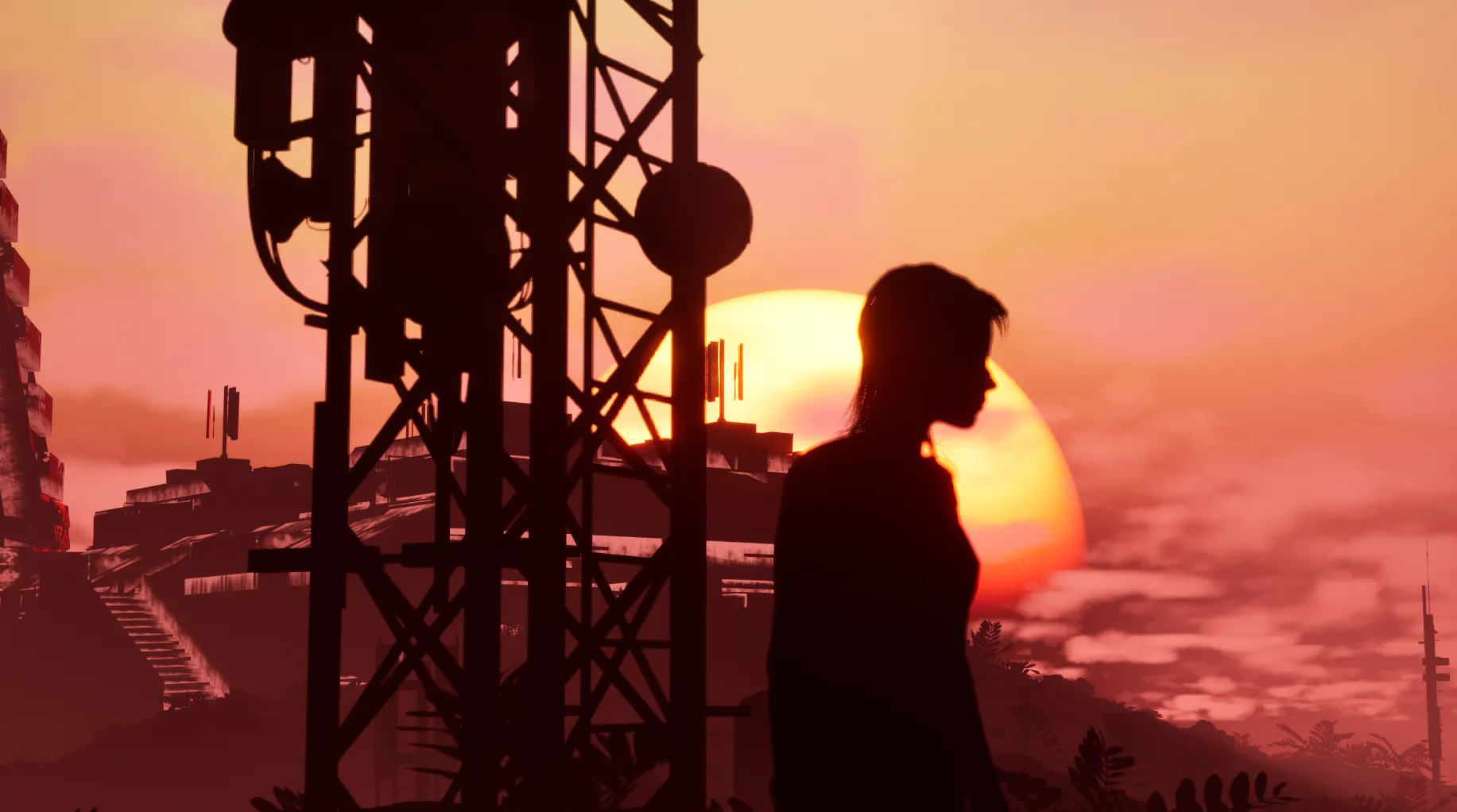
PnT: You teach video game design at ICAN. What are you trying to convey to your students? Do you talk to them about Distraction?
Nino: I teach technical art. But above all, I try to teach a certain creative way of thinking, a certain critical mindset. These are people who have their heads down, who are very good at executing tasks, but who never stop to ask themselves, “But why am I doing this?” ” The typical ICAN student, you put a computer in their hands, and they’ll automatically open Unreal and wonder how to equip a gun on their character in first-person. There’s a crazy amount of preconceptions about video games.
When you ask them to come up with new mechanics that aren’t “click the mouse to make my character walk,” they panic. But it’s that panic that’s infinitely interesting. Responding to that means thinking differently. Sometimes it feels like you’re trying to describe the color red to a blind person. But it’s worth it.
PnT: Distraction is a group of 16 people, with games like My Boyfriend Died In The Backrooms or Yesterday Was My Birthday So I Asked For Legs To Run Away. How does a collective like this actually work? Do you have an office? A Discord server? Do you meet up at a bar?
Nino: The initial idea came from Mélanie Courtinat and Jonathan Coryn, who took a trip to A.MAZE. John had just won the Most Amazing Game award. They discovered a community of art video games in Berlin. Jonathan and Mélanie have been making art video games for quite a while, and back then they were pretty much working on their own. At first, it wasn’t called Distraction. It was just us getting together at John’s place to eat and talk about the intersection of art and video games.
Over the months, we decided we were going to start a collective. I was on the “the system is defined by what it does” team. We were a collective that hadn’t produced anything yet, so for the time being we were nothing: we would define ourselves later by what we did.
Basically, we’re just a bunch of friends. It might seem like a small detail, but it’s super important: when it comes to money matters, since we all trust each other, there’s never any drama. My advice to up-and-coming collectives: do this with your friends. We started signing things in the collective’s name in 2025, with Pierre Moulin’s solo show. He told us, “There’s a second room in the gallery, let’s do something,” and it ended up being a gaming session: everyone brought their laptops and controllers, and we played each other’s games.
The biggest success was that there were people who were bad at the game. When you have people sitting behind the screen without the reflexes, who’ve never used the ZQSD keys in their lives, and who still try to explore, that’s when you see the reality that a video game is co-created by the developer and the player. For me, that’s the nobility of video games. Our site is called distraction.fun. Let’s fucking go.
PnT: You talk about collective emancipation in your manifesto. What does emancipation through video games mean? Emancipation from what, and toward what?
Nino: Vincent Moulinet wrote that manifesto. What we mean by collective emancipation is standing strong against the world. What bothered us about the Paris scene was that there’s a lot of talent out there, but it’s all scattered and disconnected. Sticking together as a group of friends allows us professionally to give each other jobs, but also to take comfort in the idea that we’re not alone. For many years, I was alone in my work. Now, I’m not. And that allows me to move forward.
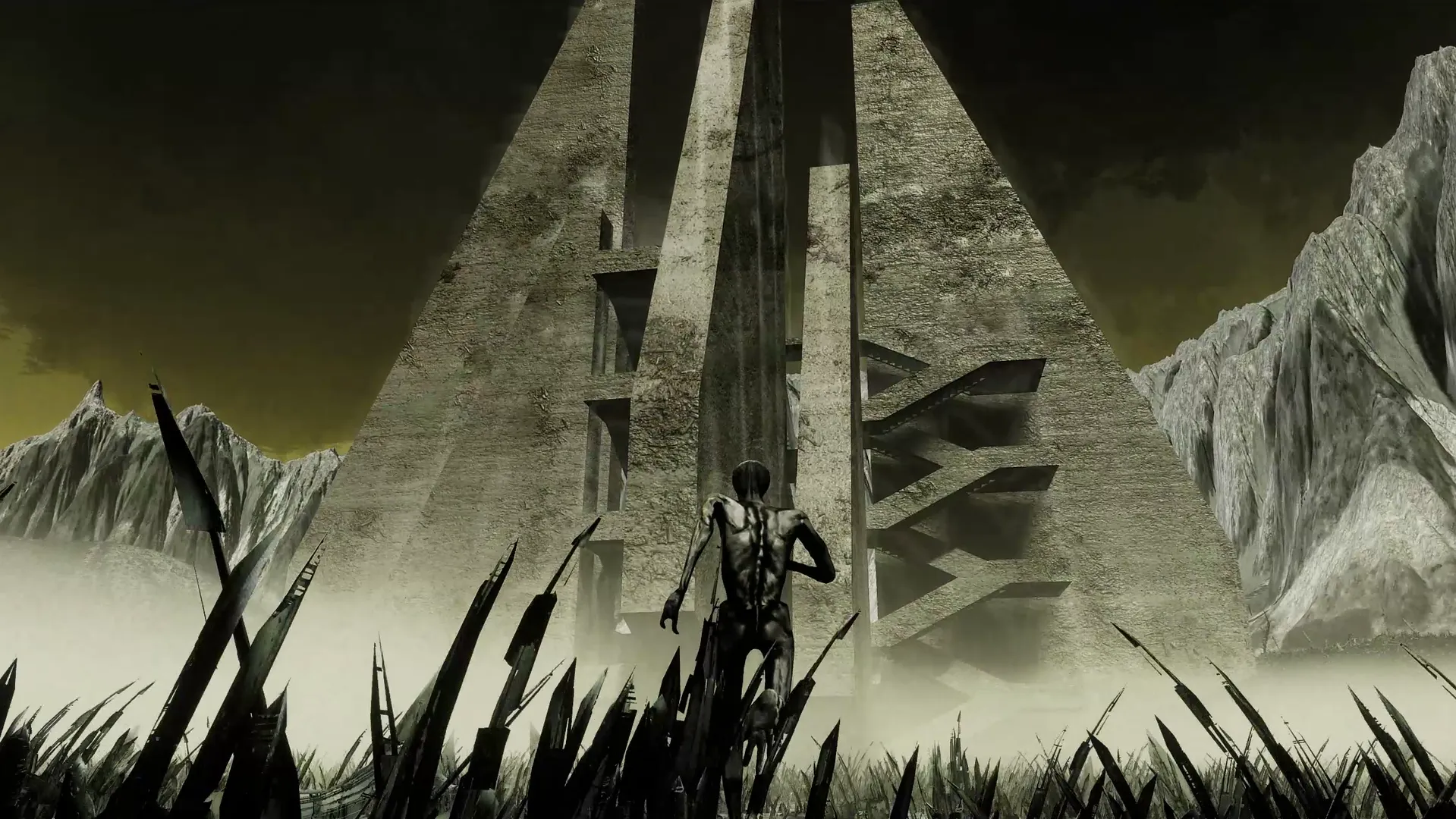
PnT: There’s something very queer about a lot of your projects, Aggregate explores cruising, and Anemoia deals with nostalgia and rewritten memory. Is that an explicit political intention, or does it just emerge naturally from the group?
Nino: When we come together as a unit and feel safe, we talk about the topics that matter to us. There’s a lot of queerness in the group. But Pierre, who’s gay too, is passionate about mushrooms and meditative landscapes, it’s very Alex Garland, and he doesn’t talk about queerness at all. The term “queer,” for me, is very vague: it refers both to the prim-and-proper gay corporate types at Starbucks in Queer High and the anarcho-queers I party with. It’s so broad that I’m going to take the liberty of not using it.
But yes, our games are about emotion, connection, and love in all its forms. We’re all a little in love with our computers: we have a lot of affection for technology, for the medium, even for the console with which we have intense childhood memories. What we want to highlight is the fragility of our interactions between humans via machines, or even between us and the machines. The overt queerness that can be observed in the games coming out of the collective is more a consequence of this approach than an intention to be a queer collective.
PnT: You ask questions like, “How do NPCs feel when their game is deleted?” It’s almost like the philosophy of mind applied to video games. Do you really think we can develop a form of empathy for digital entities?
Nino: The game you’re referring to is Cooking for William, a collaboration with Pierre Moulin and Mélanie Courtinat. You’re playing a cooking game, and you realize that the floppy disk itself is being overwritten by a horror game, because the player finds it too boring. The central character sees all her textures disappear, her husband loses face, her idyllic little garden turns into a garden of horrors.
My philosophical paradigm is that I can’t really be sure of other people’s consciousness: it’s just the projection of consciousness that can only be real. I can feel guilty for being mean to an NPC. There’s something endearing about these NPCs, and quite modern, it didn’t exist 50 years ago. Our attachment is also a way of asserting ourselves as a generation: we don’t really give a damn about Klimt and the Mona Lisa. Here are our characters, here are our comfort blankets.
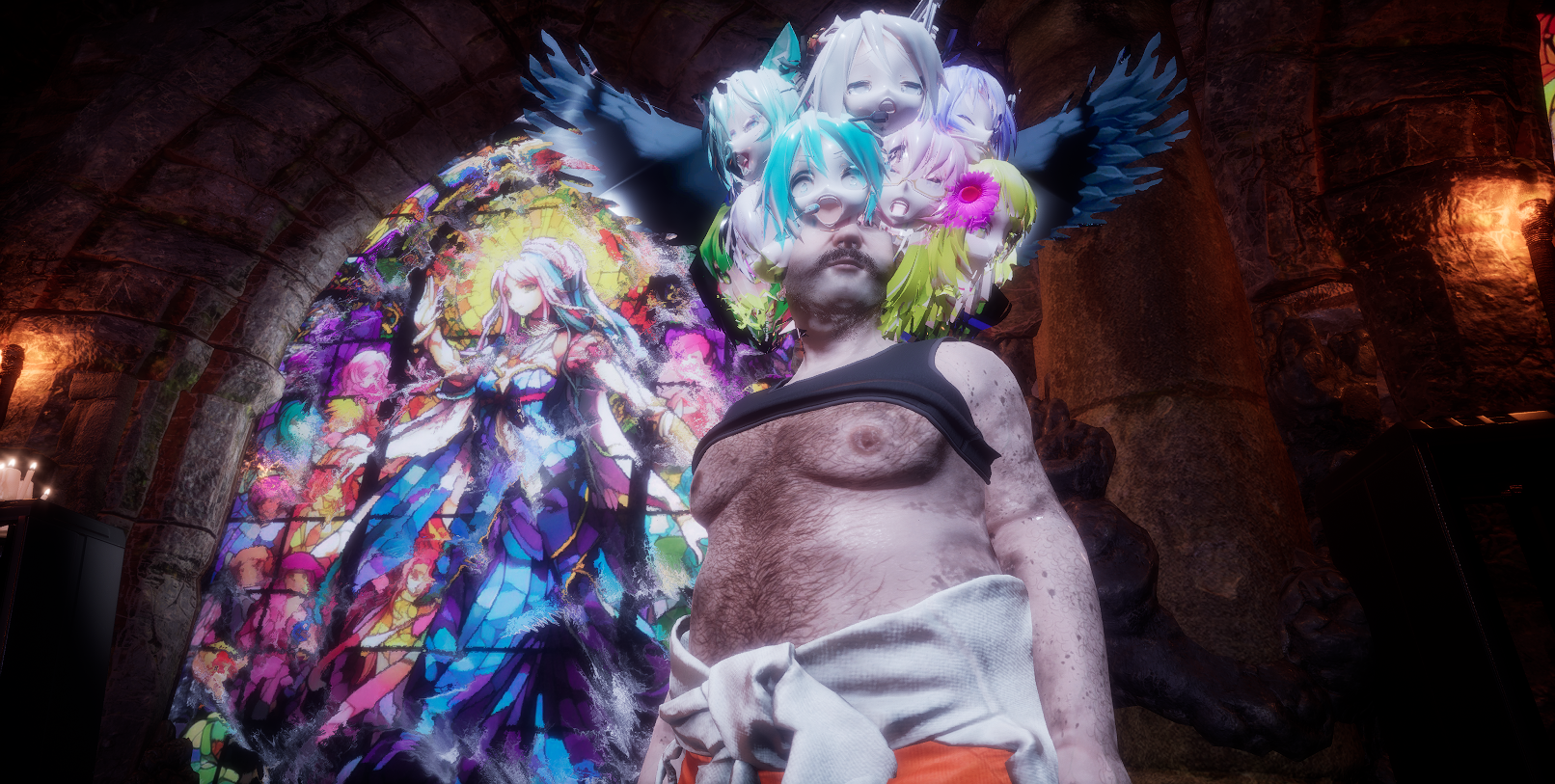
PnT: Am I The Problem? is based on real confessions from 4chan and Reddit. How did you work with this material? Did you feel a particular responsibility when handling these testimonials?
Nino: We did this during Residence Evil, our residency. We spent the first day digging into these quotes. By the end of the day, we weren’t feeling well. It ranged from touching to really disturbing stuff.
What we wanted to do was stage the encounter. On the internet, these reactions are anonymous, often linked by screenshots taken out of context. Politically, that means the straw man fallacy. But it also means there’s no dialogue. There are people who are socially at fault, but I don’t think dehumanization is a valid way to solve anything. In Am I the Problem, once you start talking to these characters, you have to see the conversation through to the end. They have a physical form: we put a lot of work into the character design for these characters who are normally anonymous. I wanted people to face these individuals.
PnT: You regularly collaborate with Résidence Evil in Switzerland. What kind of place is that?
Nino: There are very few art video game residencies available in France. We figured: we’re adults, we have connections, we can set up our own residency. At first, it was a bit of a makeshift operation, at John’s house. What is a residency, really, other than artists coming together to create? Then it got more serious, with Mélanie and Yatoni securing a space in Geneva, L’Abri, to host us. The focus on horror stories is because there’s so much to tell; you can go deep into the artistic and the political. But it’s completely disparaged by contemporary art. If we’re going to have total freedom, we might as well do the thing that all the galleries hate.
PnT: Staggered is described as “a playable poem about states of shock and the death of the inner child.” It’s a very personal subject. How do you navigate the line between the private and the public in your work?
Nino: It’s a personal game because I had suicidal tendencies as a teenager, which resolved themselves when I realized that what I wanted was the symbolic death of my inner child, not the actual death of my body. It’s something I discovered later, theorized by Jung and Erikson: role confusion.
I feel safe being personal because most people don’t get what I really mean deep down. It’s a technique. If I were represented by a gallery, I’d never say that, but most people who consume art, if things aren’t spelled out in black and white, are going to have a very personal interpretation of what’s happening on screen. And that’s fine. It used to hurt me; I tried to get people to listen to me, until I realized they’d been listening all along, because they took my stories and made them their own.
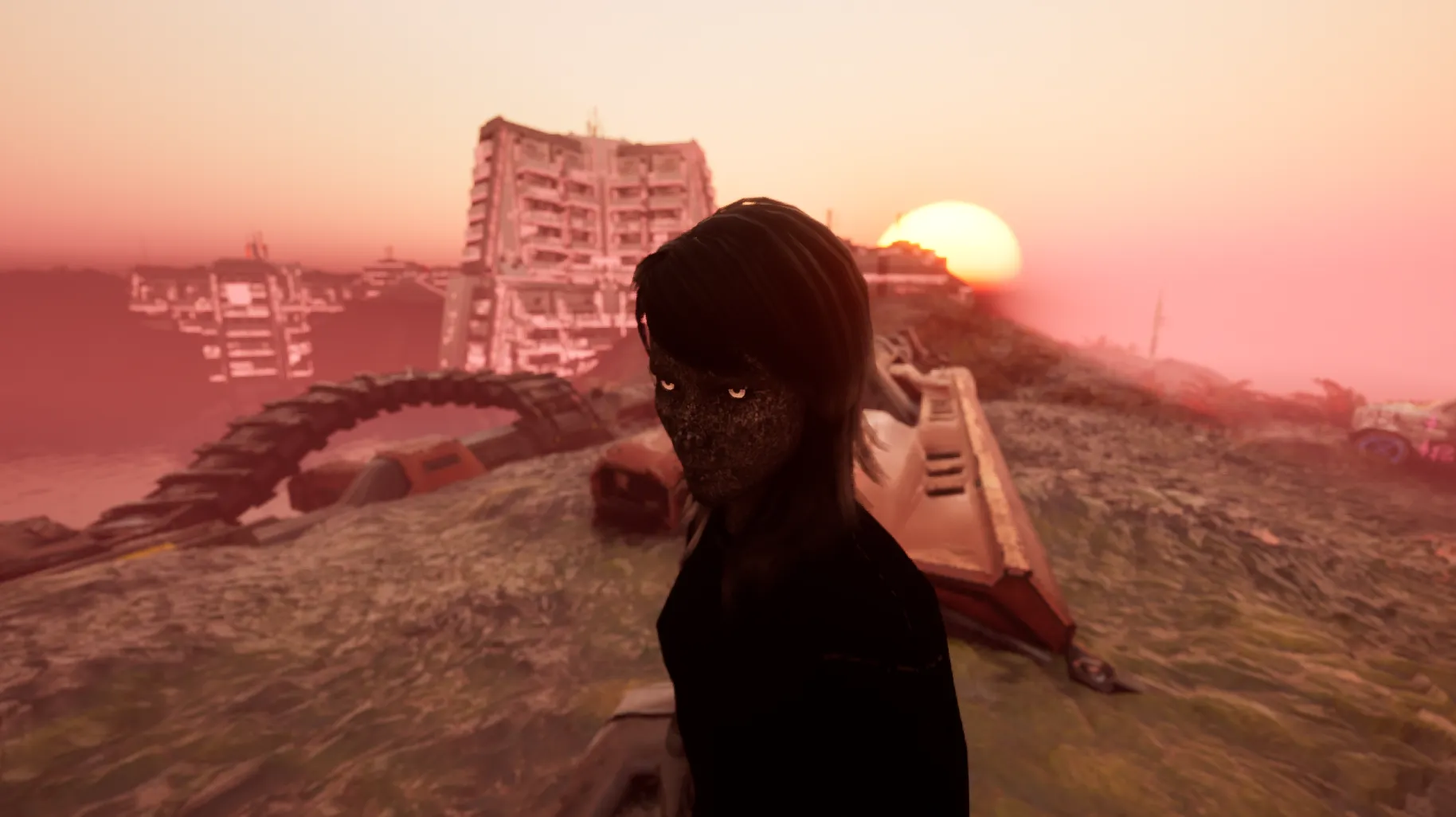
PnT: In Sacrifice, you control the game using DJ turntables. In other projects, you use the bioelectricity of plants, ultrasonic sensors… Why this obsession with alternative interfaces?
Nino: Sometimes I think to myself, “Wow, this turntable I have at home has a USB cable coming out of it, maybe I can listen to the signals using JavaScript.” I thought that was fun. Then I sat there for half an hour thinking, “OK, what do I do now?” I connected it with a bit of 3D, and I quickly added an artistic concept on top of it. But at the heart of it all, it was just me having fun with my code.
It’s the same with this project: if you water the plants, if they’re stressed, electrical signals come out of them. We put dancers in the middle of a sort of garden connected with Arduinos, it reacted to sound. No choreography: “Dancers, have fun based on the music produced when you touch the plants.” ” It was a bridge that didn’t exist before, this dance-plants-music triangle. You have to accept that we don’t yet know what’s going to happen.
PnT: Can you tell me about your latest solo show with A.MAZE in Berlin and your connection to that festival?
Nino: A.MAZE is an organization affiliated with Distraction. This year, Thorsten S. Wiedmann, who has been at the helm of A.MAZE for 18 years, reached out to me about a solo show. I was able to exhibit a short film, video games, and an interactive iPad installation simulating doomscrolling. Everyone was engaging with it, unlike in Paris where sometimes people are in “OK, let’s treat this as an installation, don’t touch the artwork, or else an alarm will go off” mode. ”
Berlin is a very experimental, very playful city. That’s why A.MAZE is in Berlin, and not in London, where the focus is on selling tech works, nor in Paris, where the focus is on selecting works that will last a millennium, that we’ll tuck away safely in the Louvre. Paris is risk-averse. It’s only in Berlin that you can have festivals like A.MAZE, with a playful crowd that embraces fun as a core value.
PnT: There’s a tension between the contemporary art scene—galleries, museums, residencies—and the video game scene—Steam, itch.io, festivals. Where do you see yourselves in this landscape? Do you feel recognized?
Nino: We had a discussion a year ago: there was this question, “Is video game art?”, asked in all seriousness. We came to the conclusion: why should we care about validation from gallery owners and museum people who don’t understand a thing about our work? We’ve already experienced the emotions. We’ve got the codes; we understand each other. Financially, we all have pretty well-paying side jobs. When museums don’t want us, we create our own exhibitions.
When you dive into Discord servers, you realize that nobody gives a damn about the Gaité Lyrique or the Pompidou anymore. There are already communities, mutual recognition, people organizing things in their apartments. When it comes to the literature of gaming, we’re lagging behind. When it comes to institutional recognition, we’ve got work to do. But this scene is thriving on its own.
For people coming from the contemporary art world, what they’re asking with “is this art? ” is really “is this relevant?” The answer is yes. But there’s a whole segment of art boomers who are still asking that question. I have neither the need nor the desire to collaborate with people for whom that question is legitimate.
PnT: If Distraction no longer existed in ten years, what would you want to remain of it? A legacy, a school, games that people still play today?
Nino: We created Distraction because there was a gap in the Paris scene: a network, an interconnection, a collective effort among creative forces. First of all, Distraction isn’t going to die, sorry to disappoint you (laughs). But in the event that we all get hit by a bus, I’d like that interconnection to remain. And for scenius to emerge from Distraction, or elsewhere.
Scenius is a word coined by Brian Eno, as opposed to genius. Genius is the image we have of artists: Van Gogh, a tortured soul who created his best works from his home. Except that’s not how it works. What happens is that there are scenes, and within those scenes, people who are slightly more talented than others use that network to express themselves. What I’d like Distraction to bring to Paris is a new language, a new way of presenting video games. It’s not a film club. I don’t even know if there’s a word for it: we came up with “game session,” but it’s still something to be invented.
Links
- Distraction : distraction.fun
- Nino Filiu : ninofiliu.com
- Supermosh : supermosh.github.io
- A MAZE Berlin : amaze-berlin.de