
Load a save file from ten years ago. Not a game you quit last week, a real one, the kind where you’ve forgotten your character’s name and half the controls. It takes a little while to load, then the screen comes back, exactly where you left off. The innkeeper is behind the counter. He’s wiping a glass. He was already wiping that glass when you left, and he’ll still be wiping it when you turn off the console, and in between, nothing has happened to him: not ten years, not even a second. He greets you with the same phrase, in the same tone, just as one would greet someone returning from the next room.
There is something gentle and something unbearable about this scene. Gentle, because nothing has been damaged. Unbearable, because nothing has lived. This man made of polygons waited ten years without knowing it, and it is we who feel the weight of those ten years in his place.
We’ve spent thousands of hours with beings whose sole purpose was to wait for us: merchants, guards, innkeepers, villagers, and wise elders stationed at the entrances to caves. Theater has its extras, and so does film, but they remain in the frame only for the duration of the take. Video games have invented something else: a character whose entire existence hangs on our return. I’m not sure we’ve ever asked ourselves what it feels like to be awaited in this way. Nor what it has taught us.
I used to be an adventurer like you
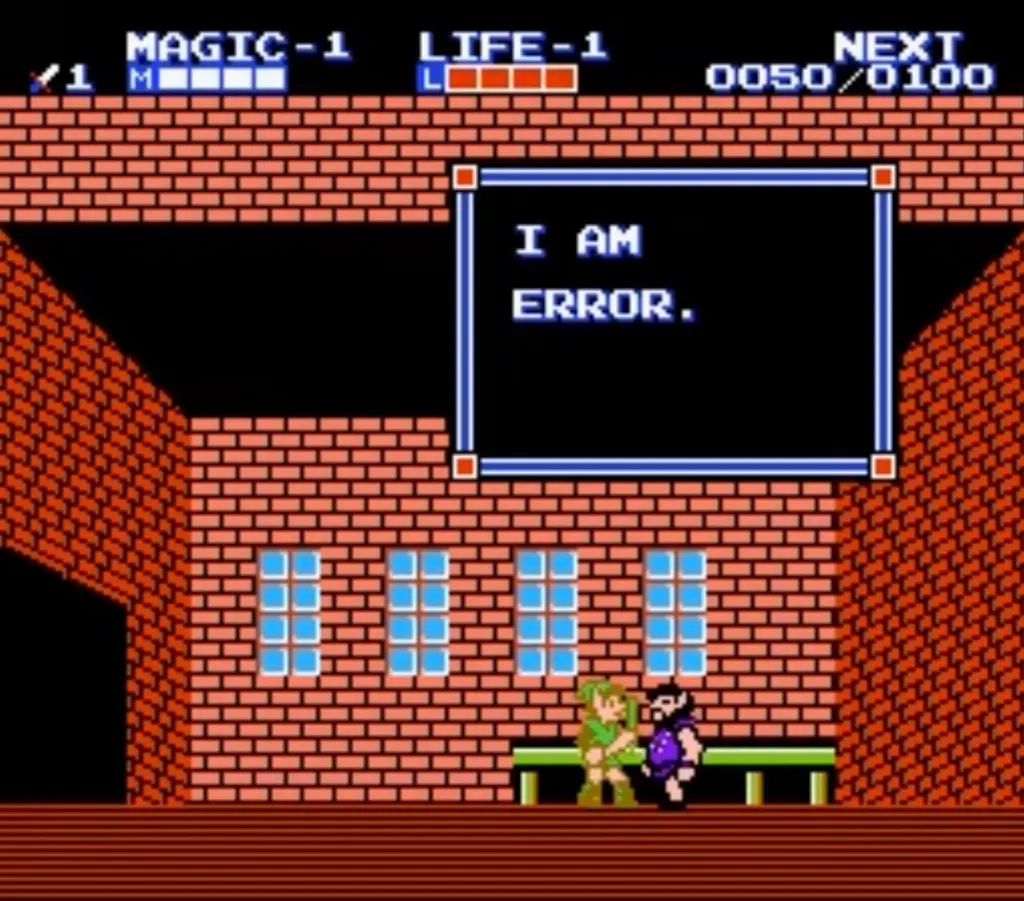
The classic NPC is more of a function, a bit like a talking piece of furniture, than a character. In the early Zelda games and in Pokémon, they stand in the corner of a house and deliver a line, always the same one, every time you press the button. The guard in Skyrim repeats that he used to be an adventurer before he took an arrow in the knee. The line became a meme precisely because it was repeated, word for word, by dozens of different characters. These extras aren’t alive.
This stagnation isn’t a design flaw. It’s a courtesy. The world pauses when I leave so that I can find it intact when I return. The old man blocking the cave’s entrance will stay there until I find the item that will make him move aside, and he won’t get impatient. No art form before video games had offered its audience such unconditional hospitality: the game doesn’t continue without you.
Cinema, on the other hand, has turned the loop into a source of anxiety. In The Truman Show, the moment when Truman begins to understand is not a dramatic revelation at all; it’s a matter of rhythm: the cyclist, the man with the bouquet, and the dented car pass by him again in the same order, at regular intervals. The extra gives himself away through repetition. What, in cinema, signals a conspiracy, video games have made their standard grammar. Every day we pass through cities where everyone keeps reappearing.
Roland Barthes devoted one of the most beautiful passages in A Lover’s Discourse to the act of waiting. In it, he establishes an irrefutable equivalence: “Am I in love? Yes, since I am waiting.” And further on: “The fatal identity of the lover is nothing other than: I am the one who waits.” The other, the one we’re waiting for, never waits. That is, in fact, what defines them. If we take Barthes at his word, the division of roles in video games becomes dizzying: the NPC perpetually occupies the role of the lover, and the player that of the beloved, who arrives whenever they please, leaves without warning, and never asks themselves the question.
Yet hospitality has its flip side. If nothing happens without me, nothing exists without me. The innkeeper isn’t really waiting: he’s only there because I’m watching. The idea seems harmless as long as it concerns polygons. It has eventually spilled over.
Bombers notebook
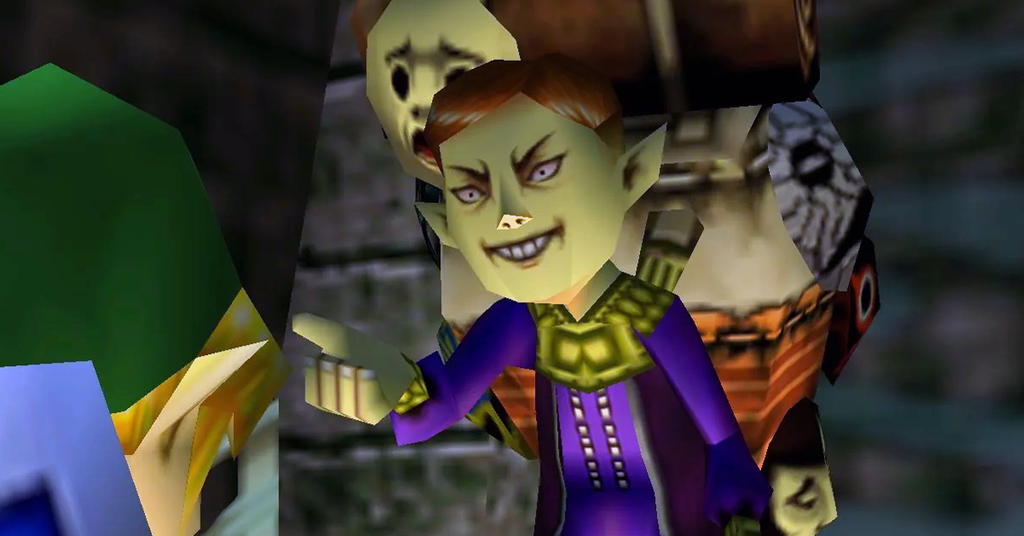
The designers quickly sensed the strangeness of these motionless worlds, and they tried to counteract it by giving the background characters watches. In 2000, Majora’s Mask traps Termina in a three-day cycle before a grimacing moon crashes into the city. Every resident has their own schedule, which the player records in the Bombers’ Journal just as an investigator fills out their case files. The mailman makes his rounds, the mayor holds council, and Anju waits for Kafei at the inn. She waits for him so stubbornly that she refuses to flee when the city empties out. But Termina starts over. At the end of the three days, the player plays the ocarina again, and everything returns to that first morning: Anju waits once more, with no memory of having waited before. The autonomy of the background characters is that of a clockwork mechanism. They live without us, but on a set course.
A year earlier, Shenmue had taken realism to the point of discomfort. The shops in Yokosuka open and close at set times, passersby head home in the evening, and Ryo Hazuki spends a considerable portion of his investigation waiting for an appointment to arrive, for a store to open, or for daybreak. For the first time, the player shared in the extras’ waiting, and many experienced it as a punishment. Since then, Red Dead Redemption 2 and Stardew Valley have refined the illusion: routines, anniversaries, memories of our actions—a camp life that continues even when we step away. The extra has become a passerby.
When I look at these meticulously crafted towns, I often think of Duane Hanson’s sculptures. His museum guards and tourists, cast in resin and dressed in real clothes, are placed in the exhibition halls among the visitors. You walk past them, mistake them for real people, and then stop short: they don’t move. Modern NPCs produce the opposite effect. They’re constantly moving, going from one point to another with absolute conviction, and it’s that very conviction that ultimately betrays them, the day we realize that the blacksmith has been striking the same anvil at the same time for a hundred in-game hours. A world that lives on without us, however, has a consequence that its designers may not have anticipated. It may notice that we’re gone.
The Cockroaches in Animal Crossing
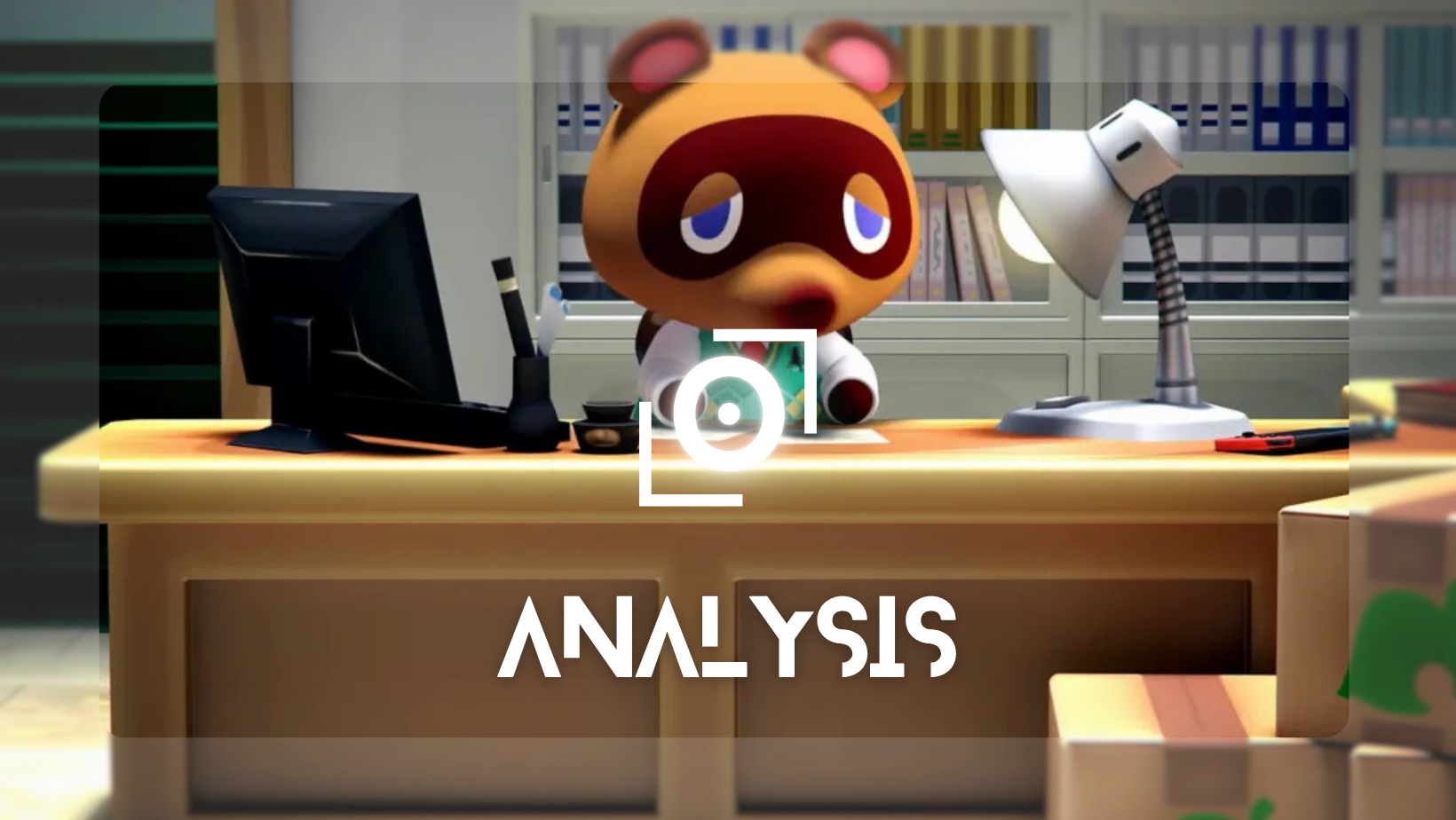
Animal Crossing has undoubtedly taught millions of players to feel guilty about not playing. The village follows the console’s clock: the seasons change in real time, the days pass in real time, and the player’s absence becomes part of the scenery. Weeds overrun the paths. Villagers count the months that have passed since your last visit and point it out, with a tenderness that’s sometimes worse than a reproach. Some eventually move away. And in the house left empty for too long, cockroaches take up residence under the furniture. You have to squash them one by one; each one flies away like a little ghost.
There is a whole body of literature about players returning to their villages after years away, and it takes the form of a homecoming story: unrecognizable streets, neighbors who have left, veiled reproaches. The game is not threatening in any way. It merely keeps a record. But that record is enough to turn the relationship on its head. The bystander is no longer the one who waits without knowing it. He knows. He has been counting.
Hideo Kojima drew on this idea for one of his most profound jokes. In Metal Gear Solid 3, The End is a hundred-year-old sniper, the most merciful member of the Cobra unit: he refuses to kill and uses only tranquilizer darts. The battle against him is a long chase through the forest. Kojima had initially envisioned it as even longer, spanning two real-world weeks, before his teams, bored to death by the prototype, talked him out of it. One secret remains: if the player saves in the middle of the duel, turns off the console, and returns a week later, the old man has died of old age. He waited for us, and he didn’t make it. The victory is absurd. Elsewhere, absence is a lapse for which the game makes us pay. Here, it becomes a weapon, with all the cruelty that entails: we won by not showing up.
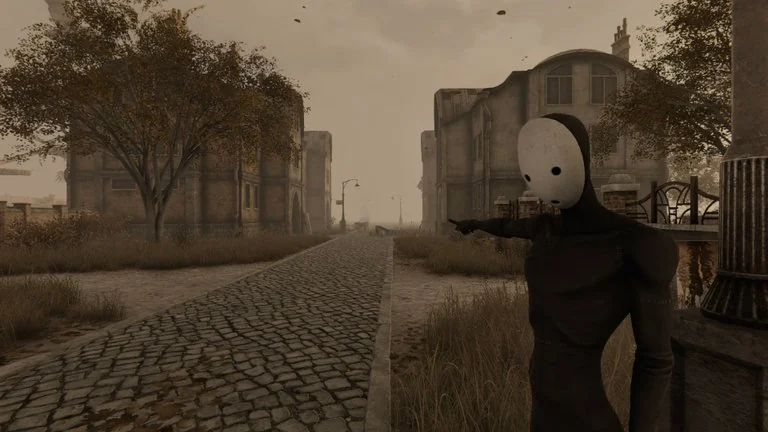
Pathologic 2 flatly rejects this premise. In this steppe town ravaged by an epidemic, time is running out and cannot be turned back. Characters die while we’re elsewhere, and the game makes no apology for it. Here, no one waits: it’s the player who chases after a world that refuses to hold a spot for them, and the unease is commensurate with the upheaval.
In L’Attente l’oubli, Maurice Blanchot wrote a book in which waiting and forgetting constantly influence one another, as if waiting for a long time were tantamount to gradually losing what one is waiting for. The villagers in Animal Crossing who pack up and leave are a modest yet accurate embodiment of this: after waiting so long, they’ve forgotten that they were waiting. But once the game had learned to count our absences, it was inevitable that someone would decide to charge us for them.
Log-in Reward, Day 1
Service-based games have completed the shift. Players log in every day to claim a reward whose value increases with consistency; missing a day resets the counter to zero. Daily missions expire at midnight, events disappear after a few weeks, and characters you didn’t obtain in time may never return. Emotional language is everywhere: the character is waiting for you, he missed you, he saved a gift for you. In gacha games, where you draw companions at random using virtual currency, these characters are designed to make you grow attached to them, and that attachment serves as a lever.
The innkeeper in Skyrim never asked me for anything. The one in the service game keeps track of my absences. The patience of the background character, which used to be a form of hospitality, has become a debt. And logic has already left the world of video games: Duolingo, with its green owl and its streak of consecutive days, has popularized a very particular way of missing someone, where the app is the one that lets you know you’re missed, insistently, until you come back.
I don’t want to make a big deal out of it. These systems work because they respond to something real: the desire to have a place somewhere, and for that place to be secured. But the nature of the contract has changed. The game of the past said: I’ll wait for you. The service-based game says: you owe me your presence. In between, the extra has ceased to be a host and has become a creditor, and the player, who used to play the role of the nonchalant lover, discovers that he is now being watched by those he used to keep waiting.
Ice cream so good
In July 2023, logic disappeared from the screen for good. On TikTok, the live streams of a Montreal-based creator, PinkyDoll, began circulating far beyond her usual audience. Facing the camera, she mimicked the gestures and lines of a non-playable character. Every virtual gift sent by a viewer triggered a set reaction: for a cone of ice cream, “ice cream so good,” accompanied by a flick of her tongue into thin air; for a cowboy hat, she’d declare herself a cowgirl; for a “GG,” it was “gang gang.” Hundreds of streamers imitated her. She said she spent six hours a day streaming live, seven days a week, and earned up to $7,000 a day at the height of the craze.
At the time, there was a lot of talk about how strange the show was. What strikes me today is its structure. The viewer takes the exact place of the player. The virtual gift serves as the interaction button. And between triggers, the streamer maintains a waiting animation: a slight sway, a smile, her gaze fixed in the distance, ready to react. In front of the innkeeper in Skyrim, all you had to do was approach him for him to speak. Here, to get a line, you have to pay. The extra in the game-as-a-service demanded our presence. This one charges by the unit.
The discomfort doesn’t stem from the imitation itself. Anyone can mimic an NPC for thirty seconds, it’s practically a classic playground game. It stems from the duration. Keeping the loop going for six hours straight turns waiting animation into a job, and the extra’s patience into a physical endurance test. The human body takes on what the game engine used to do effortlessly: repeating without wearing out.
In 2010, at MoMA, Marina Abramović sat for weeks on end, facing a chair that visitors took turns sitting in. The Artist Is Present was, too, an installation centered on waiting: the motionless artist, the passing audience. But Abramović returned their gaze. Each visitor received her undivided, silent attention, without expecting anything in return. The streamer NPC doesn’t look at anyone: she monitors the flow of gifts. The two performances are similar enough that their difference becomes apparent, and that difference lies entirely in what one does with one’s eyes.
Even before live streams, the term had already shifted in meaning. On social media, “NPC” referred to strangers encountered on the subway, passersby filmed without their knowledge so people could laugh at their reactions, and more broadly, anyone who wasn’t the main character in the video. Creators explained how not to look like an NPC, which, in gaming terminology, amounted to explaining how to stand out socially. The term was far from neutral: it served to categorize. I see this as the culmination of what Baudrillard described as the “precession of simulacra”, the moment when the model ceases to imitate reality and ends up preceding it. We no longer borrow an image from video games to describe the world. We view the world through the lens of the game, and others take on the roles we assign to them.
At the end of the road, we find ourselves back at the opening sentence. If nothing exists without me, others exist only when I look at them. The motionless innkeeper was a courtesy of the setup. Applied to the living, the same logic becomes a way of not seeing them. This is not about judging those who have made this cycle their profession, one that is often better paid than many others. It is about recognizing that, for forty years, we have been trained to adopt the most comfortable position there is: that of the beloved whom everyone waits for but who never waits for anyone. We have come to see extras everywhere.
Around the Fire
There is at least one game that offers something different. In Outer Wilds, the entire solar system fits into a twenty-two-minute loop, at the end of which the sun explodes. On several planets, a traveler has lit a campfire and is playing an instrument. They aren’t really waiting for you: they’re just there, absorbed in their music, their worries, their solitude. You can approach them, roast a marshmallow beside them, and listen. And as the end approaches, you can also do nothing: stay by the fire and watch the sun swell. For once, the wait is neither suspended nor charged. It is shared. You are no longer the one being waited for; you are waiting alongside them.
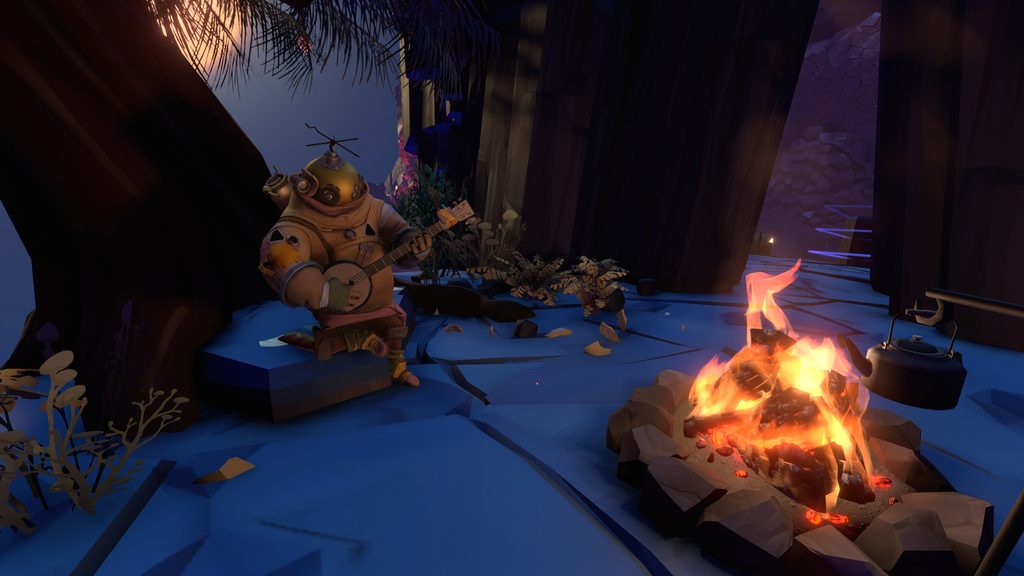
In the spring of 1942, Simone Weil wrote to Joë Bousquet from Marseille. The poet had been bedridden ever since a bullet shattered his spine in 1918; he was in a room in Carcassonne with shuttered windows, where people came to visit him. He had read a few pages she had given him, and she thanked him for the attention he had paid to them. It is in this letter that she writes: “Attention is the rarest and purest form of generosity.” The phrase has been quoted so often that we have forgotten its context: a room where a man, unable to move, waited for others, and where it was he, nevertheless, who had known how to give attention rather than demand it.
Perhaps that is what the extras have been missing from the very beginning. They’ve had our curiosity, our indifference, our guilt, our money. They’ve rarely had our attention. The next time an innkeeper greets you with the same phrase he used ten years ago, stay a while. He won’t notice. You will.
Sources
Textes
BARTHES Roland, Fragments d’un discours amoureux
BAUDRILLARD Jean, Simulacres et simulation
BLANCHOT Maurice, L’Attente l’oubli, Paris
WEIL Simone, lettre à Joë Bousquet du 13 avril 1942
Articles
CHAN Wilfred, « $7,000 a day for five catchphrases: the TikTokers pretending to be “non-playable characters” », The Guardian
« Why TikTokers are pretending to be robots and saying “ice cream so good” », The Washington Post, 17 juillet 2023.
« See What Happens When You Abandon Your Animal Crossing Village for 15 Years », The A.V. Club, mars 2020.