
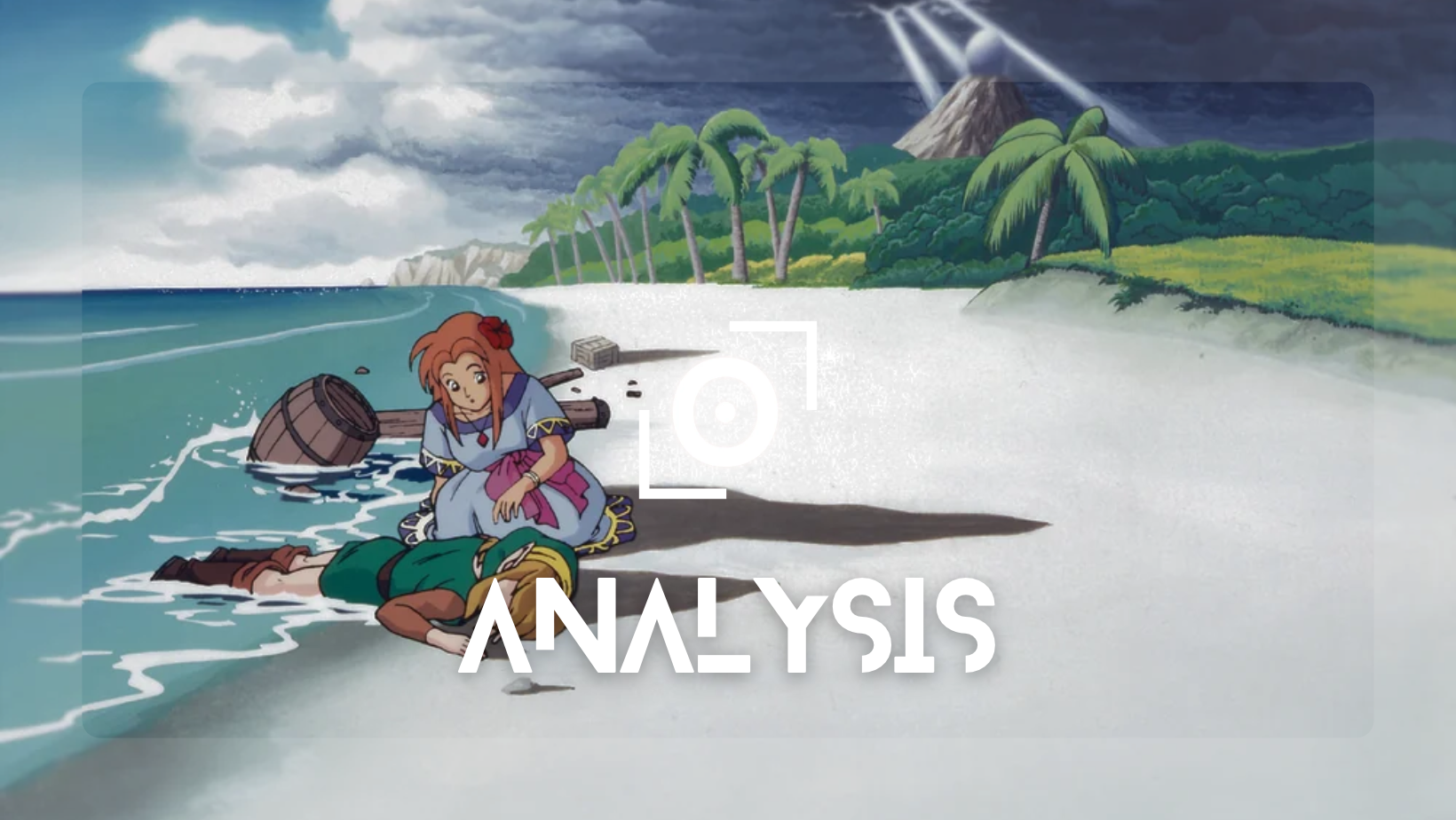
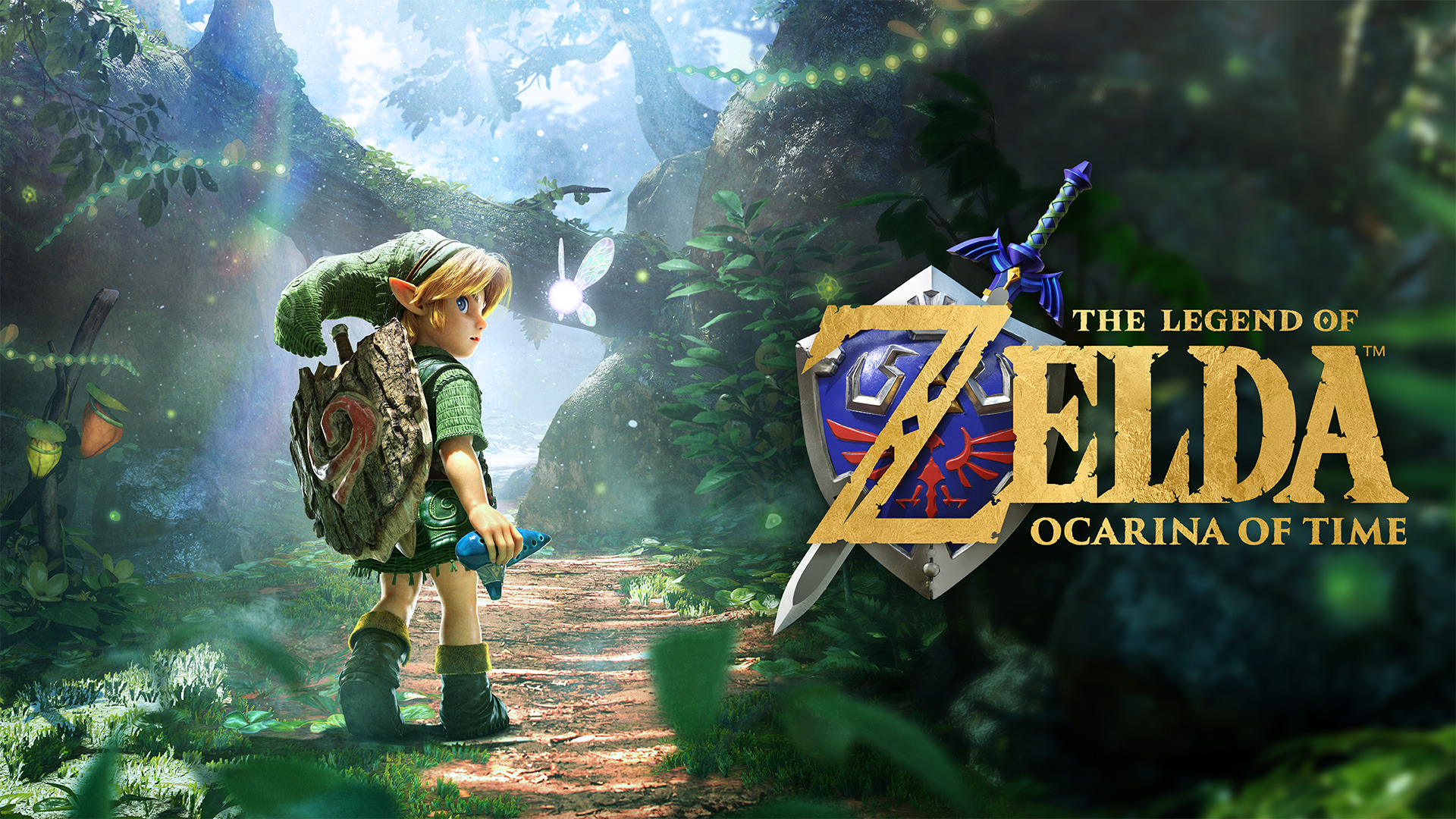
What interesting and original things can be said about what is undoubtedly one of the most significant and widely discussed games in the history of the medium? Every year, books are published on The Legend of Zelda series or on Ocarina of Time, and some of them are particularly insightful. We are fortunate today to have reference works such as Zelda: Chronique d’une saga légendaire, written by Nicolas Courcier and Mehdi El Kanafi and published by Third Editions. But also, the lesser-known yet fascinating Zelda: Le Jardin et le Monde, written by Victor Moisan and illustrated by Alain François, published by Façonnage Editions. Sometimes one has to be humble: fundamentally, I didn’t have much more to say than what had already been said about Ocarina of Time.
Like many, I consider this to be a work of paramount importance, but I believe that, deep down, that wasn’t what had fascinated and haunted me for so many years about Zelda – and more specifically, its first Nintendo 64 instalment. Whilst reflecting on the legacy of OoT and, more broadly, of Zelda, one thing struck me: I’ve never really been keen on Zelda-like games. Yet they’re consistently of high quality. One need only think of recent titles such as Death’s Door or Mina the Hollower for compelling examples. As I asked myself why, I realised that there was something more to my relationship with Zelda than just its gameplay dynamics, its world and lore, or its peoples and gods. At the heart of it all lies something that took root in my earliest gaming experiences and continues to resonate to this day. The Legend of Zelda and Ocarina of Time have been formative influences in my life for nearly thirty years.
First Steps
Writing this article has given me the chance to take a rather amusing look back at my own life. Whilst I’d always believed I’d been given my Game Boy Color for my sixth birthday, a bit of research showed me that this was impossible. It hadn’t been released yet at that time, nor had the first game that came with my console. After nearly thirty years, the story of my own life has been turned on its head: it was only at the age of seven that, for the first time, I became the proud owner of a games console.
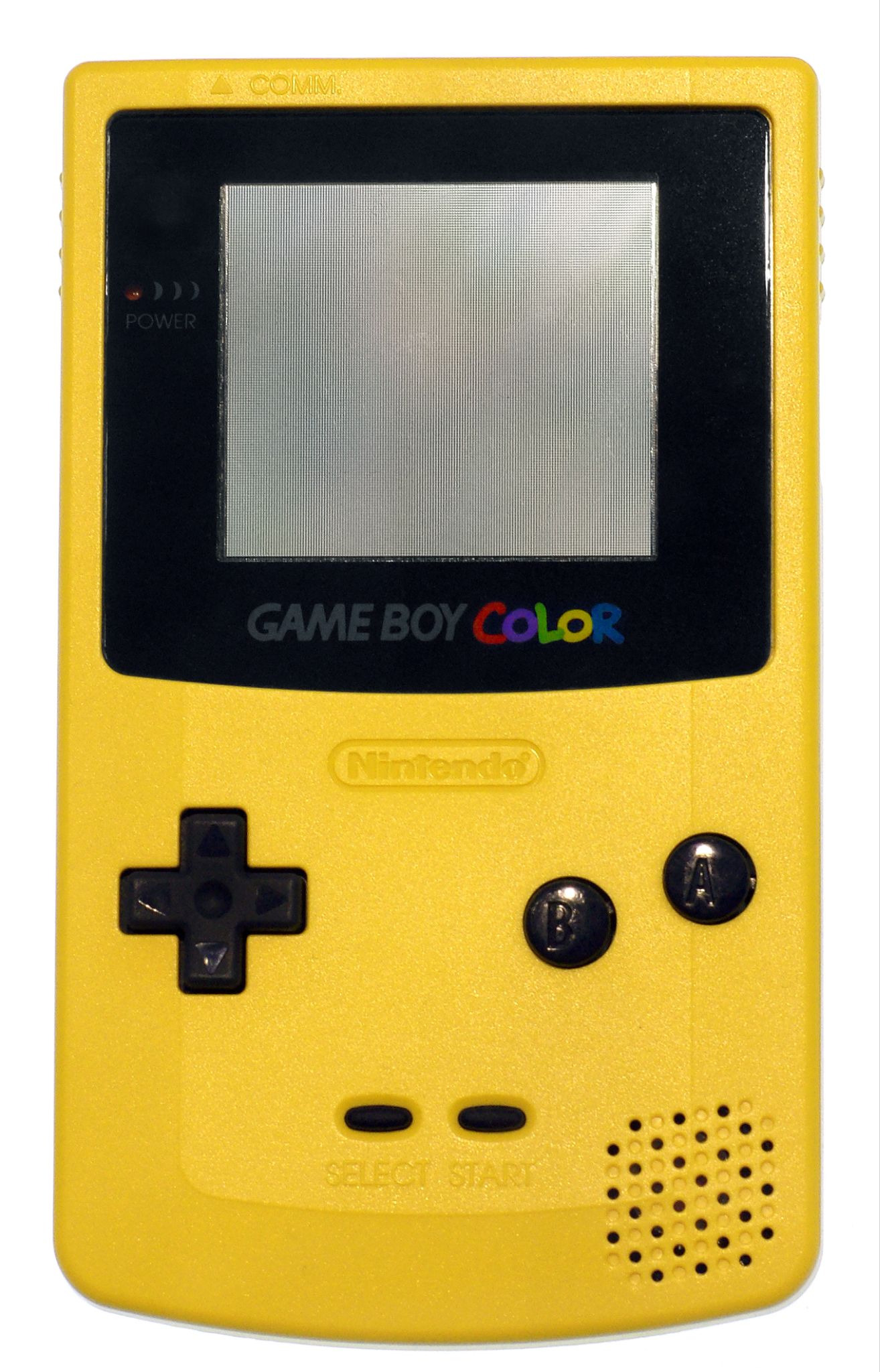
Thursday 24 June 1999: I’m probably coming to the end of my first year at primary school. For over a month now, just like every year as my birthday and Christmas approach, I’ve been bursting with excitement. The day has dragged on forever. I know what’s in store for me, but there’s still a surprise to come. I finally get the chance to unwrap my presents: first of all, the holy grail, my Game Boy Color. Yellow. It’s probably not the prettiest one, but it will be my faithful companion for a few years. And besides, it’s mine. Not my cousin’s, not my neighbour’s, not a friend’s.
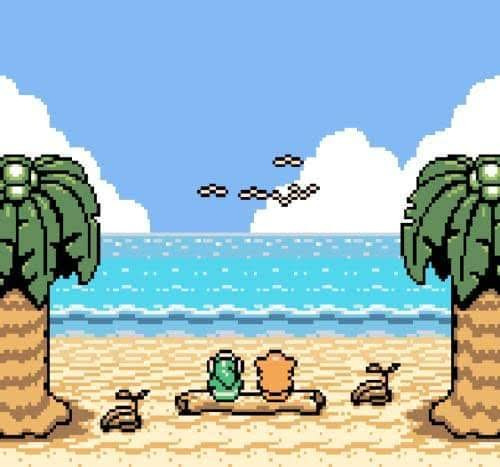
Now, of course, I need a game to go with this. So I open the second present. My first cartridge. A game I’ll never manage to finish, but one that will stay with me for life – because of its style, its atmosphere, its characters and its music. The Legend of Zelda: Link’s Awakening DX. At the time, I had no idea what that subtitle might mean in English. Never mind.
I’d already heard of Zelda back then. Was it because of my cousin Martin? Or my neighbour Arnaud? I can’t remember now. But how had my mum made up her mind when I, for my part, had absolutely no idea what sort of games were available on that console? I remember asking her. “I asked Arnaud for advice,” she replied matter-of-factly.
Arnaud was four years older than me; he and his sister were my neighbour’s children. As we lived on the ground floor, we used to go from balcony to balcony to visit each other’s homes. That was how we got about. In fact, that’s how we met: shortly after we’d moved in, my mum one day caught a young boy on our windowsill. That was the first time our two single-parent families had come into contact. Two households, each headed by a single mum.
It seemed obvious to Arnaud that I should start my gaming journey with Zelda. He was already playing Ocarina of Time, which came out more or less at the same time as the Game Boy Color re-release of Link’s Awakening. He hadn’t played the latter, but he knew the series was a sure bet. I didn’t choose Zelda myself. It was offered to me as a gift. I inherited it.
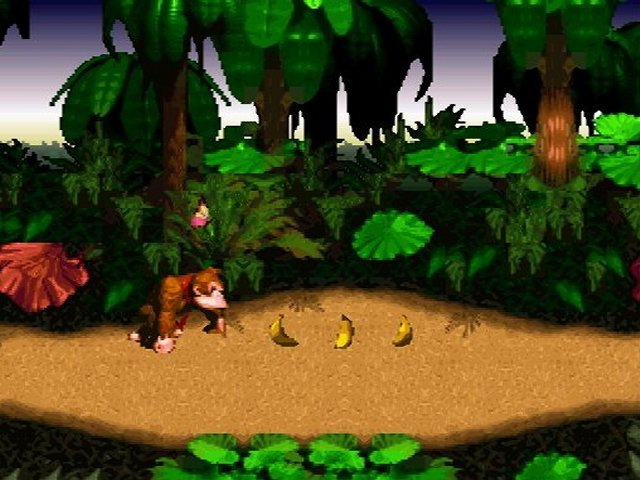
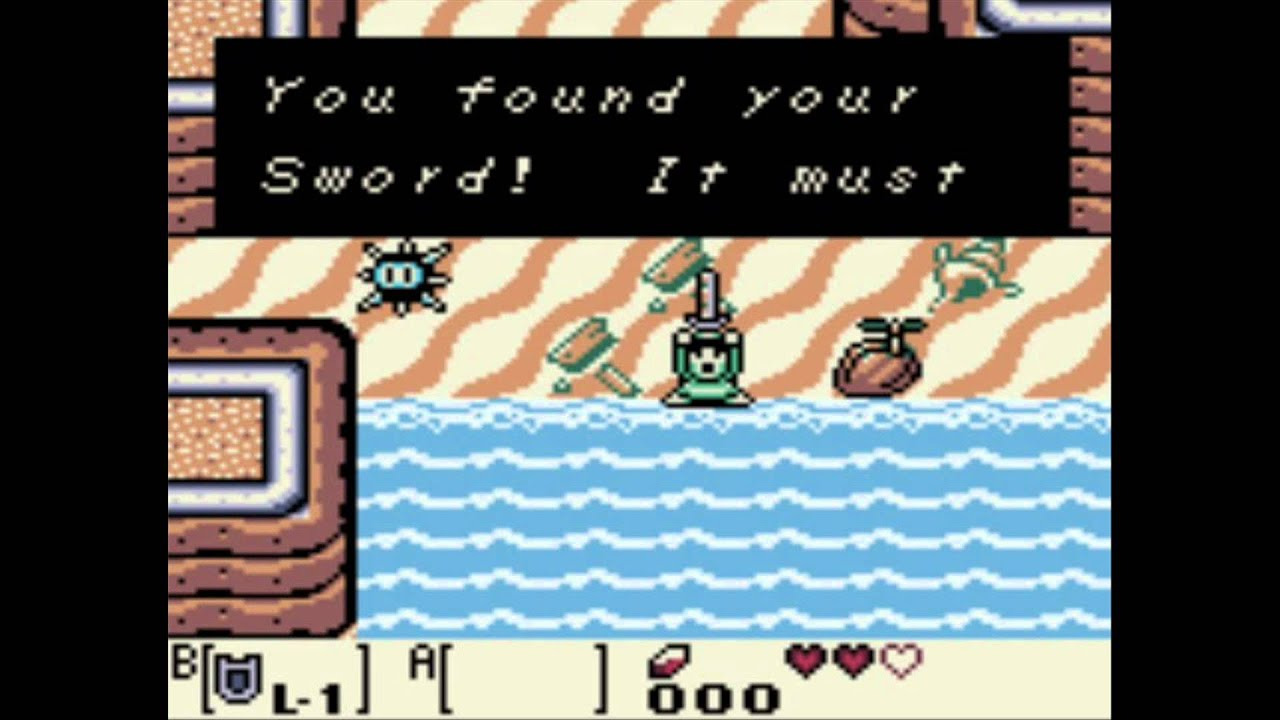
Up until then, I’d only played video games sporadically (a bit of Donkey Kong on the SNES, Mortal Kombat on the Megadrive, and Gremlins and Tetris on the Game Boy). These sessions had always lasted just a few minutes or hours. They had never really been sustained, nor had they led to any real progress. For the first time, Link’s Awakening plunged me into the long, drawn-out world of an adventure game left in the hands of a seven-year-old. Simply finding the sword on Cocolint Beach was a real ordeal. I was lost. The Moblins in the forest north of Seagull Village seemed to me at the time to be formidable foes. I avoided Chomp Chomp every time I passed by, for fear he might attack me.
Little by little, I got the hang of the game, developed a taste for adventure, gained confidence, and learnt to know my way around the places and navigate them as if I were at home. I then managed to make my way as far as Turtle Rock, the game’s final dungeon. It was there that I first came up against a hurdle that would take me more than twenty years to overcome. There was no way I could get past that dungeon. I asked Arnaud for help: he, too, couldn’t manage to get past the dreaded dungeon. He then asked me to lend him my cartridge for a while, which I did. After a few weeks, he’d started the game from the beginning and defeated the final boss.
Despite my inability to finish the game – which I would only manage to complete when the Switch remake came out – it marked a turning point. I’d developed a taste for the adventure, for this long-term commitment. I also came away with questions: who really was this Zelda who never appeared anywhere and whom I knew at the time only as a ghost, an absence mentioned in the game manual? I’d played for hours and yet I didn’t know who the princess was who lent her name to the game. The strange atmosphere of this instalment was heightened by my own lack of familiarity with the series. If Link was lost on this island, so was I. But unlike him, I had no past to anchor myself to. His former life in Hyrule was as hazy to me as a dream – the adventure on Cocolint became a dream within a dream.
Inheriting
It was a year and a half later that the journey continued. Up until then, the only Zelda game I’d played was the mini version. I could scarcely imagine what lay in store for me. Buoyed by the success of her previous gift, my mum naturally chose to give me the Nintendo 64 I’d been begging her for, along with a game from the series. Imagine my surprise when, as I unwrapped my presents, I discovered not Ocarina of Time, but a game I’d never even heard of before: The Legend of Zelda: Majora’s Mask. My mum reassured me straight away: Arnaud had two copies of OoT and would give me one of them.
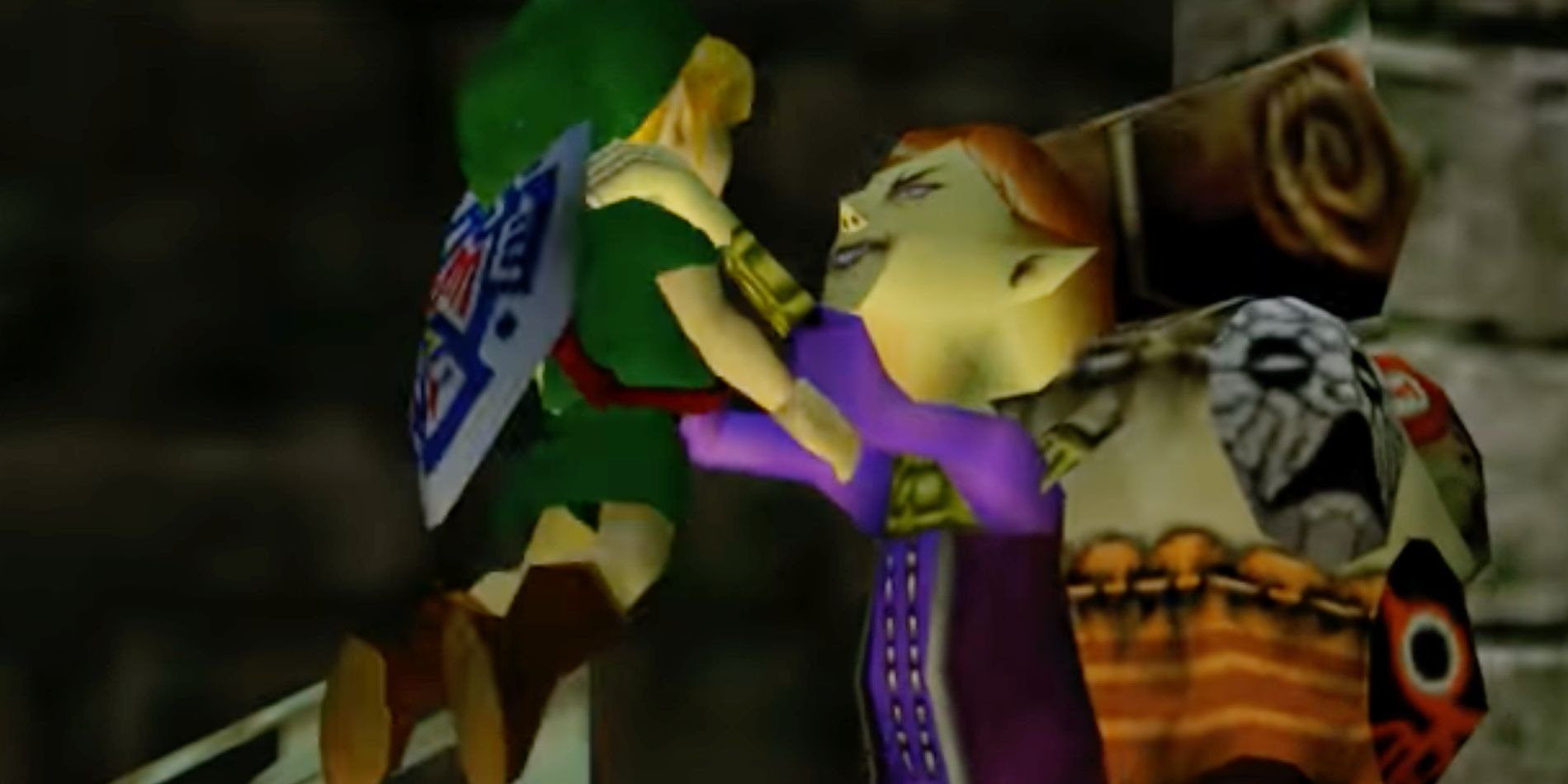
It came as a terrible shock to my eight-year-old self. To this day, I’ve never got over it. Skull Kid’s laughter, the transformation into the Mojo Pest, the menacing moon in the sky and that town of Clock Town which I couldn’t seem to escape from. For several weeks, I was condemned to relive, over and over again, the end of a world whose ins and outs I struggled to understand. Catching up with the Bombers was an insurmountable challenge for a young child discovering three-dimensional worlds with that rather strange controller, its imprecise joystick and an aiming mechanism that reversed the X-axis. It was a few weeks later that I finally got my hands on Ocarina of Time. A game that had already been started. My friend was then in the middle of the Water Temple. I played for a few hours, but, faced with the obvious, I resigned myself to starting the game from the beginning. That was when an adventure began from which I would never truly emerge. From the Kokiri Forest, through the Goron Cave and the Zora Palace, I gradually came to understand this world. I gradually discovered the peoples who inhabited it, as well as its legends. Not content merely to immerse us in a fully explorable world, Ocarina of Time offered us its original tale: one day, three goddesses – Din, Farore and Nayru – descended from the heavens and shaped the world. As they withdrew, they left behind a trace of their passage: the Triforce. For the little boy I was back then, who, like so many others, was fascinated by Greek mythology, there was something utterly magical about it. For the first time, truly, I wasn’t just playing a game: I was transported, through an avatar, into the heart of a world with its own history, inhabitants, and relationships – some friendly, some hostile. Hyrule is a place I didn’t just pass through. I lived there, for hours on end. I took on challenges there, searched for heart pieces, Great Fairies and golden Skulltulas, but I also wandered about and pranced about on Epona’s back. And despite the limited interactions with our steed, it was clear to me that there was more than just a utilitarian relationship between the rider and their mount.
How many hours did I spend chatting to Arnaud about the world of Hyrule? He understood it far better than I did, partly because of the four-year age gap between us and partly because of his guide to the game. The irony was that, despite having completed the game himself, he never managed to get me past the Water Temple. It was my cousin who provided the help I needed. As I did every holiday, I was going to spend a few days at my grandmother’s, where my cousin and I – who were exactly the same age – would meet up. In the dining room, next to the main television, there was a second one, on a lower cabinet. We used it to play games. Sitting there in little armchairs suited to our ages, we would sometimes spend hours playing alongside the adults, in between trips outside where we’d re-enact what we’d just been doing, controllers in hand.
I’d come along with my cartridge to make sure he’d help me. Although I was sceptical at first about his ability to help, he managed to get me past the stuck point quite quickly. I reckon that, in return, it was I who, in his game, helped him find the Gauntlets of Power in Ganon’s Castle. Being rather proud by nature, he never imagined I’d succeed where he’d failed. He had no choice but to admit that, this time, he owed me one. But there’s no denying we weren’t in the same league. Whilst I would never manage to complete the third temple in Majora’s Mask, he would go on to finish the game with all the masks, showing me – as a sign of his undeniable gaming prowess – the ultimate mask that transforms our hero into Oni-Link.
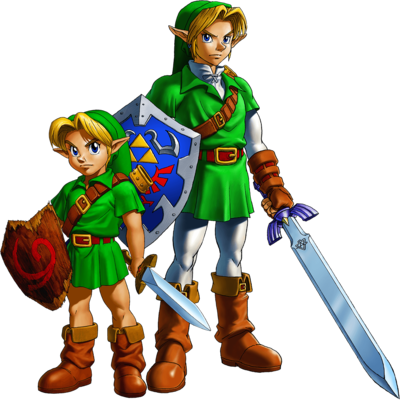
Whenever I think of Ocarina of Time, I immediately think of my friend Arnaud at the same time – even today. As an only child growing up back then, he was like the big brother I never had. And even today, whenever a new Zelda game comes out, we exchange at least a few messages and talk about it when we meet up. It’s a little ritual, a must-do. Arnaud, his sister Agathe and I share a long-standing bond, at the heart of which lies Nintendo’s timeless saga. And whilst our relationships with video games differ quite significantly, I can only be eternally grateful to the person who helped shape my gaming tastes, no doubt more than anyone else. I probably wouldn’t even have wanted a Nintendo 64 if we hadn’t met. Perhaps I would have grown up with a PS One at home instead.
Sharing
As the years went by, I got my hands on almost every game in the series that was released. On the Game Boy Color with Oracle of Ages and Oracle of Seasons, then on the GameCube with The Wind Waker. I think that was the first time I’d ever looked forward to the release of a new game in the series. In fact, along with the GameCube, it was probably the first time I’d ever looked forward to the release of a console and its games. It was around that time that I started keeping up to date with the latest video game news through magazines and, occasionally, online – on the rare occasions when, for whatever reason, I found myself accompanying my mum to her work. A year passed between the release of the GameCube and that of The Wind Waker. I then had to wait nearly two more months before I was given the game as a birthday present – it was pure torture. I remember how much we used to talk about the pre-release with a few mates from the school playground back then. And yet, my memory of The Wind Waker is a much lonelier one. I remember a game I played on my own, without many people to talk to about it. Arnaud’s entry into his teenage years and his move a few streets away had driven us somewhat apart; as for my cousin, he didn’t own a GameCube, only a PlayStation 2.
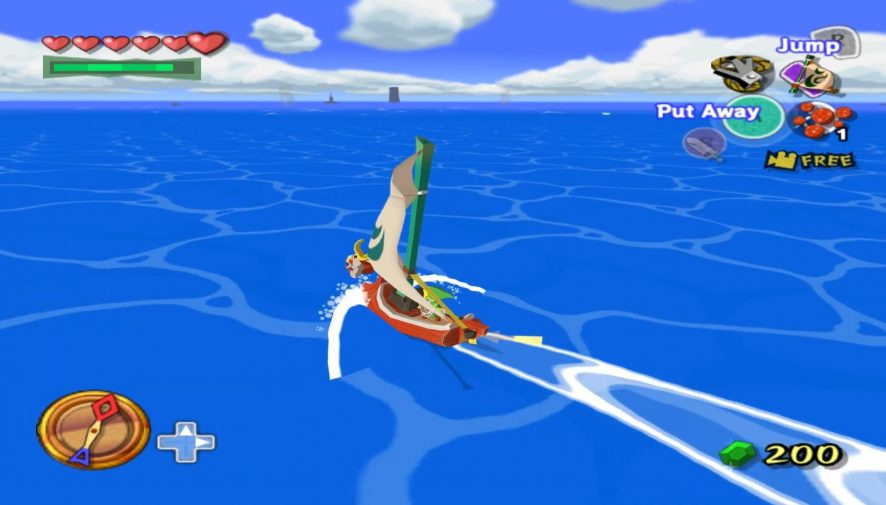
Starting secondary school gave me the chance to make new friends, including quite a few video-game players. But as far as I can remember, Zelda was never really a major topic of conversation back then. What brought us together were those afternoons spent playing Super Smash Bros. Melee after lessons in my living room, which, incidentally, also doubled as my mum’s bedroom. Whilst she never objected to her flat turning into a gaming den at least once a week whilst she was away, she was, on the other hand, far less thrilled to find out that three, four or five teenagers had been sitting on her bed. But that’s a whole other story. It was with a certain sense of betrayal that my main character in the game became Roy rather than Link. I regularly forced myself to play with him. I had the strange feeling that I was breaking something by sidelining him the way I did.
It was actually some time later that my story with Zelda was to take a new turn. Around that time, my father, who was living in Germany, got remarried. His new wife, who would soon be moving in with him, already had two children younger than me, and was about to have a little girl from this brand-new relationship. Was it a right mess? Of course it was, and for a long time. I’d long dreamt of having brothers and sisters, yet I found myself with a family I only saw a few times a year. It was a strange situation in which it’s hard to find your place when you’re a teenager. However, Wolf – who was four years younger than me – and I hit it off straight away. He did manage to annoy me once when, wanting to demonstrate The Matrix, he kicked my dad in the balls, whereupon my dad decided to confiscate the copy of Enter the Matrix he’d just given me and buy me Zapper: One Wicked Cricket instead. Quite quickly, however, I realised I was dealing with a little boy whose appetite for video games would become insatiable.
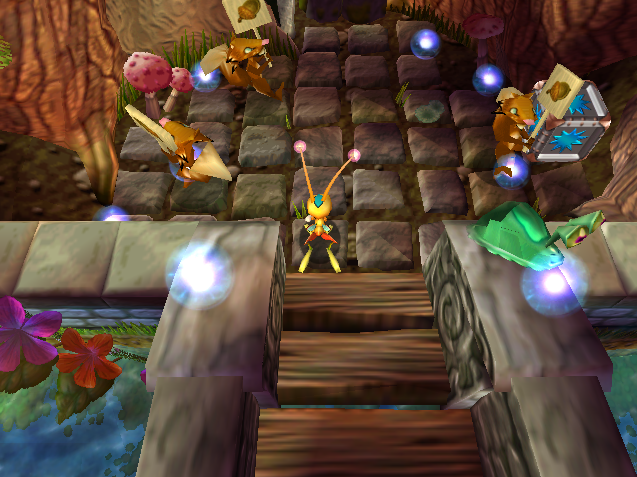
Our first major shared gaming experience revolved around the third generation of Pokémon: we’d spend hours playing it – he on Sapphire, me on Ruby. But an event was slowly set to turn things upside down. It was when, one summer, I brought along the GBA re-release of A Link to the Past that everything changed. Firstly, because it was the first time I’d let my little brother play a Zelda game. Secondly, because it was a real challenge for both of us! But he enjoyed the experience, and I was delighted to see, a few months later, that he’d been given the game as a present too. As well as progressing through the game at the same time, it finally gave us the chance to have a go at Four Swords together. It was a truly special moment of bonding. I remember a den we’d built in the bedroom so we could play out of my mother-in-law’s sight. We thought: if we’re hidden, she’ll obviously have no idea we’re playing. Need I say that it was a bitter failure?
A mutual love for the Nintendo saga began to take root, which would later see Wolf play The Wind Waker on the GameCube, followed by Ocarina of Time in its re-release for the GameCube. Having extolled the virtues of the seminal 3D instalment to him, he did whatever it took to get hold of it. Although he didn’t play it until years after its release, OoT became one of his all-time favourite games. From then on, Zelda became a source of shared enjoyment that was constantly renewed: Twilight Princess, Skyward Sword, Breath of the Wild, Tears of the Kingdom and, even now, the remake of Ocarina of Time, following its re-release on the 3DS fifteen years ago.
In some respects, the pupil has surpassed the master: he’s played the DS games that I’ve never even touched. He was the one who bought The Minish Cap, and it was only his version that I finished. It was like passing the baton: he’d lend me his cartridge whenever he got stuck. And I’d come back a few months later, having finished the game and able to help him.
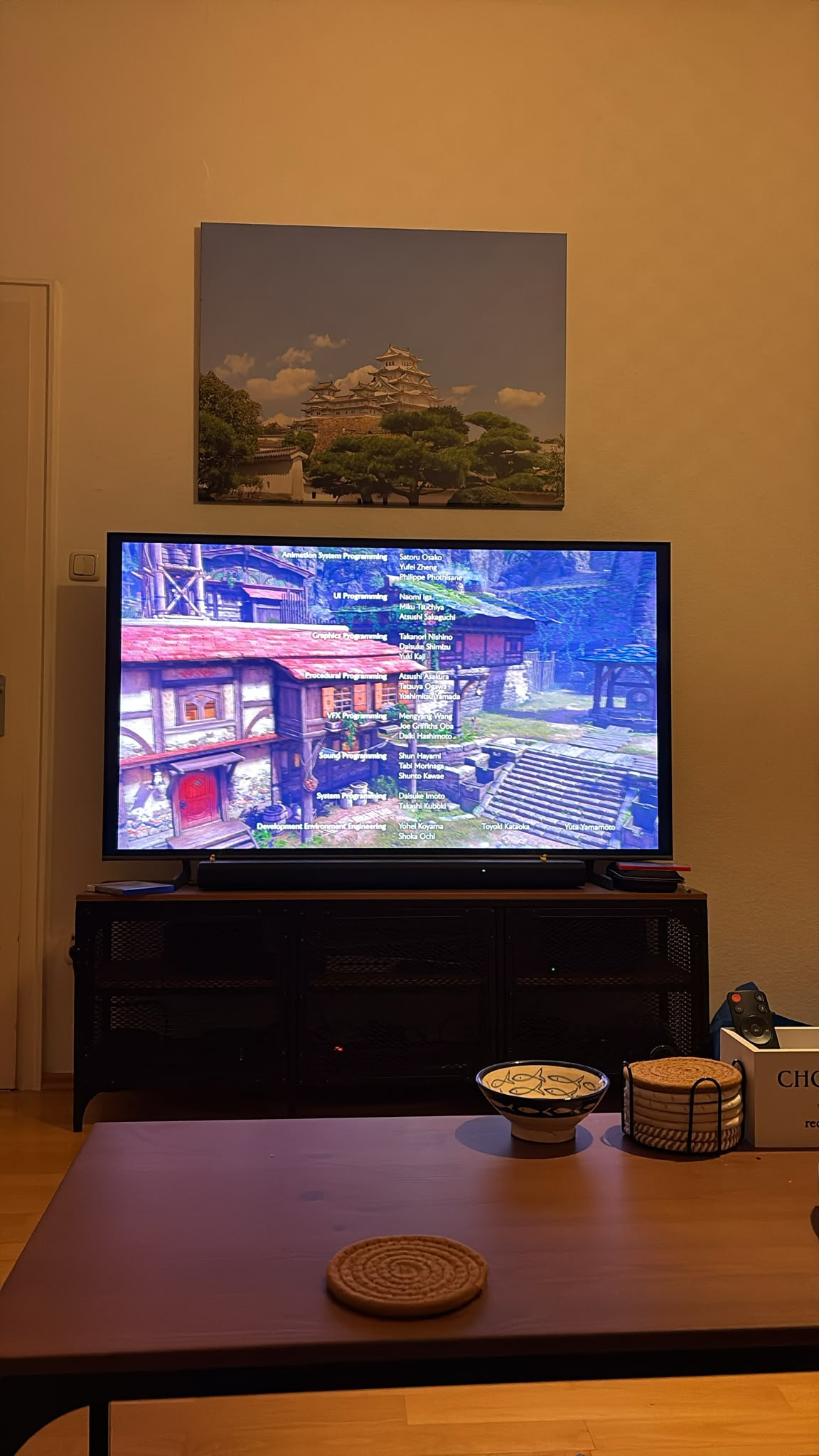
Every trailer, every new game release is an opportunity for exchanges and discussions, accompanied, I believe, for both of us, by the warmth of this treasure we have shared for over twenty years now. I like to think that the Nintendo saga is one of the threads that have woven our bond of friendship and continue to keep it alive; I like to believe that I have given it that little something which it has carried with it for two decades, as a legacy. What a lovely pleasure it is, one afternoon, to receive a simple message from him, accompanied by a photograph of the credits from the newly released remake, and to know that, controller in hand, each time, we are thinking of one another.
So, wasn’t it only natural that we, in turn, should pass on what was our shared treasure? When our little sister was given a 3DS, there was only one thing that stood to reason: her gaming journey simply had to get off to the best possible start. After the bitter failure of an introduction to Star Wars, the time had come to pass on our most precious possession to her. Ocarina of Time would lead the way! But there are some people who simply resist you. Irrevocably. It wasn’t for her. And, in fact, she never returned to the saga, not even to this day. Our sisterly bond proved fruitless in this regard. I savour with a certain delight this irony, which suits my youngest sister’s strong character so well. Nevertheless, her interest in video games has continued to grow over the years. And it is very different games that we now share experiences of.
Perhaps in a few years’ time I’ll be able to play one final role as a guide by introducing my own son to the saga and to Ocarina of Time. Perhaps he’ll become part of this lineage centred on a kingdom and its fantastical peoples. Or perhaps not. A legacy is always fragile in the way it is received, but that is also why it is worth trying.