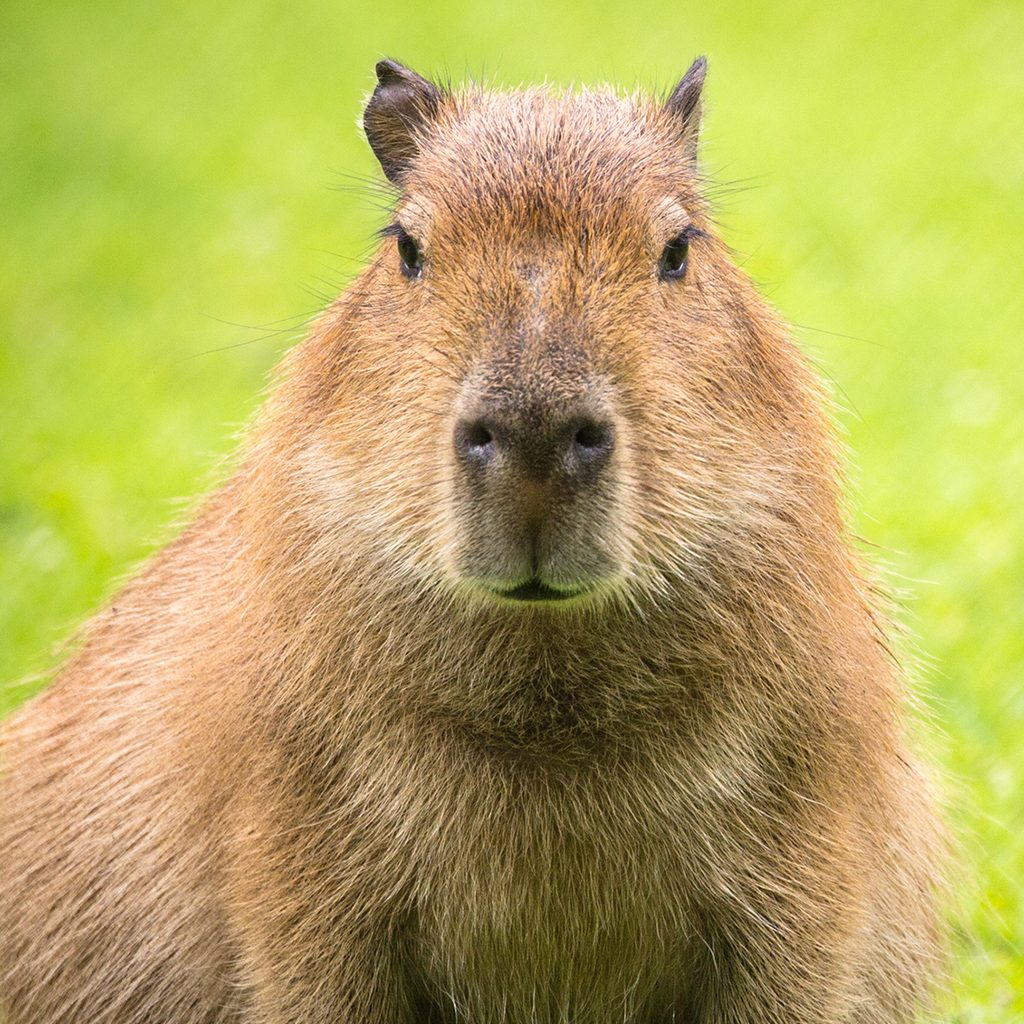
Have you heard of Bonnie and Clyde? The famous outlaws who sneaked out of… the Toronto Zoo? Because Bonnie and Clyde aren’t just the famous outlaws who terrorized and captivated 1930s America. They’re also… Capybaras. In 2016, their weeks-long escapade made headlines around the world, much to the chagrin of local authorities who struggled to track them down. Ten years later, Kitten Cup Studio decided to reimagine this story as a video game with a particularly evocative title: Capy Castaway. It’s a new addition to the gaming canon of one of the Internet’s most beloved animals, whose appeal among video game developers shows no signs of waning. But why does everyone love the capybara? And is it just a fleeting trend?
GAME OF FAUNE – SEASON 2 – Episode 1
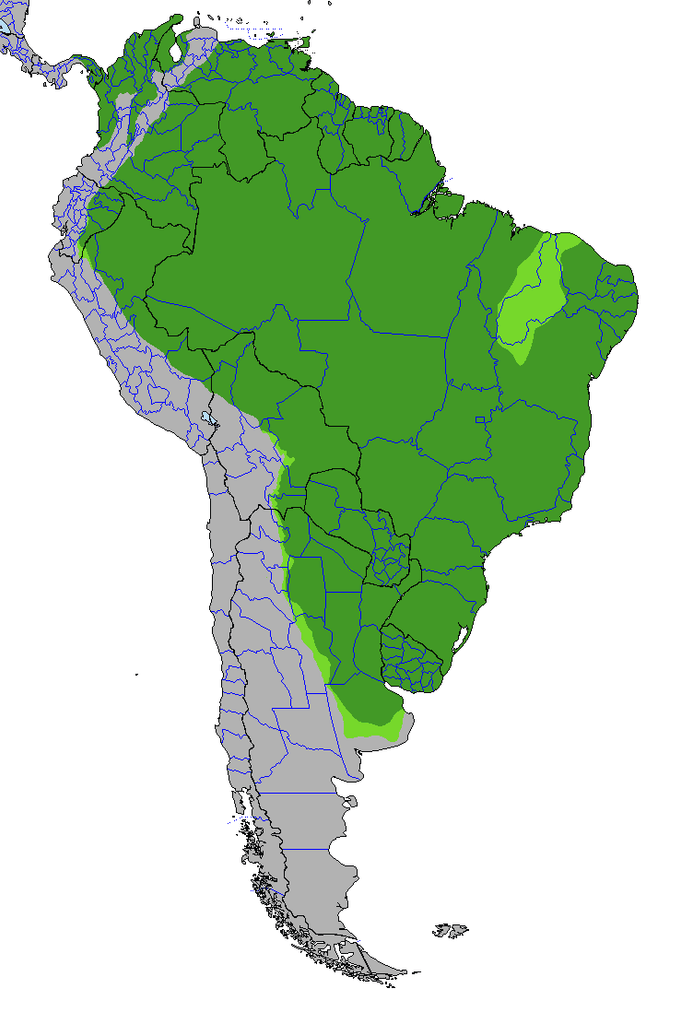
Herbivorous animal native to South America, the capybara is the world’s largest rodent, as its size suggests: 1.30 m long ( more than four feet) and weighing 65 kg (140 pounds) (and up to 100 kg (220 pounds) in captivity!). It lives in family groups of 10 to 30 individuals, centered around a dominant male in primarily marshy environments, spending most of its time in the water to protect itself from the heat or predators. While their wild population does not appear to be declining due to their vast range, which spans a significant portion of South America (see figure below), numerous disturbances in their habitat are nonetheless threatening them. Forest fires, decreasing rainfall, and, obviously, the destruction of their habitats have forced capybaras to adapt, even in major cities such as Buenos Aires, Argentina.
For the past few years, it hasn’t been uncommon to come across this animal on the outskirts of the city, particularly in the Nordelta neighborhood. About a thousand of them roam freely in this upscale neighbourhood, a neighbourhood built on the capybara’s natural habitat, because it’s always important to remember what came first. The animals move about freely in parks, gardens, and even right up to the front doors of houses. And while some people advocate for the animals—notably… because they were here first and aren’t really that much of a nuisance (aside from a few uprooted flower beds and some droppings on the lawns)—others are far more critical, citing safety concerns, public nuisances, and even attacks on pet dogs and more (TW in the video below: Injured animals). In 2025, the city of Buenos Aires therefore launched a campaign to spay or neuter and/or relocate the animals to an island 50 km away. This conflict appears to be ongoing as I write this article.
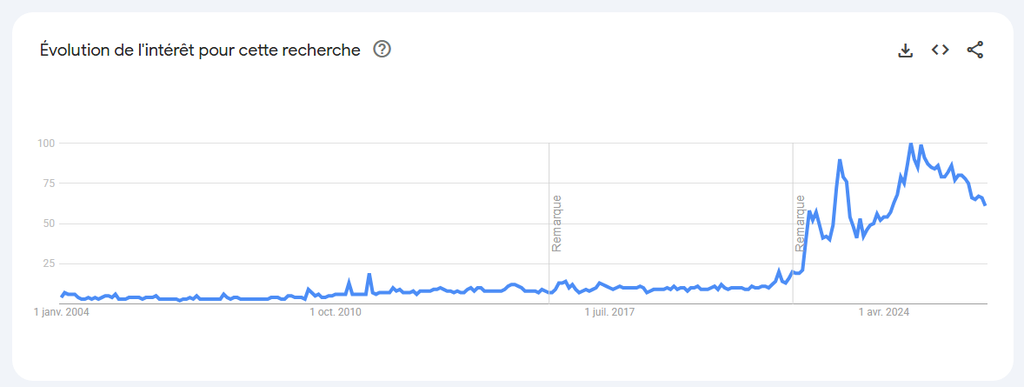
Beyond the scope of this overview, the capybara’s cuteness and closeness to humans were the catalysts for a true success story that took social media by storm at the turn of 2022. Indeed, an analysis of Google Trends searches for the term “capybara” shows that interest in the animal rose from 19% in 2022 to 92% 16 months later, and even reached 100% in December 2024. Today, its popularity has declined quite significantly, but it still remains above 60%.
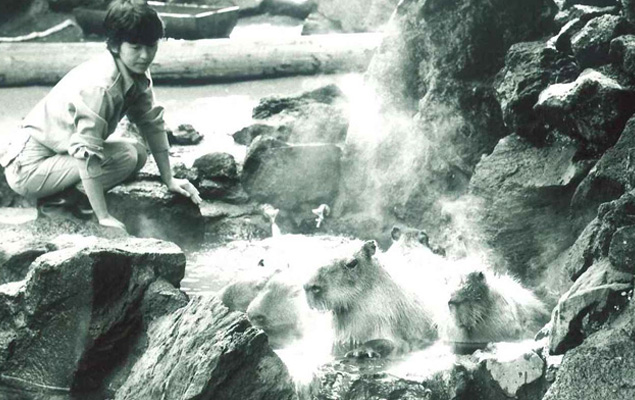
However, the story dates back even before the advent of the internet, to 1982, when the Japanese became fascinated by this animal, which seemed to take pleasure in lounging in the onsen (hot spring baths) at Izu Shaboten Zoo as December approached. A study later showed that the animal did indeed obtain real benefits from bathing in these hot springs, an idyllic image that would continue to resonate deeply with capybara enthusiasts, as we shall see very soon. Interest in the animal subsequently waned gradually across the country, with ‘Capymania’ patiently awaiting the moment when it would once again be in the spotlight.
This resurgence in popularity seems to have started with a short video called ‘Ok I pull hop’, published on 11 September 2020, in which a capybara is sitting in a car, chilling out to music by Don Toliver. The trend was fueled by a succession of photos and videos of our Argentine capybaras, which cemented the animal’s place in the collective imagination, before the Russian band Sto-Litchnyy Ona-Nas sealed its fame by writing a song that would go viral on social media in 2022. In the space of two years, the capybara has become the new trendy animal.
A cute animal that is close to people, as mentioned earlier, but above all a symbol of calm and tranquility, seeming to tolerate whatever is near it – be it a tortoise, a bird, or a mammal, even going so far as to serve as a snack for a rather overconfident pelican. This relative pacifism (in the wild, dominant males engage in fierce competition to lead the family group!) has therefore struck a chord with internet users, particularly during a dark era marked by division and an ‘every man for himself’ mentality. The capybara has thus naturally carved out a prominent place for itself amongst the symbols of the internet, and even within certain groups such as the LGBT community. Given all this, it won’t be long before we see it featured in some video games.
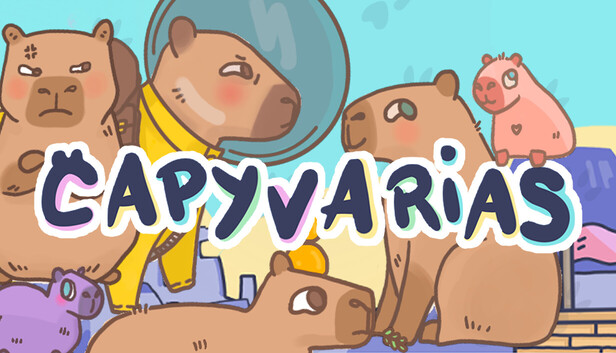
And so, the imagery I described a few moments ago will, of course, be reflected in the various video games featuring the capybara. And every developer I’ve spoken to or whose interviews I’ve read has consistently expressed an interest in the animal’s cuteness, whether it’s the main character or just a cameo, as in the game Nothing Strange Here. Cozy Ember, the developer of the game Capy of Gods , which I’ll come back to in a moment, fuelled this interest by revealing to me that the animal was also easy to dress up, and therefore to customise. A detail that has influenced the appearance of several characters within his game, and no doubt many other creations as well. The affection that some people have for this animal goes even beyond a simple virtual friendship. Kirani, the Franco-Brazilian developer of Capyvarias, told me in an interview for the French podcast Indie 500 that she used to come across capybaras in her hometown, as they live close to people’s homes there, and that they had even become a sort of local mascot.
The fact remains, however, that the first game to pave the way, Capybara Spa, was released in 2022, at a time when the capybara was becoming increasingly popular. At the start of this trend, the developers at Cozy Bee Games admitted in an interview that they had been inspired by the whimsical image of capybaras visiting Japanese onsens. The idea of a cosy spa management game therefore seemed an obvious choice for its creators, drawing on the folklore surrounding the animal. It was this folklore that formed the basis of Capy Castaway, with developer Saffron revealing that she had sketched illustrations of these capybaras bathing in the onsen before wondering how she could turn them into a more ambitious project.
But rather than revisiting the idea of the two capybaras, Bonnie and Clyde, on the run, which we mentioned in the introduction, Saffron and her team decided to tell the story of their offspring explained me Bee Zelda, the community manager of the team. So we play the couple’s young offspring, who set off on a tour around the world to recount their exploits. This shift in focus is accompanied by the introduction of another character, Corvi, a bird that the team are also very fond of, even though he is hard to spot in Toronto itself, where the studio is based. This new dynamic has created an asymmetry that has worked well for the gameplay mechanics, as the two animals possess different abilities.
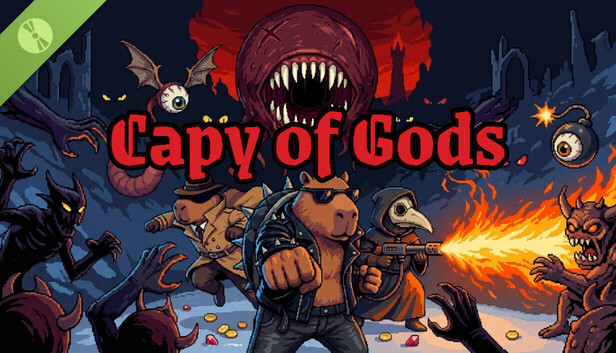
But apart from these examples and a few other games yet to be released, it seems to me that we’re reaching the limits of the Capybara’s presence in video games. Indeed, the capybara mainly features in many games as a joke, and no doubt sometimes even solely for marketing purposes. Capy of Gods, for example, is billed as a 2D Survivors-style game with a rather spooky atmosphere. A perfect contrast, as Capy Ember explained to me:
“In Capy of Gods, there’s a contrast, and that’s really at the heart of the game: the capybara is the calmest animal there is, and I’ve placed it in a chaotic world. It isn’t the capybaras who are subjected to the chaos; they’re the ones who bring order to it.”
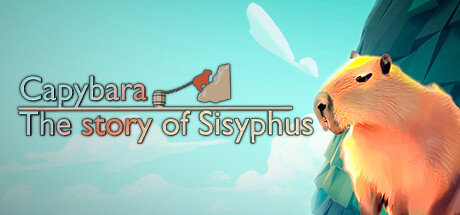
In Capybara, the Story of Sisyphus, the player controls a capybara chained to a barrel who must climb a mountain in ragdoll-style physics. Capybara Clash, meanwhile, puts its own spin on Worms, whilst Capyvarias, mentioned earlier, is a clicker game that actually lets you send capybaras into space. Far from criticising the quality of the games or the choices made by the developers, all this has led me to reflect on a thought I’ve had for some time now, one that is by no means limited to the humble rodent, king of the internet.

There was a time, in the 1980s and 1990s, when animal diversity was limited and associated with specific requirements. “Am I making a game with a level set in the sewers? Let’s just use snakes, bats or alligators, without distinguishing between them.” This was a simplistic yet logical line of thinking for its time , a point we’ll return to in a future episode.
Today, species diversity has never been more spectacular, and we’ve already had the chance to see some rather marvellous examples, if only through the first series of Game of Faune. But species diversity does not yet necessarily seem to align with the mechanical diversity that could offer such opportunities. This raises the question of whether certain animals can therefore make good video game characters, in the emotional sense of the term. To put it another way: are animals easely switchable?
During a lecture I gave at the Sorbonne on 19 September on the representation of animals in video games, I had the opportunity to carry out a short stylistic exercise entitled ‘Every bit of knowledge can make a difference’. In it, I outlined some facts I’d gathered about an animal: its morphology, of course—the easiest aspect to present and incorporate into a game—but also the animal’s habitat, its ecology and its social behaviour; and I could undoubtedly have gone into greater detail. This animal was, of course, chosen with full awareness on my part; it was the Capybara.
The aim of this thought experiment was to demonstrate that it was possible to go beyond one’s own experience by trying to gather some information about a popular animal, so as not to rely on the same old tropes. And what applies to the capybara also applies to other animals. For I maintain that a better representation of animals also requires a consolidation of the knowledge incorporated into such representations. The aim is not to be encyclopaedic, nor even to say that we should no longer make games featuring a particular popular animal. Rather, it is to reflect on why a particular animal should feature in a particular game, setting aside all financial or folkloric considerations. And here again, we’ll have the chance to discuss this further very soon in this second series of Game of Faune, as this lack of reflection causes, for example, enormous harm to certain animals or groups of animals.