

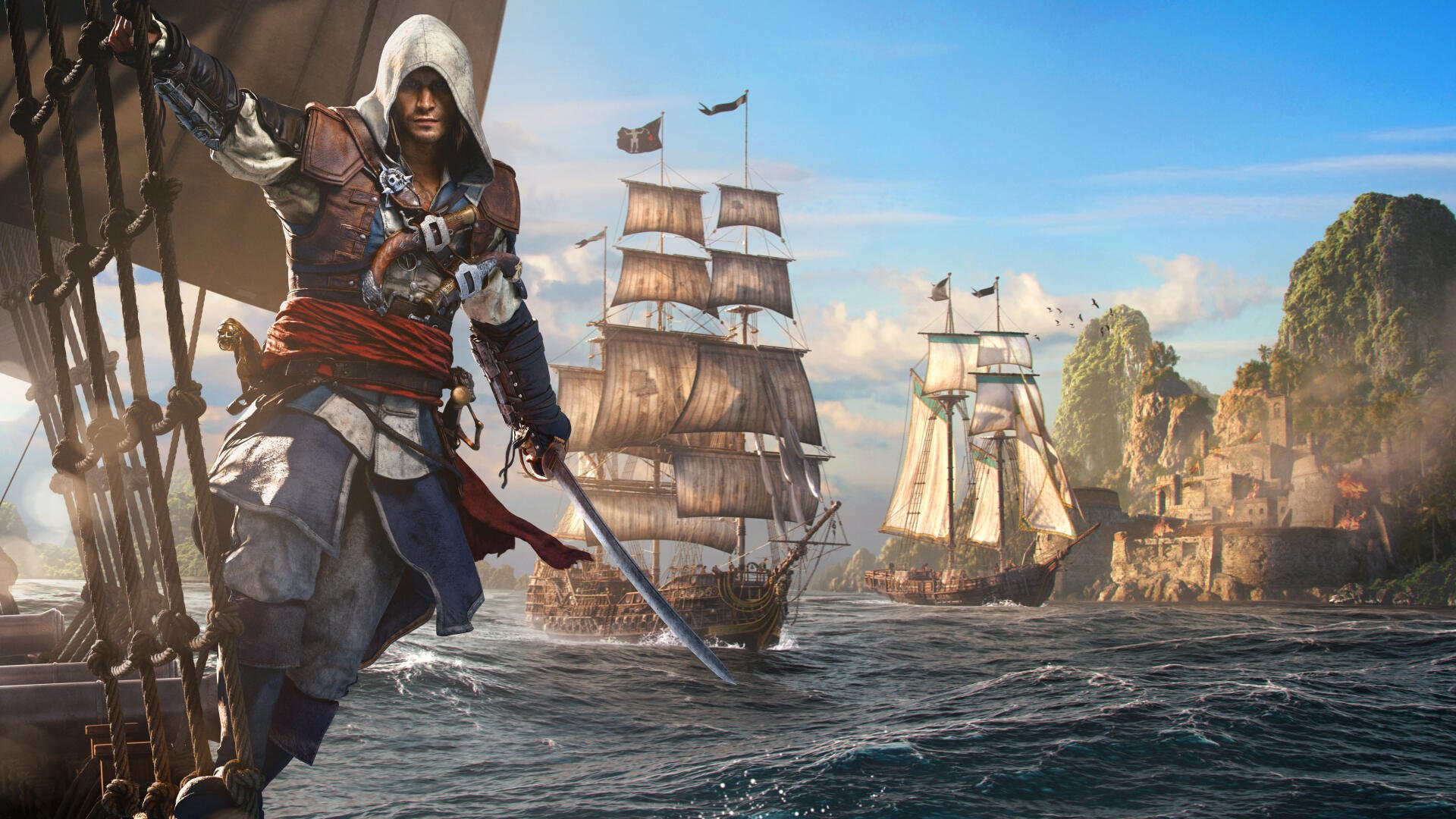
At the beginning of Assassin’s Creed : Black Flag, Edward Kenway is nothing more than a drifter dressed in filthy rags. He is an unremarkable pirate, one of many who roamed the Caribbean seas at the time. It takes only a few minutes of gameplay, and the forceful acquisition of Duncan Walpole’s Assassin outfit, for us to begin discovering this somewhat rough character as he sets sail alongside Stede Bonnet. Before long, the young Welshman of humble origins reveals himself to be a man constantly running forward, fleeing from whatever lies behind him. Having always felt trapped in an existence too narrow for his ambitions, he sees the Caribbean Sea as a way to escape the circumstances of his birth. From his native Wales, that endless blue stretched out before his eyes, drawing a horizon beyond which lay the promise of unknown territories, where he could leave his past behind, and above all, the place that birth had imposed upon him, in order to finally become someone.
For centuries, the vast expanses of our planet’s oceans have fuelled the fantasy of freedom. The New World, embodied by distant colonies and transatlantic trade routes, represented for thousands of men an opportunity to start anew and rise above their social class. The ocean was perceived as a frontier where one could break free from the rules of the Old World. It was in this space, brimming with promises and dreams, that the figure of the pirate was born. Popular imagination has long reduced him to a handful of iconic images, forever intertwined with one another: the black flag, the wooden leg, rum, and treasure maps marked with a big X where one was supposed to dig. Yet behind the romantic myth lies a complex historical phenomenon. The Golden Age of Piracy, which primarily spanned the late seventeenth and early eighteenth centuries, unfolded in a world profoundly shaped by imperial wars and economic exploitation. Pirates did not emerge from chaos simply because the urge to plunder merchant ships had suddenly sprung into the minds of a few troublemakers. They were the offspring of a brutal system that had produced them.
Following the War of the Spanish Succession, thousands of sailors accustomed to the violence of European conflicts found themselves unemployed. Yet the Spanish, English and French empires continued to expand their dominion over the Caribbean, turning the ocean into a vast commercial theatre where goods, slaves and wealth circulated. For some men excluded from this order, piracy became a means of survival, while for others, it was a way of defying a world that offered them no place beyond the one they had been assigned at birth. This is where the figure of the pirate intersects with that of the social bandit studied by Eric Hobsbawm. This concept embodies a particular vision of banditry, portraying the men and women who chose this way of life as figures rejecting an order they considered unjust, to the point that they sometimes undergo a form of rehabilitation in collective memory. While Jack Sparrow may captivate us, we should not turn the pirate into a romantic hero. He remains a criminal, capable of cruelty and predation. Nevertheless, he becomes the symbol of a deeper question: is there a space where man can escape the structures that determine his life?
This is precisely the ambivalence that Assassin’s Creed IV: Black Flag explores. Behind its spectacular naval battles, tropical islands, hidden treasures and dazzling graphics that make you want to dive headfirst into the ocean, Ubisoft’s game does more than tell an epic adventure in which we cut down dozens of Templars with our swords. Above all, it tells the story of a dream fading away and the end of an era in the face of the advance of the so-called civilised world. Most players remember Black Flag for the unique sensation of sailing aboard the Jackdaw, for its naval battles, or for that almost childlike feeling of freedom when exploring the Caribbean. The figure of the pirate has always had a way of gently stroking the strings of our imagination. But beneath this surface lies a far more melancholic narrative, one about men who believed they could build a world outside of History, only to discover that History always catches up with them in the end. Nassau is a cradle of promises. It is the famous pirate republic of Nassau, a fragile experiment in emancipation that sought to create a society without kings or masters. The promise was to make it a place where outcasts and forgotten individuals could imagine a different way of existing. Unfortunately, every utopia carries within it the seeds of its own demise. The Golden Age of Piracy was never meant to last. As modern states rose to power, pirates gradually became anachronistic, like symbols of a world already on the verge of disappearing. Edward Kenway, who believed he was searching for freedom, would gradually discover that perhaps he had been pursuing something else entirely, and that his quest for treasure and riches had lulled him into a false sense of hope.
This is what makes Black Flag so singular, as the game initially invites us to look at the ocean in the same way Edward himself does, namely as a space vast enough for no one to ever find us. Nassau then seems to embody this fantasy, as it is a place where one could start over and forget who they once were in order to become whoever they wished to be. Yet this promise already contains its own contradiction, for no man can live outside the world forever. As this fleeting respite begins to draw to a close, Edward discovers that simply leaving is not enough to make one free. This is, in part, where the tragedy of Nassau lies, because like every other society that has sought to exist outside the world, it cannot forever escape the forces that shape it. The pirate utopia is not merely destroyed by English and Spanish cannons. It is doomed by a changing world and by a History moving in a direction that leaves no room for those who refuse to belong to it. What the pirates mistake for a new beginning may ultimately be nothing more than one final reprieve before the modern world crushes them.
Nassau, or the Impossible Dream of a World Without Masters
When discussing piracy, it is important to distinguish myth from reality. In particular, we must rid ourselves of an idea deeply ingrained in our collective imagination, one that suggests pirates somehow appeared out of thin air or by sheer coincidence in the Caribbean seas, emerging from somewhere between a bottle of rum and a chest filled with gold coins. Their origins follow a far more mundane historical logic, for the pirate is a product of his time. He emerges precisely when his world begins to generate enough violence and inequality for certain men to decide to turn those very mechanisms against the people who put them in place. At the beginning of the eighteenth century, Europe was still a mosaic of empires vying for control of the world. The War of the Spanish Succession, which came to an end with the treaties of Utrecht and Rastatt in 1713 and 1714, had mobilised thousands of sailors, privateers and soldiers for more than a decade. When the conflicts ended, these men found themselves far from home, deprived of any prospects for the future. They were left at the heart of a world that no longer had any need for them. Thus, many seasoned sailors, accustomed to violence and the precarious conditions of life aboard military vessels, found themselves available just as transatlantic trade was undergoing considerable expansion. There is something delightfully paradoxical in observing how Europe, having waged war to expand its commercial interests, found itself confronted with a population of sailors willing to violently prey upon that very trade.
At the time, the imperial system relied on a dizzying circulation of goods, people and capital between Europe, Africa and the Americas. Sugar, tobacco, cocoa, precious metals and enslaved people crossed the Atlantic aboard ships that formed the very heart and lungs of a system built on conquest and exploitation. The infamous triangular trade was one of the defining structures of early globalisation. The same powers that claimed to bring civilisation to the territories they colonised systematically organised their exploitation. It was within this world that piracy took root. We must therefore understand that piracy was not external to the imperial system. It was an offshoot of it. The same sailors could transition from privateers, whose activities were legal when serving the interests of a crown, to pirates, criminals the moment they ceased to obey that same crown. The boundary between the two was anything but clear to those who crossed it. During European wars, states issued letters of marque to private captains, authorising them to attack enemy vessels. When peace returned, these men suddenly became undesirable. The violence that had once been a patriotic virtue became a crime. The pirate was thus aware of a truth as old as power itself: legality is not always a matter of morality, but often a matter of allegiance.
This reversal helps explain, in part, why the figure of the pirate has retained such symbolic power. There is something profoundly romantic about the idea of a man who refuses to lay down his arms simply because kings have decided that the war is over. Behind this image, however, lies a far more brutal reality. Living conditions aboard merchant and military ships were appalling, defined by discipline, physical violence, precarious wages and an almost absolute hierarchy. In Villains of All Nations, Marcus Rediker demonstrated how some of these men transformed the pirate ship into a kind of social laboratory, one that almost anticipated some of the democratic principles underpinning our societies today. It would obviously be absurd to conclude from this that pirates were revolutionaries ahead of their time. They remained thieves and predators. They could display terrifying levels of violence and certainly had no intention of building an egalitarian society in the sense we would understand it today. Nevertheless, their existence reveals something far more interesting than the picturesque image of the romantic buccaneer. The figure of the pirate reminds us that when individuals are excluded from an established order, they may seek to invent their own rules. And this is precisely where Nassau comes into the picture. At first glance, Nassau seems little more than an ideal place for criminals. It is a small port town in the Bahamas, far removed from the centres of European power, close enough to trade routes for pirates to grow wealthy, yet marginal enough for the authorities to struggle to impose their control. Its significance extends far beyond that of a simple hideout. When European wars ravaged the colonial administration of the Bahamas and the British presence on New Providence dwindled considerably, Nassau became one of the main gathering points for pirates operating in the Atlantic. After 1713, former privateers who had been discharged from service flocked to the region, and the town eventually became the heart of what would retrospectively be known as the “Pirate Republic”.
The term is obviously imperfect. Nassau was not a republic in the modern sense of the word, and it would be dangerous to project our own political conceptions onto these men. Yet something quite extraordinary happened there. Aboard many pirate ships, captains could be elected and removed from power by their crews. Loot was divided according to previously established rules, and injured men could receive compensation. Far from being absolute, the captain’s authority was often constrained by the “articles” collectively adopted by the crew. Rediker thus describes pirate crews as democratic, egalitarian and multinational communities, standing in stark contrast to the extremely rigid hierarchies of merchant and military navies. As I write these lines, a striking irony gradually begins to emerge. In a world where kings ruled by right of birth, men regarded as criminals were able to elect their leader and live according to their own rules. In a society where birth largely determined the place each individual occupied, the deck of a ship became a space where power could be negotiated. In an economy where captains and shipowners wielded considerable authority over their crews, some pirates collectively decided upon the rules to which they agreed to submit. The pirate ship thus became a small floating society, freed from some of the conventions of life on land. This is what makes the history of Nassau far more interesting than the simple tale of a gang of outlaws who found somewhere to hide their loot. These men were not merely seeking to possess more, but above all, to no longer be possessed by anyone.
The experiment was, of course, deeply contradictory. Pirates attacked ships, seized goods and were themselves part of a system of violence that stretched across the entire Atlantic. Yet their internal organisation could paradoxically prove more egalitarian than that of the very societies they plundered. Men from different backgrounds could sail together; individuals marginalised by the colonial order could find their place among these crews; some freed slaves and Black men could join pirate communities. Rediker rightly emphasises this multicultural dimension, which made pirate crews particularly distinctive societies within the eighteenth-century Atlantic world. This is something Black Sails understands exceptionally well. The series, created by Jonathan E. Steinberg and Robert Levine, places Nassau at the very heart of its narrative. Captain Flint is not seeking to become the richest pirate on the island. His purpose is quite different, as he seeks to preserve a territory that might escape imperial domination. When the English come to reclaim Nassau, they are not merely trying to take back a strategic port. They are also sending a message in response to a movement that has become increasingly troublesome. The confrontation between the pirates and Woodes Rogers carries an almost philosophical dimension, as we have, on one side, an imperfect, violent and unstable yet autonomous society, and on the other, a civilisation that brings with it commerce, law and prosperity, but also colonial domination and subjugation. Black Sailstakes this contradiction to its logical conclusion by turning the struggle for Nassau into a much broader war against empire and the colonial order. The series also makes a remarkable point of portraying pirates as the scapegoats of a civilisation determined to keep its children within its grasp. This is probably why pirates hold such a powerful fascination for popular culture. From Treasure Island to Pirates of the Caribbean, from Long John Silver to Jack Sparrow, we have transformed these criminals into figures of freedom. Robert Louis Stevenson gave the Western world an imagery that would leave a lasting mark on our perception of piracy, filled with treasures, maps, parrots, the black flag, and the idea of adventure as a promise of an endless horizon. But beneath the myth of the adventurer lies a deeper question: what becomes of a man when he decides that he no longer wishes to live by the rules imposed upon him? This is precisely what Black Flag explores with remarkable intelligence.
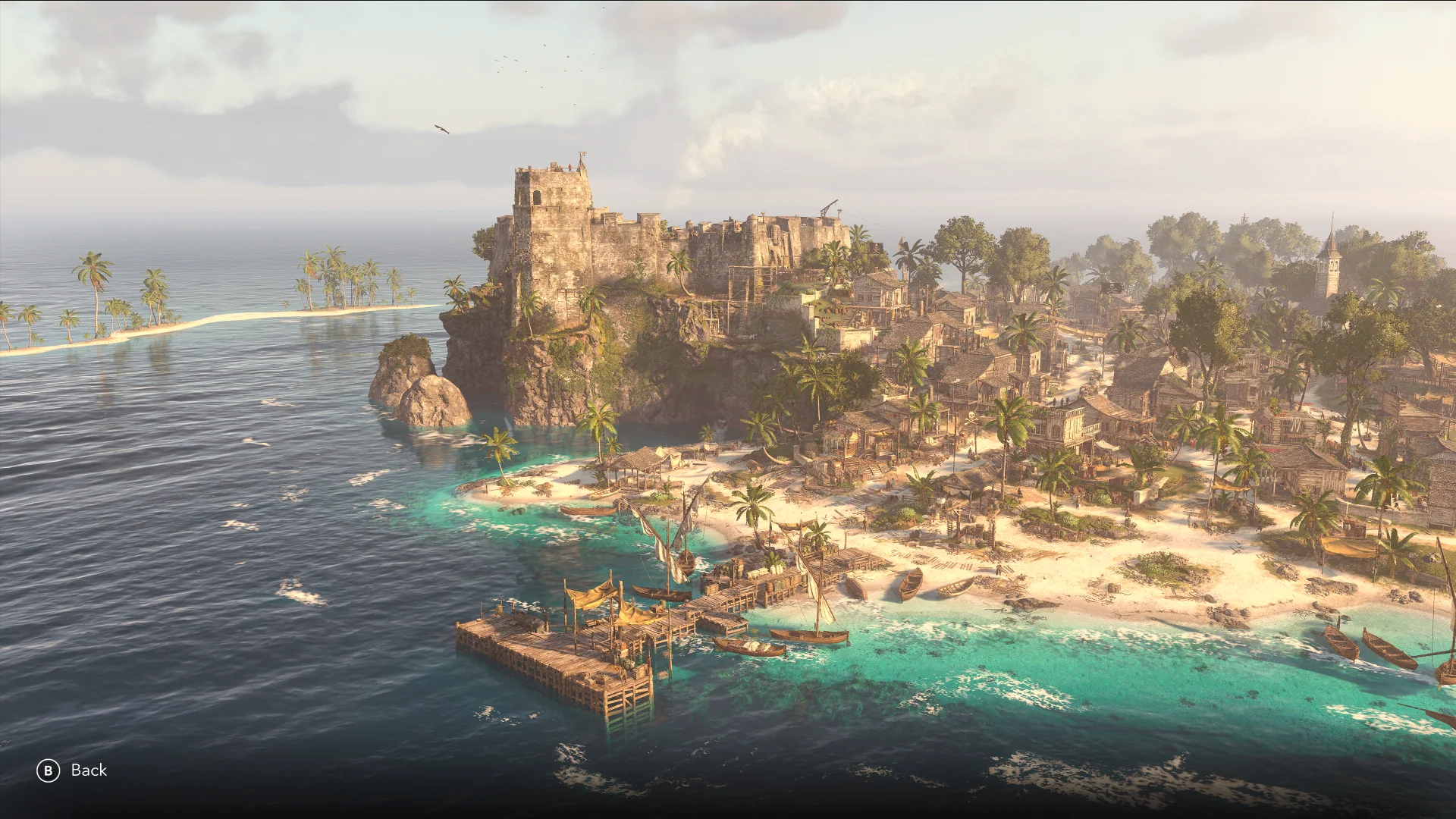
Ubisoft could have turned Nassau into a picture-perfect postcard setting. After all, it had everything one could ask for: white sandy beaches, smoky taverns, sea shanties and enough famous pirates to fill several history books. The studio could simply have indulged us with the most immediate fantasy of piracy. Indeed, for a large part of the adventure, that is exactly what the game seems intent on doing. Yet the postcard effect quickly fades away. Nassau is also depicted as dirty, poor and violent. The town is made up of fragile buildings, muddy streets, drunkards and men who seem to live just inches away from destitution. Nothing here possesses the architectural grandeur of Europe’s great cities. There are no palaces, no cathedrals either. There is no great civilisation to admire, only a community of outcasts trying to survive between two expeditions at sea. And yet, despite all this, Nassau breathes with remarkable vitality. This may well be one of Black Flag‘s greatest achievements: its ability to give this place something that the wealthier cities in the series have not always possessed. Nassau is disorderly because it is not entirely controlled. It is poor because it is not integrated into the great circuits of power. It is dangerous because no one holds enough authority to claim they can impose their rule upon it indefinitely. In a word, it is free. Or at least, that is what it seems to be.

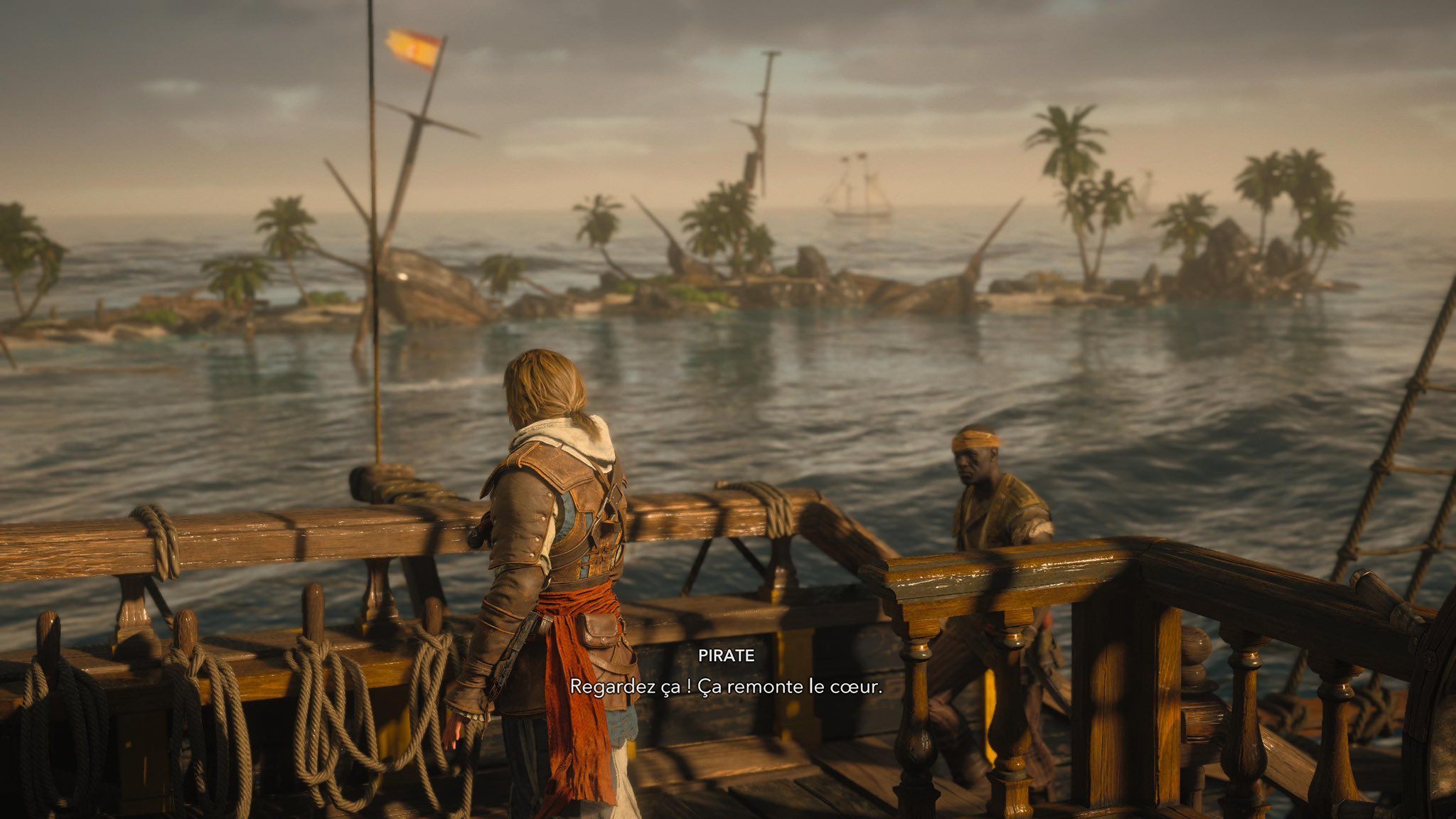
For Edward Kenway, who has never truly found his place in the world he belongs to, Nassau comes as a revelation. He does not need to be a nobleman. He does not need a title. He does not need to answer to a king. He can become a captain, amass gold, command his own ship and have his name written into history. Where his life on land was constrained by the circumstances of his birth, the sea seems to abolish every boundary. All he has to do is look towards the horizon. This is where Black Flag proves far more intelligent than it might initially appear. The game constantly associates freedom with movement. To be free, for Edward, is to be able to leave. To leave behind a marriage that does not satisfy him. To leave behind a profession that offers too little. To leave a country that has nothing to offer him. To set sail for the Caribbean, then pursue treasures, then ships, then an ever-greater fortune. His dream never really has a destination. It consists entirely of successive departures, a constant flight forward. The sea thus becomes the perfect metaphor for his desires. It is immense, without visible boundaries, indifferent to titles and social classes. On its deck, a man of no particular standing can become captain. A Black man can command white men. A woman can assert her authority over towering men. On the horizon, there are no mountains, castles or borders to remind anyone of the place they occupied yesterday. It is the great fantasy of untouched space, a world where one might start again from scratch. Yet there is a significant problem, because the ocean is not simply a vast expanse overflowing with promises. Quite the contrary, it is criss-crossed by countless maritime routes belonging to empires. Their ships, goods and armies travel across it. Every sea route connects a territory to a political power. Every stolen cargo belongs to someone. Every island is claimed by a crown. Even Nassau, this enclave that creates the illusion of having escaped the world, exists only within a temporary gap left vacant by European wars. The pirate dream therefore contains its own contradiction from the very beginning, for it seeks to escape the system while making a living from what that system produces. It wants to abolish masters while growing rich from the goods they circulate. It dreams of a world without borders while depending entirely on the trade routes established by empires. Above all, it believes it can remain forever beyond the reach of History. This is the illusion that Black Flag gradually dismantles.
Nassau is a historical anomaly born out of the temporary weakness of states, the disorder left behind by wars and the sheer vastness of the Atlantic. In 1718, Governor Woodes Rogers arrives in Nassau with a straightforward mission: to restore British authority, even if it means offering the pirates a royal pardon in order to avoid bloodshed wherever possible. Some accept, others refuse. Benjamin Hornigold, for instance, chooses to reintegrate into the very order he once fought against, while men such as Charles Vane continue the struggle. The Pirate Republic does not disappear because it has suddenly ceased to believe in its ideals. It disappears because the world around it has grown powerful enough to no longer tolerate its existence. This is the great melancholy of Black Flag, and what brings it so close to Red Dead Redemption 2 in terms of its themes. Nassau is not destroyed because the dream was misguided, but because the world was never designed to give it a lasting place. The pirates believed they had found somewhere no king could tell them what to do. All they had really found was a place where, for a few years, no king was powerful enough to come and tell them. This distinction changes everything, because utopias often need an imperfect world in order to emerge. They are born in the cracks of power, in spaces that History has not yet entirely sealed off. Unfortunately, when states consolidate their authority and empires realise that these men pose a threat to their interests, the crack eventually closes. Utopias have always come with an expiration date, much to my dismay.
The Lost War Against History
It is relatively easy, when looking at Assassin’s Creed IV: Black Flag, to search for its main antagonist among the faces the game puts before us. There are the Templars, of course. There is Torres, the Order’s Grand Master, whose shadow soon looms over Edward’s actions and the strange underground war waged between Assassins and Templars. There is Woodes Rogers, quickly introduced as the British Crown’s military enforcer against piracy. Then there are the English soldiers, the Spanish ships and all those men representing an authority against which the pirates spend their lives fighting. Yet none of them is truly responsible for the disappearance of the world the game invites us to fall in love with. The true antagonist of Black Flag has no face. It is intangible. The enemy is time, and therefore History itself. This may well be one of the game’s most interesting ideas, precisely because it remains almost entirely in the background, never quite being brought into the open. Edward is not simply waging war against the Templars. He is not even really fighting to preserve Nassau. He is sailing through a civilisational shift whose full implications he has yet to understand. Indeed, the world in which he seeks his fortune is already slowly disappearing by the time he sets foot in it. As mentioned earlier, piracy was able to exist within the gaps left by the European powers. It could thrive thanks to the broader historical context, and because the immense distances separating Europe from its colonies made effective control of the seas difficult. This disorder gradually became incompatible with the economic and political ambitions of the empires. As transatlantic trade grew in importance, merchant ships became far too valuable to leave at the mercy of men who made their living by capturing them. Britain therefore sought to secure its trade routes, leading to an increased military presence in the Caribbean. Piracy was no longer a more or less tolerated feature of maritime disorder. It had become a political problem that needed to be dealt with.
This transformation is fundamental because it changes the very nature of the conflict. For a long time, pirates could believe that the ocean was vast enough to belong to them. To some extent, they were right. The seas were immense, territories were poorly controlled and authorities were unable to monitor every bay. Yet this freedom depended precisely on the imperfections of the world around them. It existed because states had other priorities following the wars between rival crowns. But states soon regained their footing and returned their attention to colonial affairs. They consequently strengthened their colonial administrations and the protection of their commercial interests. The genius of the crowns lay in realising that turning an enemy into a subject would probably prove more effective than simply seeking to destroy him. This is precisely the purpose of the royal pardons offered to pirates in 1717 and 1718. British power did not respond to them with cannons alone. It offered them a way out. They were given the choice of abandoning their pirate lives and recognising the authority of the king in order to rejoin the civilised world. Avoiding bloodshed was a preferable solution, both for the Crown and for some pirates. Power was not seeking to kill the pirates. It was seeking to suffocate the counter-society they had established and reclaim the men who could still serve its interests. Black Flag is far more tragic than a simple tale of pirates fighting soldiers. The antagonist standing against Edward and the players is therefore the force that gradually transforms the ocean into a place where it is no longer possible to live out one’s dreams. In this respect, Woodes Rogers’ arrival in Nassau in July 1718 is arguably more significant than any naval battle. Historically, Rogers arrived with ships, soldiers and a clear mission: to restore British authority in the Bahamas. His arrival did not lead to some grand final battle. Instead, his landing created a deep division among the pirates, as many captains accepted the royal pardon and attempted to convince the remaining crews to do the same. Others refused the offer, like Charles Vane, who rejected submission and managed to escape. Nassau thus fell almost without a fight. It is a particularly cruel way to bring an end to a utopia. It did not die amid noise and destruction, but simply because those who had brought it into existence gave up and agreed to become part of respectable society once again.
Hornigold is the first to understand this reality. He embodies a disillusioned cynicism in the face of Nassau’s failure, brought about by men’s inability to organise themselves into a genuine counter-power. The man who had helped bring this space of freedom into existence ultimately chooses to join the British authorities and becomes a pirate hunter. There is something profoundly ironic about his journey, as the man who once helped turn Nassau into a refuge for those who rejected the rules of the world gradually becomes one of the very instruments tasked with bringing them back into it. Hornigold is no despicable traitor. He is a man who gives up, recognising before the others that the world has changed, and that when a world changes, the freedom of some can sometimes become the servitude of those who refuse to change with it. Black Flag could have turned this evolution into a Manichaean opposition between good pirates and evil representatives of the established order. Instead, it chooses something far more interesting by showing us men reacting differently to the same historical catastrophe. Some resign themselves to their fate. Some stubbornly refuse to give in. Some lose their minds. Others try to save whatever can still be salvaged. All of them, in their own way, lose. One of Black Flag‘s greatest strengths is its understanding that the disappearance of the pirate world had to be conveyed through its characters. Nassau falls apart from within because the men who built it do not share the same understanding of what freedom means once that freedom comes under threat. Hornigold chooses security. This decision may seem ordinary, almost cowardly, but it is actually one of the most human choices in the game. He accepts the royal pardon while others continue to dream of an independence that has become almost impossible. He understands that the age of piracy is drawing to a close and would rather survive than die for an idea he has failed to give substance to in more than a decade. He thus becomes a symbol of all those who, when the world changes, choose to fall back into line. He is almost a universal figure of the revolutionary activist who gradually grows older and quietly finds his way back into the system. Every era produces its own Hornigolds: those who begin by challenging the rules before realising that it is sometimes more comfortable, or more sensible, to participate in the system than to keep fighting against it. This is not necessarily cowardice. Sometimes, it is simply a survival instinct. Hornigold chooses to live at the expense of idealism.
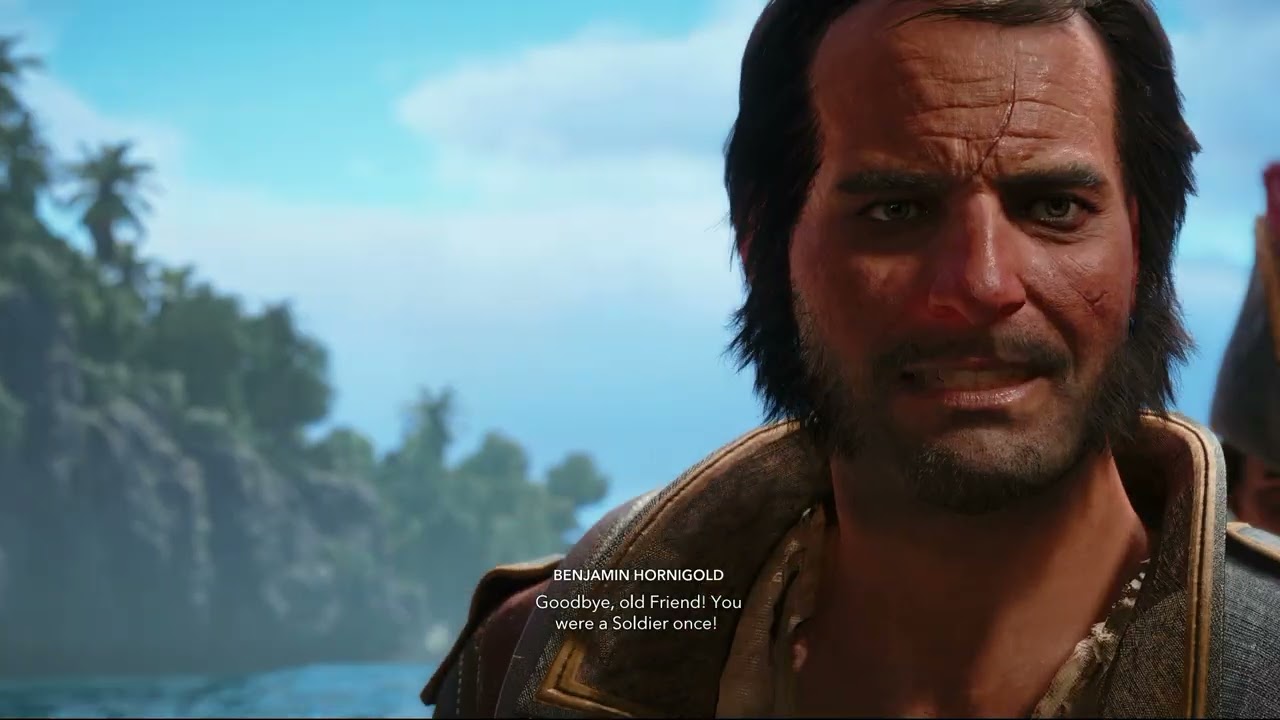
If Charles Vane is presented as Hornigold’s main opponent at this point in the story, it is because he embodies the very opposite ideology. For him, freedom allows no compromise. He rejects the pardon, rejects British authority and, above all, rejects the idea that he should have to give up who he is simply to carry on existing. When Woodes Rogers arrives in Nassau, Vane sets fire to a ship and uses it as a fireship to break through the blockade before making his escape. Historically, this episode marks one of the last spectacular acts of resistance by the old pirate world. Vane is fascinating because he represents an almost absolute conception of freedom. To him, being free means belonging to no one. What he fails to realise, however, is that a freedom which refuses all limitations eventually becomes incapable of building anything. Vane no longer knows what to do with his freedom once the world stops offering him a space in which to exercise it. He is no longer truly trying to build Nassau. He is not even trying to become wealthy. He simply wants to keep being Vane. His existence ultimately becomes one long act of defiance, leading him to madness before he rots away in a Port Royal prison cell. There is something romantic about this stubbornness, but also something profoundly tragic, because Vane’s romanticism rests on the illusion that a sufficiently strong will can overcome historical circumstances. Yet no individual will, however fierce, can prevent a world from disappearing.
Edward Thatch may be the one who understands best what is happening. He knows that legend alone will not be enough forever. He knows that warships are becoming more numerous, that the authorities are gradually reclaiming control and that the age of grand adventures is drawing to a close. He even considers retiring. In the game, his desire to abandon piracy gives his character an almost paternal dimension, tinged with resignation. Blackbeard is no longer merely the mythological pirate known throughout the world. He becomes a tired man searching for one last opportunity to live differently. Unfortunately, he makes the same mistake as so many other characters in the story by believing that time can be negotiated with. Thatch wants to leave the legend behind, but he does not really know how to become an ordinary man again. He has spent too long building his own myth to simply rid himself of it. Edward Thatch and Blackbeard have become inseparable. When the world sets out to destroy Blackbeard, it is also hunting Edward Thatch. This is where the trajectories of these characters become particularly interesting. Hornigold accepts his place in History. Vane chooses to fight against it until he goes mad. Blackbeard understands that History is winning, but still hopes to disappear before it catches up with him. Blackbeard’s death goes far beyond the character’s own fate. It is central to everything that follows in the story, and its significance is almost surprising given that he is not, fundamentally, one of the game’s main characters. When Edward watches helplessly as his friend is killed, something changes irrevocably in the adventure. Until that moment, the player could still believe that the pirate world was eternal. With Blackbeard’s death comes the end of the illusion that this adventure could last forever. The scene takes place off Ocracoke in 1718, during the confrontation between Blackbeard and the British forces commanded by Robert Maynard. Edward tries to come to his friend’s aid as British soldiers close in around him. Thatch fights to the very end, as though the sheer violence of his final battle might still allow him to remain the man he had always claimed to be. Then, in the midst of this deadly confrontation, he utters a line that has become one of the most famous in the franchise:
“In a world without gold, we might have been heroes.”

This line is magnificent because it contains the entirety of Black Flag‘s message. For Blackbeard, gold is more than mere wealth. It embodies the entire system to which pirates belong, despite themselves. They wanted to break free from it, but their dream of freedom was always tied to the ability to take and possess. They wanted to escape the world of commerce while making their living from its riches. They rejected the empires while attacking their ships. They wanted to build a different kind of society while taking part in the very economic violence that sustained the colonial world. Blackbeard understands something that the young Edward is still incapable of seeing. Their mistake was not choosing piracy, but believing it was possible to become heroes in a world built around conquest and power. There is something almost Shakespearean about the tragedy contained in this line. As though, in the moment of his death, Blackbeard finally accepts that he is nothing more than Edward Thatch.
Throughout the game, Blackbeard understood the importance of spectacle. He knew that fear was a weapon. As he himself put it, you had to give your enemies something to fear. That is why he relished the idea of becoming a creature so terrifying that men would fall to their knees before him. He had therefore spent his life building a myth. Unfortunately, no one can bargain with death. When British soldiers surround him and cut him down, there is no more Blackbeard. All that remains is a man of flesh and blood, capable of bleeding and dying. During the few seconds in which we watch helplessly as he dies, Black Flag ceases to be the fantasy of freedom it had promised us. The player realises that everything they loved about this world can disappear. That is what makes the scene so deeply unsettling. Blackbeard’s death marks the first real crack in the world the game had built around us. Until then, piracy had been synonymous with freedom and open horizons. With the loss of this leader, it suddenly becomes something already being swallowed up and digested by civilisation. The world will keep turning without Thatch. British ships will continue to sail. The empires, meanwhile, will continue to expand. Somewhere across that vast ocean, a man we thought almost immortal has just died.
The chronology of events gives the impression that the gates of paradise are closing abruptly. Nassau falls, and then Blackbeard follows. In the years that come, Atlantic piracy rapidly declines, until historians generally place the end of its Golden Age around 1726. If Blackbeard’s death carries a weight that few other deaths in Assassin’s Creed ever manage to achieve, it is because it closes off any possibility of a happy future for this world apart that we have been exploring for dozens of hours. Black Flag does something particularly cruel to these characters. It had given them the ocean as a space of absolute freedom, only to eventually show that this space was never as free as they might have believed. The horizon is still there, but it now seems beyond their reach, as though the dream of reaching it has just slipped away. Edward, for his part, does not understand this yet. He watches Blackbeard die with the pain of a friend losing his mentor, but he cannot yet see that he has witnessed something far greater than the murder of a man. Without knowing it, he has witnessed the twilight of the world he believed he could belong to. If Blackbeard dies understanding that his legend cannot outlive the world that gave birth to it, Edward will continue sailing for a few more years before realising that his thirst for gold and adventure merely conceals his fear of the emptiness of his own existence. He will cling to the dream of finding, somewhere, that extraordinary life he had set out to seek by running away from the one he already had.
Edward Kenway, or the Tragedy of the Man Who Wanted to Become Someone
Edward Kenway is a singular character within the Assassin’s Creed franchise, and that much is clear from the very first minutes after we cross his path. Looking back on his journey only makes him all the more fascinating. He is not a hero in the traditional sense. He is driven by no great political conviction, has no desire to overthrow empires and dreams of no better world. Nor is he seeking to right a wrong done to him or avenge the loss of a loved one. He does not join the Assassins because he believes in their cause, much less because he has suddenly developed a political or humanist conscience. When he first sets sail, Edward wants nothing more than to become rich and escape his social standing. He wants to earn enough money to give Caroline the life he believes he cannot provide by remaining the honest, hard working man society expects him to be. Above all, he wants to prove something to a world that has always made him feel he is not important enough to deserve a place in it. Edward is not searching for truth, but for a reward, and that is what sets him apart from the other protagonists in the series. His adventure is closer to that of the colonial adventurers who crossed the oceans believing that happiness must surely lie somewhere beyond the horizon. There is something profoundly modern in his outlook: the idea that our present lives must necessarily be too small, and that happiness is waiting for us somewhere else. He embodies a particularly destructive ideology, one that suggests all we need to do is leave, amass wealth and return with a life that has finally acquired meaning. He believes that becoming rich is the only way to become someone. At the beginning of his journey, Edward is the embodiment of a man in a hurry. He always wants more, hoping to fill the emptiness of his existence and get even with Caroline’s father, who has always looked down on him. When all is said and done, Edward is a tragic figure, forever soothing himself with illusions.
The first paradox of Black Flag is that, at first, Edward actually gets everything he desires. He becomes captain of his own ship. He amasses a considerable fortune. His name becomes known throughout the Caribbean. He meets the most famous pirates of his time and eventually becomes one of the most feared men in the Atlantic. Despite Nassau’s troubles, he still manages to become the leading figure in Great Inagua, turning the settlement into a second Nassau, far from prying eyes. If we judge his life solely by the goals he set himself at the beginning of the adventure, Edward achieves extraordinary success, yet remains unable to find happiness. Worse still, each of his victories seems to take something away from him. He only realises this in the final stretch of his journey. At the beginning of the game, Edward abandons Caroline, believing he will return once he has made enough money. His departure is presented as a temporary sacrifice of two short years, but in reality it will last almost a decade. As far as he is concerned, he is not abandoning his wife. That is the story he tells himself, as well as everyone who questions him about his past. He cloaks himself in a veneer of virtue, claiming that he is setting out to find the means to give her a better life. In doing so, he turns money into a promise of happiness. If he has enough gold, Caroline will forgive him. If he becomes someone, his father in law will have to acknowledge his worth. If he returns victorious, all the humiliations of his former life will no longer matter. The problem is that the game never truly gives him what he is looking for. Edward wins the Jackdaw, but gradually loses those who sail alongside him in his obsessive pursuit of the Observatory. This is particularly evident in Adewale’s departure from his crew, driven by his need to find a nobler purpose in life. Edward’s reputation and wealth continue to grow, yet they are never enough to persuade him to return to England. The irony of his life is that he becomes one of the most feared pirates to sail the seas just as the pirate dream is falling apart.

Wealth thus emerges as a true mirage. The richer Edward becomes, the closer his world draws to its end. This idea is already apparent in his relationship with Stede Bonnet. Their first meeting is almost comical, so completely do the two men seem to belong to different worlds. Edward is already an experienced sailor, while Stede is a wealthy merchant who, almost on a whim, decides to become a pirate after meeting him, despite knowing absolutely nothing about that world. Stede represents something important to Edward because he too is a man fleeing his life and his wife in search of something more exciting. Unlike Edward, however, Stede does not lie to himself. He openly admits that he needs a little more excitement in his life. The difference is that Stede quickly discovers that his adventure is nothing like he imagined. He is naive and clumsy, almost ridiculous among the pirates. Yet, unlike Edward, he soon understands that it is the men and women he meets along the way who give his journey its true value. When he meets Edward for the last time, after freeing himself from Blackbeard’s influence, he tells him that their friendship is worth more than gold, silver or rum. A few months later, Bonnet is captured and executed. This part of the story is important because it helps Edward begin to understand something he had never considered, having always valued gold above everything else. Sadly, those around him must disappear one by one before he can begin to grasp what Stede had understood long before him.
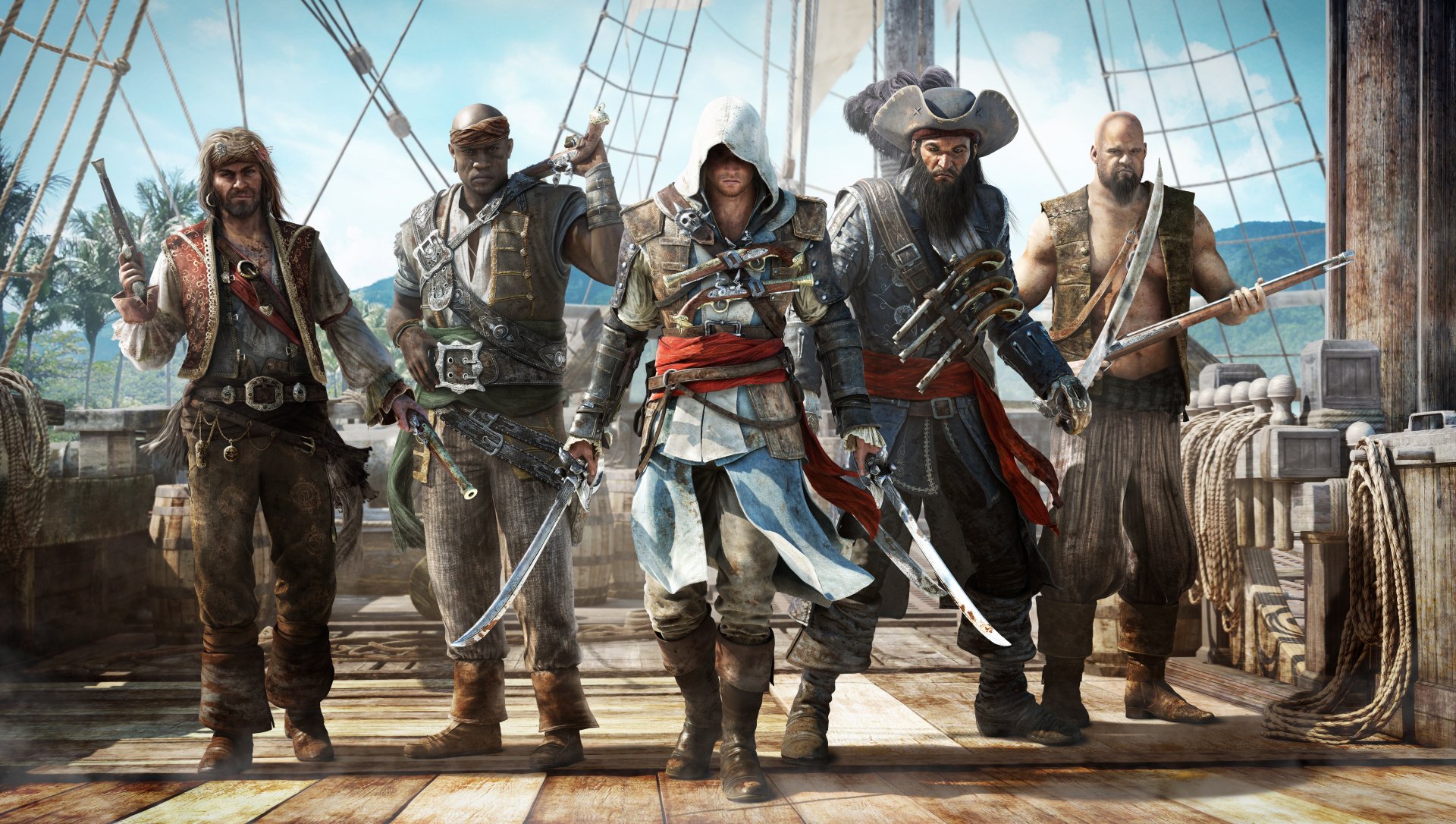
Black Flag is a graveyard of dreams. The game begins as a sunlit adventure and ends as a twilight elegy. At the outset, the characters surrounding Edward are almost different incarnations of the same dream. Each represents a different way of believing that it is possible to live otherwise. Blackbeard represents glory and power. Hornigold represents the possibility of changing with the world. Vane represents absolute freedom. Stede represents the naive promise of a new life. Mary represents the possibility of finding meaning in that freedom. Anne, finally, represents what remains of people once the dream has collapsed. Edward moves through each of these fates as though gradually visiting the different graves of his own ambitions. This accumulation of tragedies makes the second half of Black Flag particularly melancholic. The game never bluntly announces that the adventure is over. Instead, it makes us understand through subtraction. One character disappears. Then another. Then another still. The Caribbean Sea gradually empties of these familiar faces. Edward displays an uncommon resilience. He keeps going, until life finally delivers one blow too many. You will have guessed it: I am, of course, talking about the death of Mary Read.
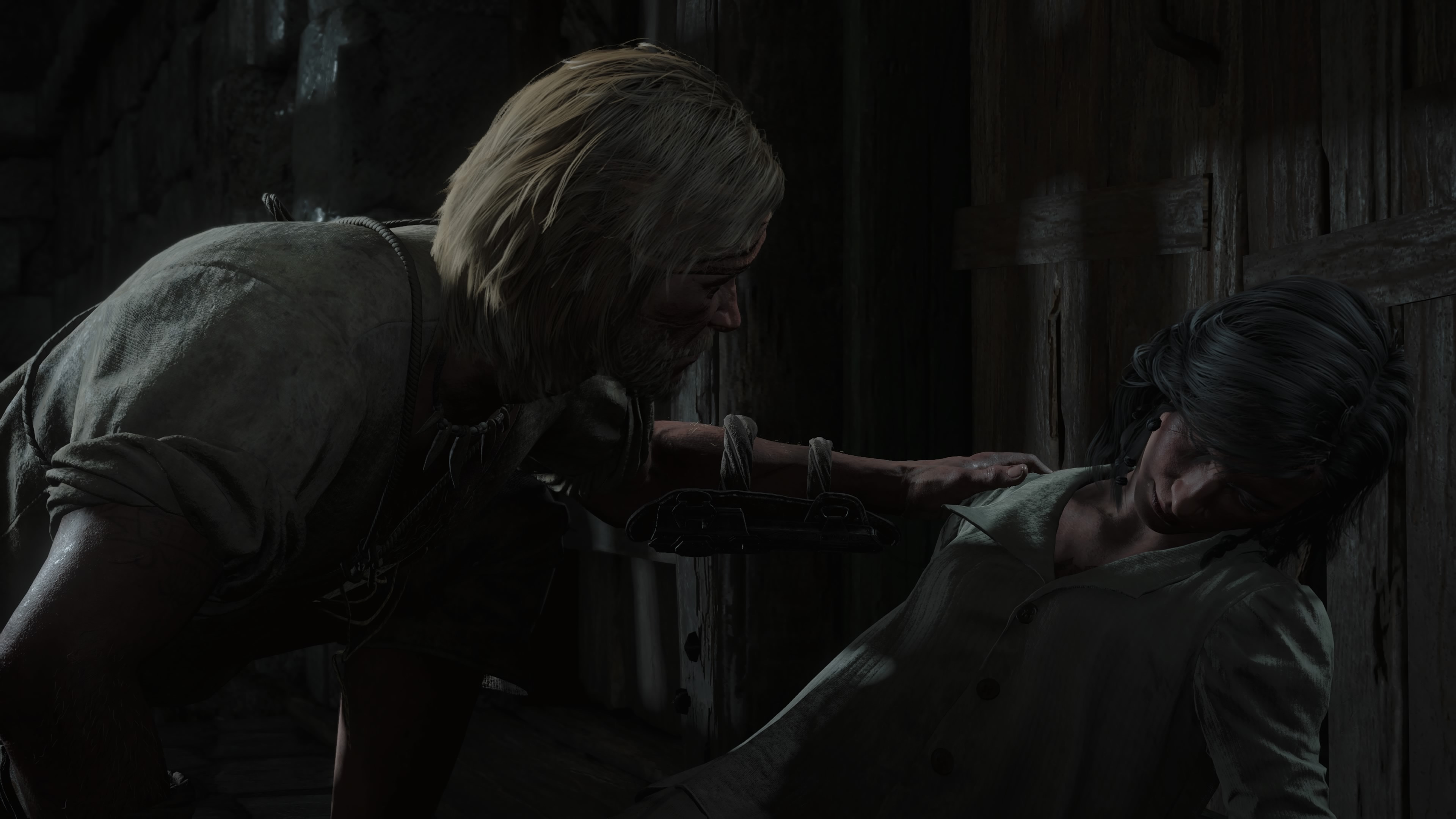
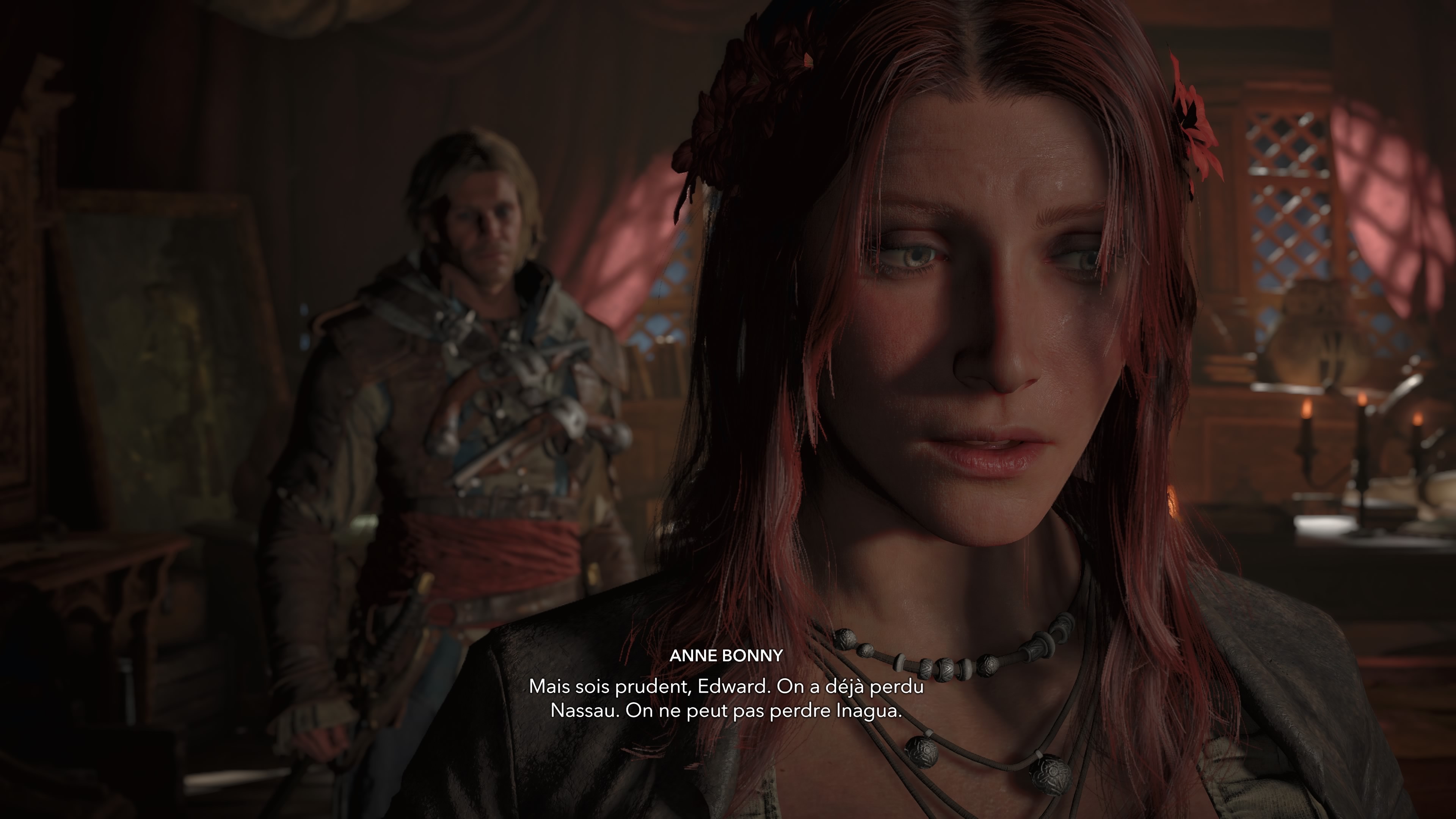
Mary Read is arguably the most important character in Edward’s transformation because she is the first to understand what he is truly wasting. Mary does not judge Edward simply because he is a pirate consumed by his thirst for gold, but because he could become something so much greater and nobler. She belongs to the Assassin Brotherhood and believes deeply in its Creed. To her, freedom does not mean the absence of rules, but the ability to live without being subjected to those who seek to control others. This is a fundamental difference between her and Edward, who wants freedom for himself, while Mary wants freedom to be possible for everyone. She therefore regularly reproaches him for his obsession with money and tries to convince him to look beyond his own greed. Whenever she meets him again after one of his adventures, she does not see a man who has succeeded. She sees someone who owns more and more, yet seems just as empty as ever. This is what makes their relationship so important and so fundamental to the character’s eventual development. At heart, Mary may be the first person who asks Edward for nothing material. Her only demand of the pirate is purely moral and philosophical. She wants nothing from him except to push him to become better than the man he is turning into. But Edward is who he is, and for many years he refuses. Although he initially finds the Assassin Creed appealing, he proves incapable of showing such nobility of spirit. Edward would rather keep sailing troubled waters, to the point of rejecting Mary’s outstretched hand when she offers him a cause worth fighting for. Too young and too selfish, our pirate remains obsessed with the promise of wealth and glittering treasure. Mary’s death in his arms becomes a turning point, as he finally realises that he was wrong. When the British capture Mary and Anne, Edward is already imprisoned in Port Royal following the misfortunes that befell him after his crew abandoned him. At the mercy of Woodes Rogers’s sadism, as he gains the upper hand in his war against the pirates, Edward is forced to witness the trial of Anne Bonny and Mary Read. The two young women escape the gallows only by revealing that they are pregnant. A few months later, Mary gives birth in prison and falls gravely ill. Edward and Ah Tabai manage to break into the prison to free them, but it is already too late. Mary dies in Edward’s arms as he desperately tries to get her out. In her final moments, she asks him to make amends and become the man she believed he was capable of becoming. This is a genuine breaking point for a character who thought gold could buy and repair everything. All the wealth he has accumulated suddenly seems utterly worthless. The entire idea upon which Edward had built his existence shatters into a thousand pieces. He has spent years sailing the seas in the hope of becoming someone, only to realise that he has become nobody and stands for nothing. Anne Bonny’s character then becomes the privileged witness to his transformation.
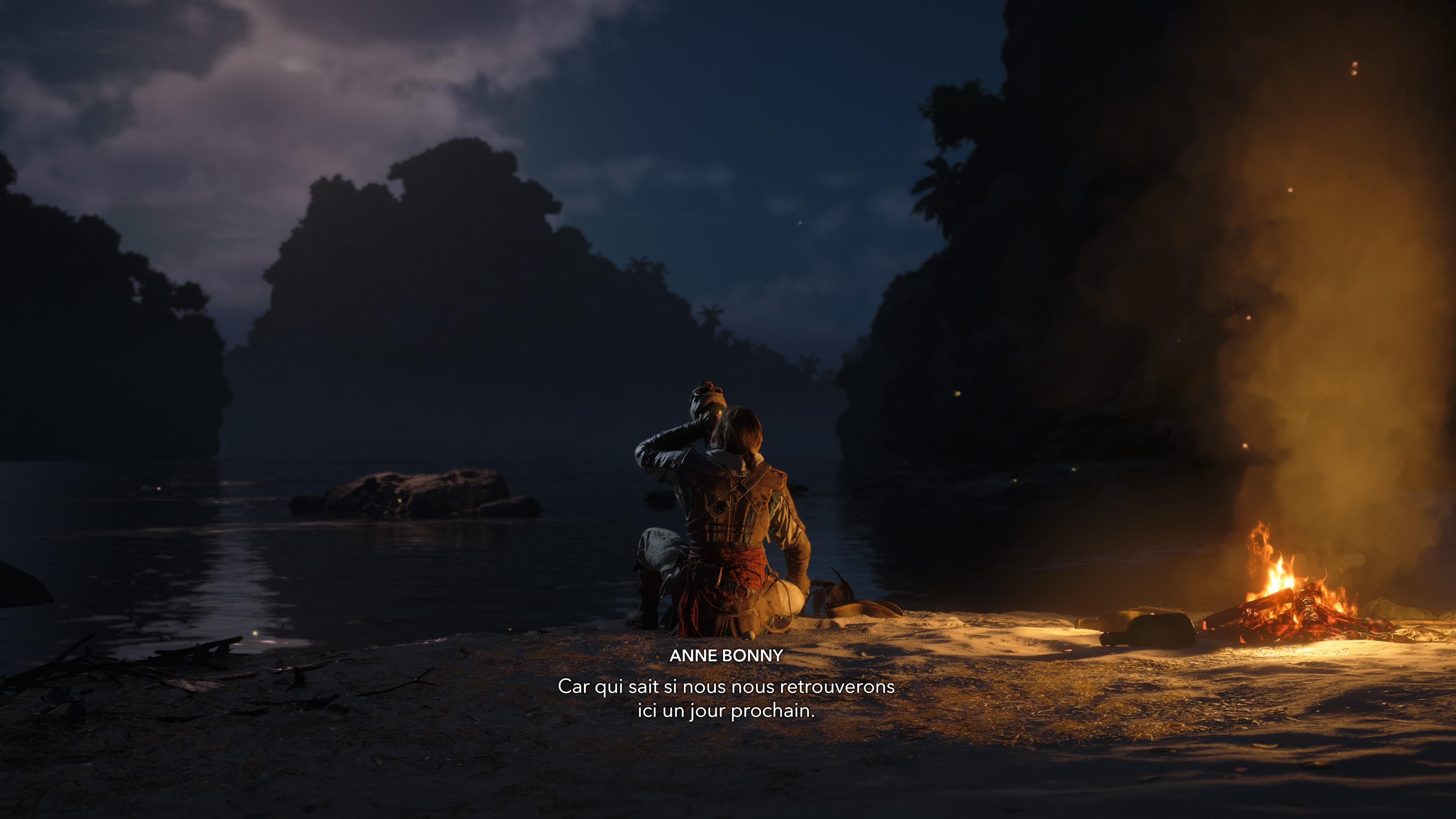
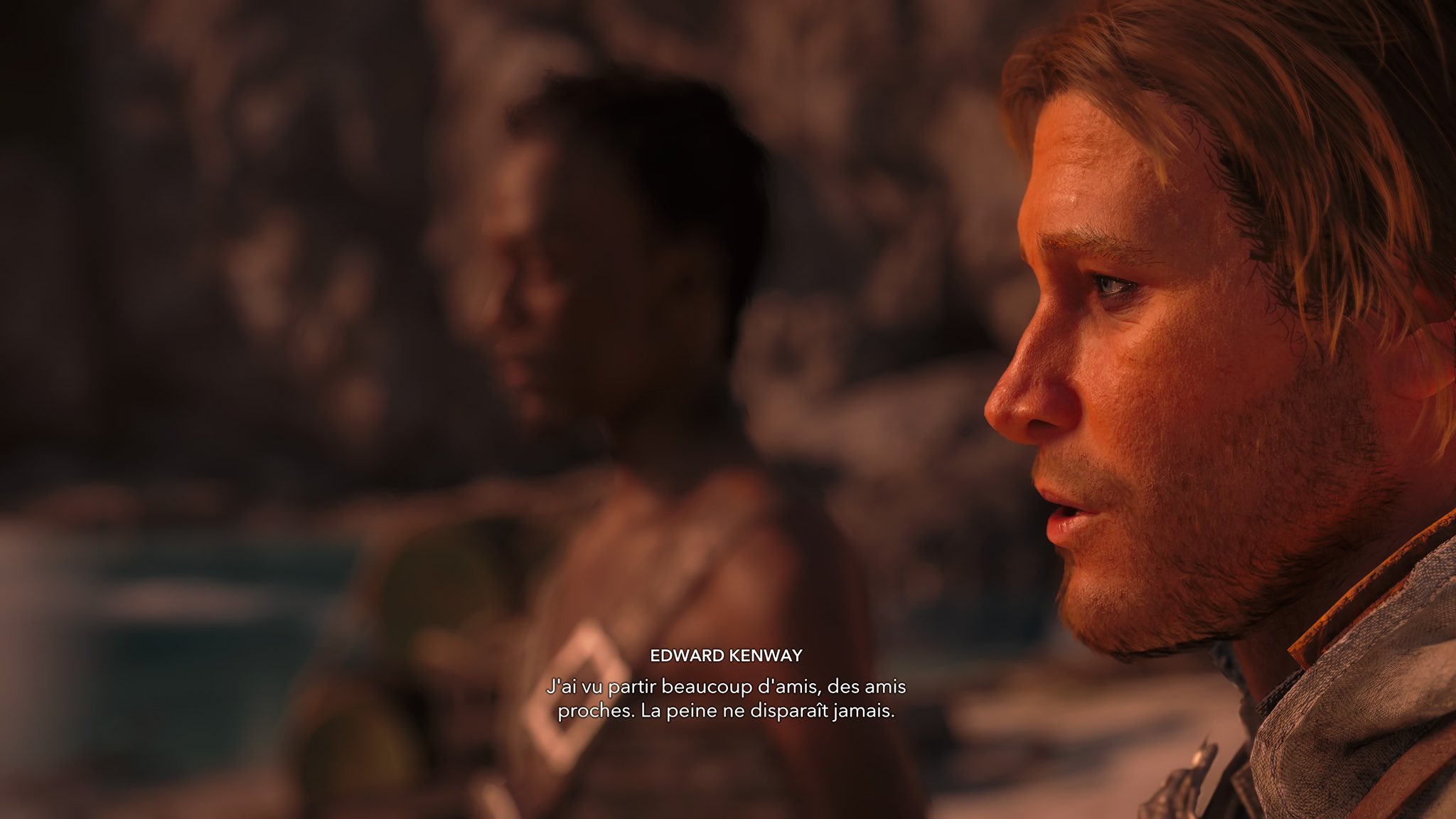
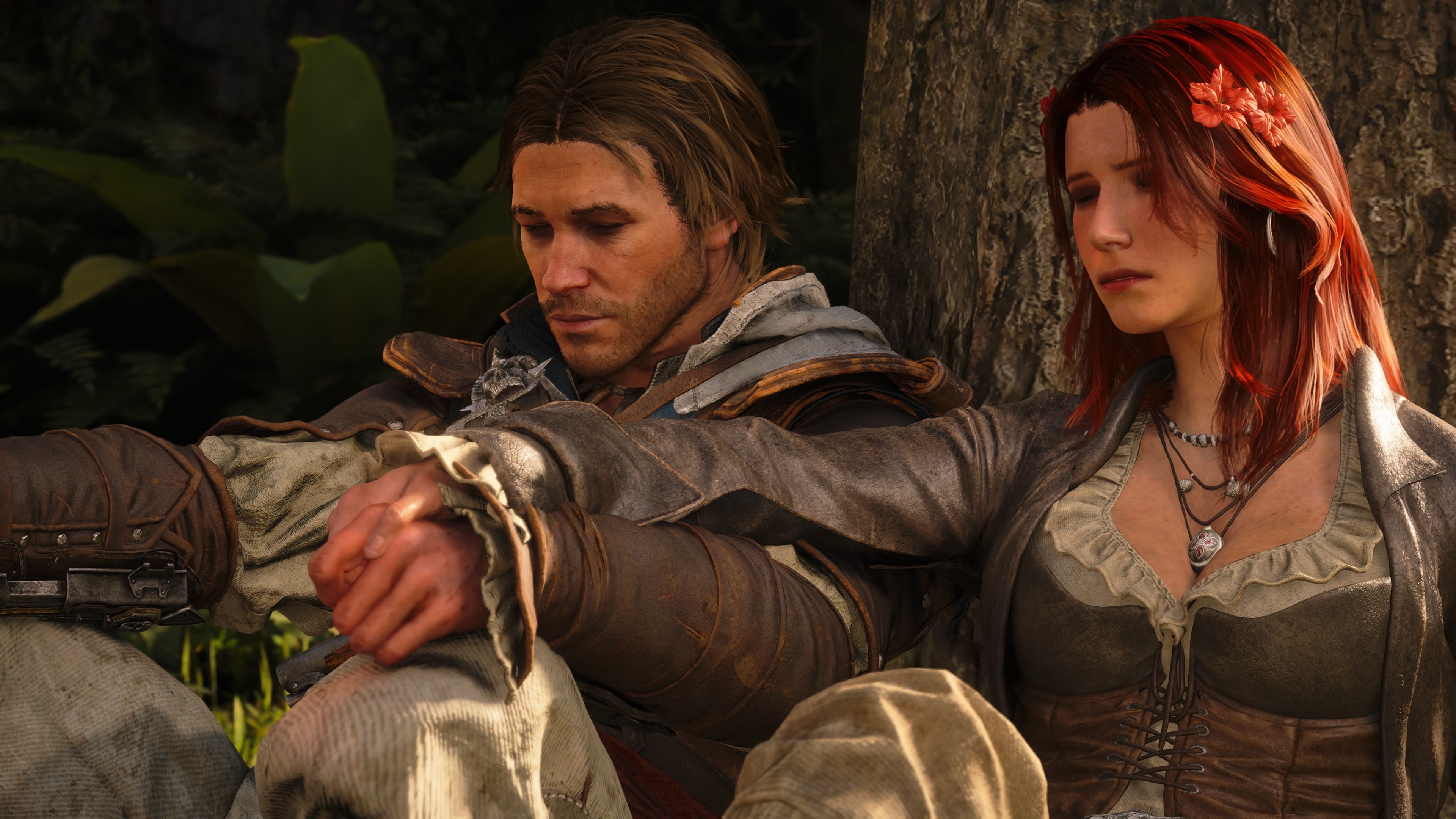
She may be the character who most closely resembles Edward. She too has fled the world and, like him, has known violence and disillusionment. From the age of fifteen, she fought to carve out a place for herself in this tempestuous world. First as a barmaid in Nassau, then as a ruthless pirate alongside Jack Rackham and Anne. When she reunites with Edward after his escape, she is no longer the young woman we first met in Nassau’s taverns. Before us stands a survivor, scarred by life. The moment that moves me most in Black Flag is the tender conversation between the two characters in Great Inagua, when they realise that no one is left. Everyone who was still there just a few years earlier has become nothing more than a memory. She asks him whether he feels that same emptiness, and he answers yes, gently taking her hand. This reunion between two wounded souls is, in truth, the culmination of his entire story. Our hero becomes free at the moment he realises that there is nothing to be gained from owning even more, and that the time has come to stop running ever further away. Anne thus becomes the last remaining piece of the pirate world Edward had wanted to conquer. She offers him neither treasure nor glory, but serves as a mirror, magnifying everything he has left behind and allowing him to look back and acknowledge the dead he has left in his wake. After their escape from Port Royal, Anne becomes Edward’s quartermaster and accompanies him on the final stage of his personal journey. Together, they are no longer merely two pirates, but the living legacy of everyone who came before them. Their paths diverge in the final moments of the adventure. Edward decides to return to England to care for his daughter, whose existence he has only just discovered and who joins him in Great Inagua. Anne, meanwhile, chooses to remain in the Caribbean, leaving no trace in History.
The final part of Black Flag is therefore, to me, far more important than it might initially appear. What we are witnessing goes beyond the simple conclusion of a story, because it represents the true culmination of Edward’s long journey, the one we have shared with him as we sailed the seas over the course of ten long years. He could have continued chasing a chimera made of gold and daydreams. He could even have used his desire for revenge or his attachment to the Assassin cause as an excuse to prolong his stay beneath the trade winds. Instead, he chooses the path of reason and maturity, returning to England to embrace his role as a father. At the beginning of the game, we had a young and tempestuous hero fleeing a life he considered too small for him. By the end, we are left with a man returning to his homeland. The ocean, which had long held the promise of riches, has now become the path leading him towards a meaningful life. Edward’s journey is therefore a coming of age story in the purest sense, as we follow a child becoming the best man he could possibly be. Although everything he pursued has fallen apart, our pirate is neither left with nothing nor brought to the gallows. An entirely new life alongside his daughter awaits him, with an ideal of society to guide him. Edward becomes an Assassin because he understands that his freedom cannot mean anything if it serves only to satisfy his own desires. Mary had tried to explain this to him, but to no avail. She failed to convince him while she was alive, but her death succeeded where words could not.
This is probably why Black Flag remains one of the most moving stories in the series, and one of the instalments that has truly managed to connect with its audience. For dozens of hours, the game sells us the ultimate fantasy of piracy. We sail wherever we please, attack whichever ships we choose, upgrade our vessel, fill our holds with goods and accumulate enough gold to make us feel as though the horizon belongs to us. Then the game asks us what any of this has really brought our character, leaving us with a terrible realisation. The irony of the story is that Edward finally becomes a fulfilled man when he stops pursuing everything he once believed could make him powerful and respected. The final shot of his story encapsulates his entire transformation. Edward is sitting in a theatre with Jennifer and young Haytham, having rebuilt a life for himself in England. The pirate is still there somewhere, hidden behind the scars and skin weathered by the salt, but he is no longer at the helm of the Welshman. Edward is no longer free because he can leave at any moment, but because he finally has a reason to stay at home and stop running without ever looking back. However, if our Captain only becomes free when he renounces the life he once believed to be free, then we must return to the promise that sustained this entire pirate world and ask ourselves what kind of freedom we were really talking about.
Pirate Freedom: An Impossible Promise
There is a question we have left unanswered since the beginning of this journey. We have seen why men became pirates, what they tried to build in Nassau and how the expansion of the empires destroyed their world. We have followed Edward Kenway to the moment when dreams of gold and glory ceased to promise him a better life, but we have yet to ask what all these men actually meant by being free. This is a fascinating question, given how much their answers differ, sometimes contradicting one another so profoundly that they helped bring the very dream they shared crashing down. The first answer is the one the sea seems to offer Edward. Broadly speaking, if we consider only the ocean and the horizon, being free means being able to set sail into the unknown, no longer accepting that a father, a king or a wealthy man should decide the worth of our existence. The pirate boards a ship, leaves the harbour and watches the land disappear behind him. We are presented with a physical representation of freedom, embodied by the open space before the bow and the wind filling the sails. It is easy to understand why this held such fascination for sailors accustomed to the discipline and violence of merchant and military vessels.
In political philosophy, this aspiration can be compared to what Isaiah Berlin calls negative liberty. Broadly speaking, it describes a space in which a person can act without others imposing their will upon them. This does not mean that pirates were accomplished philosophers, but Berlin’s words help us clarify what they were seeking when they abandoned crews subjected to the authority of crowns and merchants. They wanted an end to a form of interference in their lives. The power of the pirate myth lies in this initial gesture. A man who has always been told where he belongs discovers that he can leave. Black Flag gradually leads us towards a deeper unease, because what are we supposed to do with our lives once nobody is telling us where to go? Edward has obtained the freedom of movement he dreamed of. He commands his own ship, chooses his targets and can put off his return for as long as he wishes. Yet this does not prevent him from following, for years, a path he seems incapable of questioning. He needs more gold to return to Caroline, then even more to justify the years he has spent away from her. Every victory promises to bring his quest to an end, while simultaneously giving him another reason to pursue it. He has escaped the orders of others without ever managing to free himself from the one he has given himself.
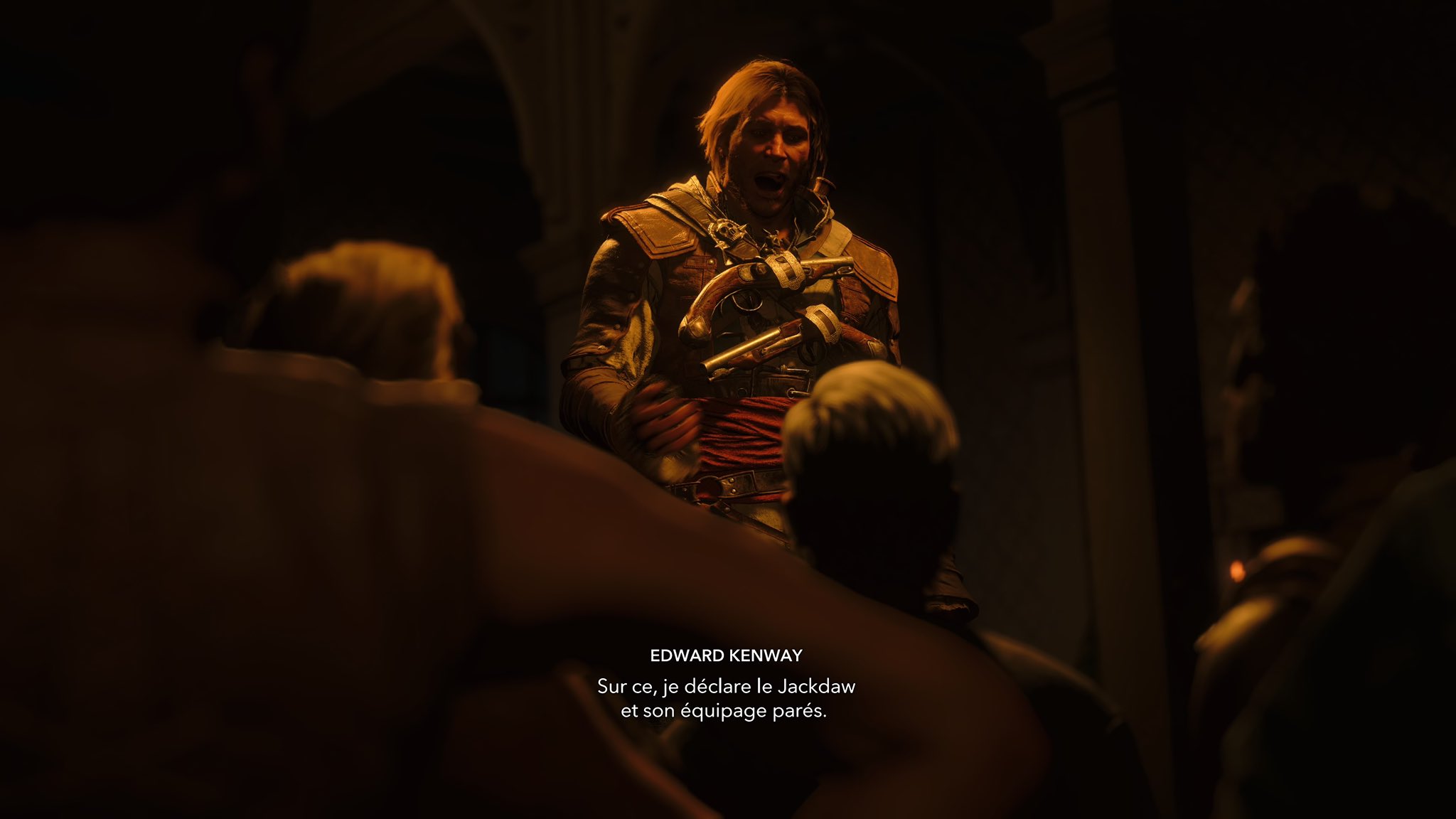
This contradiction extends far beyond Edward himself. A pirate can reject all external authority and still be governed by fear, anger or the persona he has created for himself. Blackbeard turned his legend into a weapon, but now he must live up to it. Vane made his refusal to yield such an absolute part of his identity that no other path seems possible to him anymore. Hornigold chooses to survive by siding with the power reclaiming Nassau, even if that means serving those he once sailed against. None of them is simply free or imprisoned. The truth is far more complex, and forces us to reconsider the original question of the desire for freedom. Perhaps it is not enough to ask, “Who commands me?” We must also ask, “Why am I pursuing this life, and am I still capable of choosing another?” However, it would be a mistake to turn their story into a simple lesson about our inner prisons. The pirates had good reason to rebel against very real forms of power. The captain’s whip, dependence on an owner, the authority of an empire over the people and lands it claims as its own do not disappear simply because we learn to understand ourselves better. Any reflection on freedom that sees piracy as nothing more than a matter of personal desires or illusions would overlook why these men took to the sea and reached for their swords. Their rebellion was also about the way power was distributed.
This is where Nassau and the pirate crews become far more interesting than the image of a band of men living by their own rules. As we have already mentioned, on certain ships, the captain was chosen by the crew and could be stripped of his command. The division of the spoils followed agreements known to everyone. These pirates had therefore not abolished authority in the strict sense, but had instead attempted to make it revocable. The difference from the old world is essential, and helps us understand that a community does not necessarily become less free simply because it establishes rules for itself. Everything depends on who writes them, who is subject to them and whether those enforcing them can be challenged. Marcus Rediker’s work illustrates just how unusual these practices were in a maritime world defined by often brutal discipline. We can shed further light on this experience through another philosophical conception of freedom known as non-domination. In this tradition, developed notably by Philip Pettit, freedom can exist only when nobody holds arbitrary power over our lives, even if they do not exercise it on a daily basis. As it happens, pirates encountered this very conception of freedom, often without even realising it. A merchant captain might be generous one day and violent the next, but ultimately his crew remained entirely at his mercy. By limiting the captain’s authority and establishing rules to which he too was accountable, some pirate ships therefore attempted to reduce this dependence. Their ideology did not rest on the absence of power, but on the simple idea that no one should be able to command others solely on the basis of their own whims.
This naturally leads us to wonder why the dream of Nassau remained so deeply unsatisfying. This is where we need to remember who actually benefited from this freedom. The sad truth is that the more egalitarian rules adopted by the crews that made up this republic did nothing, in themselves, to change the fate of those whose possessions they seized. Some pirates, for instance, sold captives who were then reduced to slavery. Even if their rebellion was justified, we must set aside the romanticised image of the pirate. If the opportunity for marginalised men to find a place aboard certain ships coexisted with the violence of the Atlantic slave trade, it would be all too convenient to erase one of these realities in order to preserve the other. Pirate history is unsettling precisely because a community could challenge the domination it suffered while simultaneously taking part in the domination imposed upon other human beings. This contradiction exposes the limits of any conception of freedom as a privilege reserved for those who belong to the crew of our own ship. If I no longer want another man to hold arbitrary power over my life, on what grounds could I claim the right to do the same to someone else? A pirate cannot invoke the injustice of imperial rule when it is directed against him, only to dismiss it as irrelevant when it enriches his crew. Nassau represents an attempt to live differently, but its existence does not prove that a just world spontaneously emerges as soon as we sail beyond the reach of kings. The failure of Nassau demonstrates that we can carry the violence of the old world with us across the ocean, even when we claim to have left it behind.
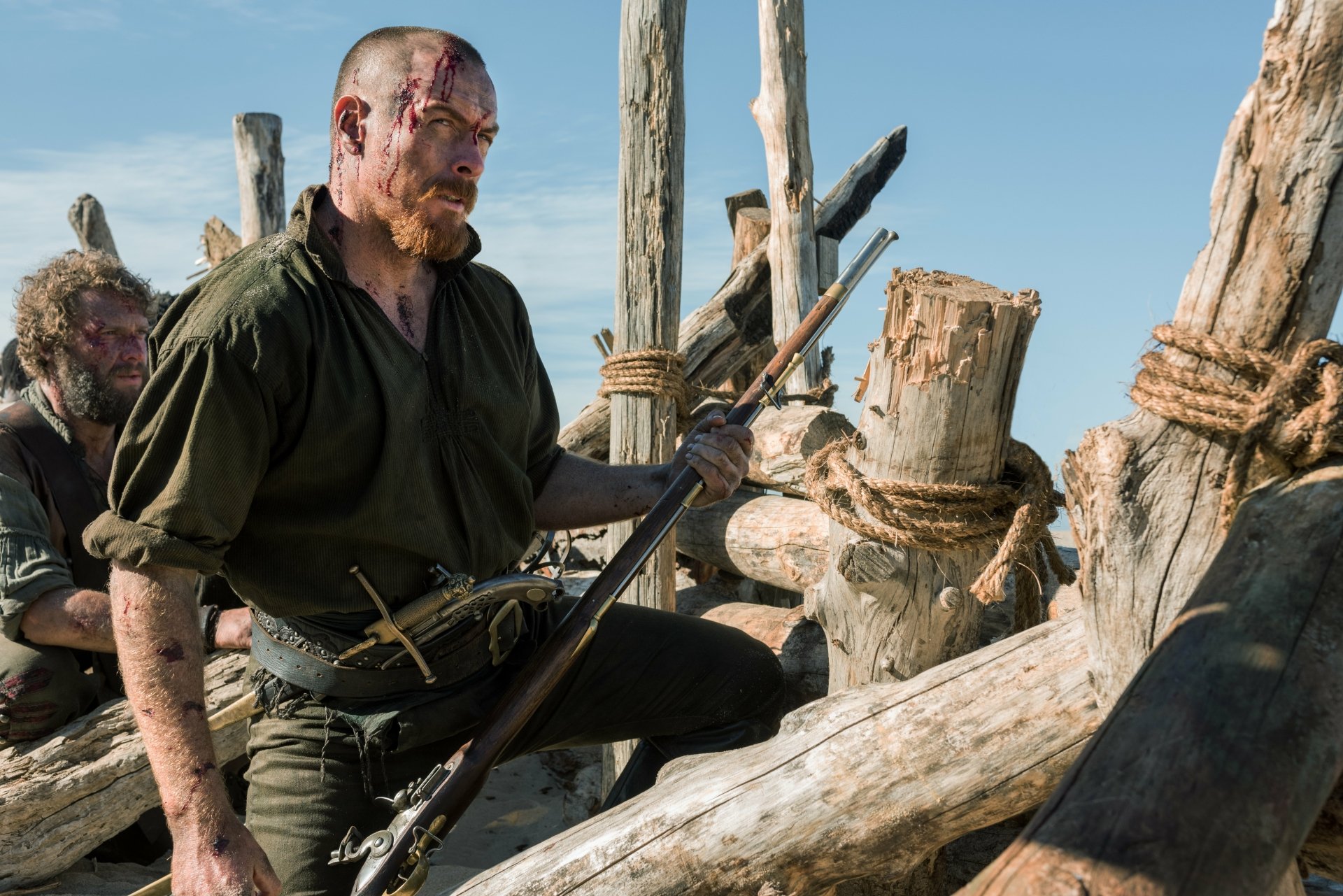
This is where Black Sails makes a decisive contribution to this reflection. Captain Flint sees Nassau as an opportunity to resist a power that seeks to define, all by itself, what civilisation means and who deserves to be part of it. His struggle is fuelled by resentment over what British society did to him and to Thomas Hamilton, back when he served as an officer in the Royal Navy under the name James McGraw. However, as he grows closer to the communities of escaped slaves in their struggle against the old world, his war can no longer be understood solely through the lens of his own suffering. For Madi, the stakes go beyond preserving a pirate refuge in order to establish a counter civilisation. She is fighting an order built upon enslavement to secure the future of her people. Their struggles may converge, but it is essential to distinguish where they come from. Flint wants to defeat the empire that destroyed him, whereas Madi’s attention is focused on those who continue to hold her people in slavery. This brings us back to the question of Nassau’s celebrated freedom. Who is this island free for? What, exactly, is it free from? And above all, how far can this freedom extend without acknowledging the freedom of others? The series deserves credit for leaving these questions open. It also shows the danger facing a rebellion founded on a just and virtuous principle when it becomes entirely bound up with the will of a single man. Flint’s cause is far from meaningless, and the empire he fights does not become any less violent simply because his companions eventually begin to doubt him as they contemplate the bottomless abyss that houses his anger. A war waged in the name of freedom can demand so many sacrifices that those it was meant to liberate gradually lose the ability to question its purpose. Human history is no stranger to revolutionaries who ended up becoming worse than those they fought against.
In The Rebel, Camus explains that rebellion begins the moment a human being refuses to accept what they consider intolerable. Yet this refusal carries a limit within itself, because if we demand a dignity that we also recognise in others, we cannot then treat them as mere instruments of our own victory. This brings us to the idea that rebellion gives rise to a form of solidarity, sometimes unconscious, which prevents us from justifying everything in the name of a fairer future. For what would become of the freedom we defend if those fighting alongside us eventually lost the right to reject our decisions? This question runs through Black Flag on a more intimate scale. For a long time, Edward follows the path of piracy, treating it as permission to indulge his every desire. He takes whatever he can and imagines that the consequences are for those who failed to stop him. Throughout the story, Mary Read tries to make him understand that his choices affect other people’s lives. When Edward puts the Assassins in danger for his own gain, his freedom to act is unquestionable, but what he lacks is the willingness to take responsibility for what he has done. He must lose Mary and look back over the course of his life before he can understand that a free life cannot be reduced to a succession of decisions made without regard for others. Edward finally accepts that he must live with the consequences of his actions, consequences that no treasure can ever undo. Caroline died before he could fulfil his promise to return home and build a better life for them. Mary will never know the man she tried to help him become. He can neither reclaim those years nor ask the departed to validate the meaning he now gives them. When he welcomes Jennifer and chooses to return home, he performs a modest act compared with all his victories at sea: he stops putting his life off until tomorrow.
Flint makes this gesture harder to interpret, which is precisely why it is important to keep his story alongside Edward’s without confusing their respective fates. Asking Edward to stop running away does not mean asking Flint or Madi to abandon their fight against the empire. Some people have the option of walking away from the struggle and leaving to care for their loved ones, but we must remember that others are fighting precisely to obtain those very possibilities. Inner freedom cannot replace political freedom. Conversely, no political victory can, by itself, guarantee that those who achieve it will cease to be governed by their pride or desire for revenge. Perhaps this helps us better understand why pirate freedom remains an impossible promise. This does not mean that the pirates were wrong to pursue it, nor that their desire to live differently was an illusion without value. Their story retains the power of a structural need: men subjected to almost absolute authority imagined that they could choose how to live their lives. But given the nature of the world, every time they believed they had reached a place finally free from all constraints, other questions were waiting for them. How do we live together? Who gets to decide? Who is left out? What do we do when the freedom of some still depends on the subjugation of others?
The sea offers no answers to any of these questions. It may provide distance from the old world, but it guarantees neither the justice of a community nor a man’s ability to see himself clearly. Nassau may have opened a breach in the imperial order without becoming the egalitarian world we would like to tell ourselves it was. Edward may have crossed the Caribbean without ever managing to escape his own expectations. Flint may have devoted his life to fighting a very real form of domination while risking turning his war into a destructive blaze that could never be extinguished. Perhaps this is what Black Flag asks us to understand beneath the vibrant colours of its sunsets. Being free does not mean reaching a place where nobody will ever hold us accountable. Such a destination probably does not exist, and never will. Freedom means being able to reject domination, to take part in shaping the rules that govern our shared lives, and to recognise the impact our choices have on those who share them with us.
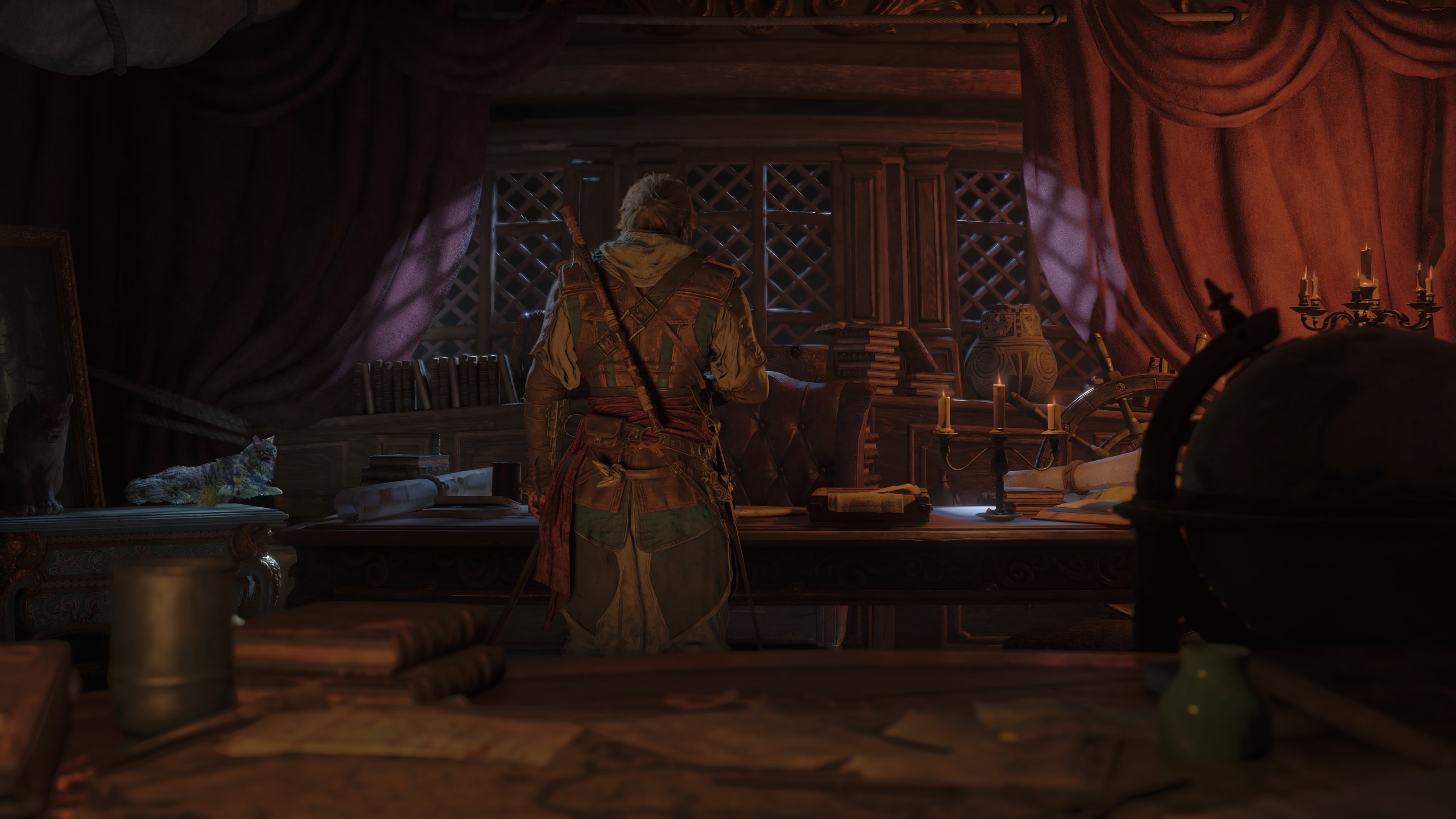
For dozens of hours, Ubisoft gives us exactly what we came looking for in this Black Flag. We have sailed the seas aboard our ship, with that delightful feeling that the entire world belonged to us and was simply waiting for us to explore it. We have set out in search of treasure, fought Spanish galleons and sung at the top of our lungs alongside our companions. The Jackdaw is a home we love with all our hearts, and the Caribbean an immense playground. Then, without truly realising it, something begins to change in the way we relate to this journey of self discovery. Familiar faces disappear, and the people with whom we thought we would conquer the world are no longer there to share our victories. The sea is still just as beautiful, and those ochre sunsets remain hypnotising, yet something may have begun to fade. We possess almost everything we desired at the beginning of the adventure, including an immensely powerful ship that we gleefully customised, but we have lost those who gave us a reason to keep wanting more. This is probably what moves me most about Black Flag, and what explains why its story continues to linger in my mind so many years after the original game’s release. The game leads us to believe that we are taking part in the great romantic adventure of piracy, before gradually confronting us with the reality of these men who tried to live differently. Nassau was no utopian paradise, and its inhabitants were certainly no saints. They were capable of cruelty and violence just as terrible as those of the world they claimed to reject, yet they had nevertheless tried something. In an era when birth largely determined an individual’s place in society, when empires carved up territories between themselves and when men could own other men, some had imagined that it was possible to organise society differently. Their experiment was imperfect and ultimately short lived. That does not, however, diminish what it tells us about that age old human aspiration to take control of our own existence. I even find it rather sad to think that History has mostly remembered their crimes, their treasures and their hangings, when their adventure also allows us to question the forms a society might take if freed from some of its relations of domination.
It would nevertheless be far too easy to conclude that pirates were simply the victims of a world incapable of tolerating their freedom. We have seen that this freedom itself rested upon profound contradictions. Nassau wanted to escape imperial order while living off the wealth it helped circulate. Some crews challenged the arbitrary authority of their captains while taking part in colonial violence. As for Edward, he believed he had freed himself from his circumstances, when in reality he remained trapped by the obsession with success that had driven him to leave Caroline. They had all found a way to break away from their former lives, without necessarily managing to rid themselves of what had shackled them in the first place. This story embodies just how difficult freedom can be, because we come to realise that overthrowing an authority is not enough to make the mechanisms that sustained it disappear, any more than leaving one’s attachments behind is enough to become a different man. We always carry something of our old world with us, even when we are convinced that we have turned our backs on it for good. This is also why Edward’s fate ultimately strikes me as far more interesting than that of a hero who simply discovers a cause noble enough to justify his struggles and decides to rally behind it. His evolution is nothing like a sudden awakening. Our hero experiences no epiphany. It takes him years to understand what Mary Read was trying to explain to him, and even longer to accept that all the riches in the world will never allow him to fill the void within himself. He cannot save Nassau, bring Blackbeard back or give Caroline the years he had promised her. He cannot even thank Mary for believing in him when he was still a young man incapable of looking beyond his own ambitions. What he can do, however, is still decide what he will do with the time he has left, and choose not to repeat the same mistakes, so that he can become the father to Jennifer he probably never would have been just a few years earlier. This may seem rather modest after spending so much time chasing legendary treasures, but I believe that is precisely what makes his achievement so beautiful. Edward no longer needs an extraordinary life to give his existence meaning.
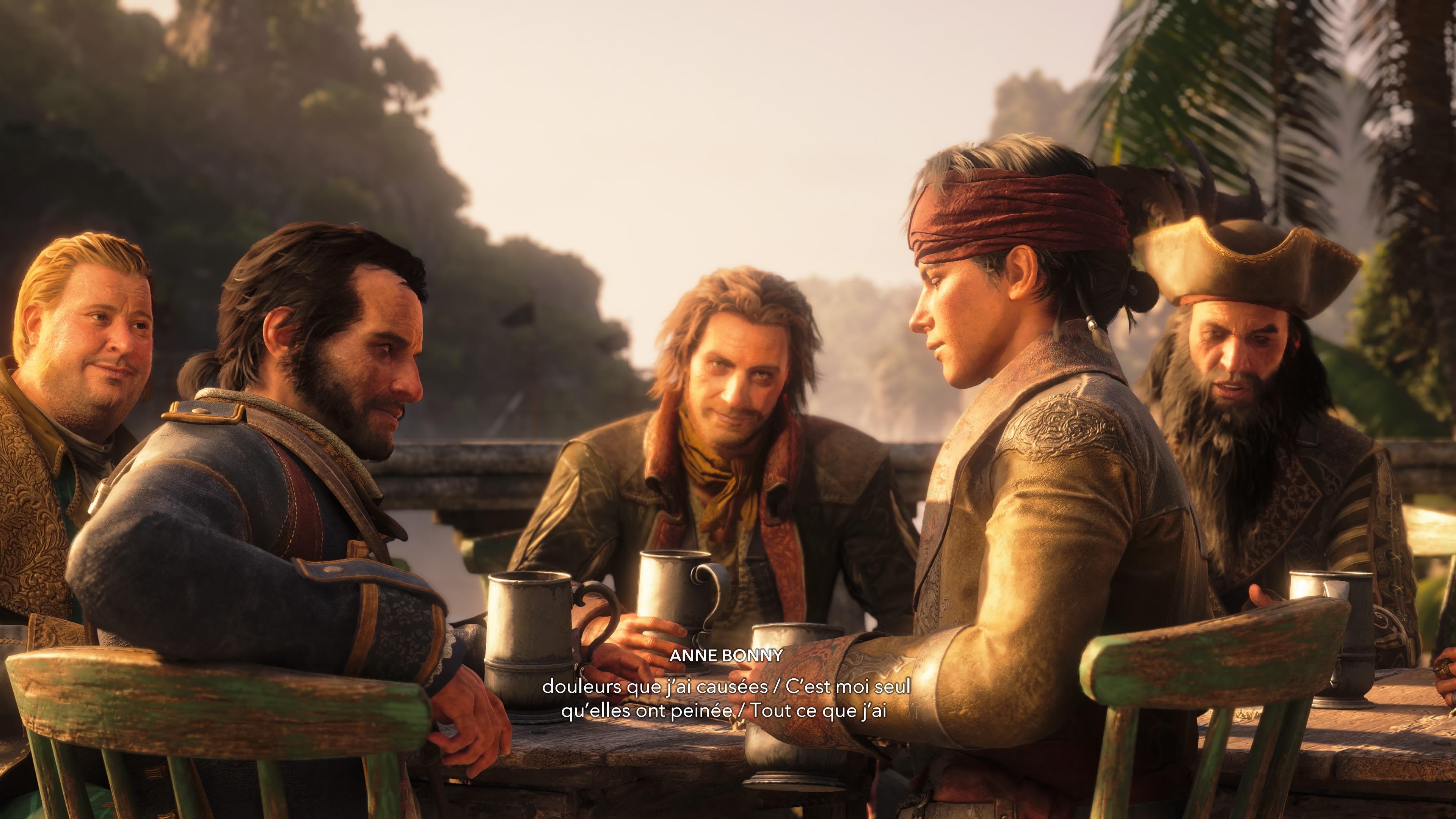
The final sequence is probably one of the most beautiful endings Ubisoft has ever given its franchise. Anne Bonny sings The Parting Glass as Edward takes one last look at the faces of those who shared his adventure. They are all there, gathered around a table, as though time had never taken its toll on them and fate had been kinder. Blackbeard, Charles, Jack, Benjamin, Mary, Stede and the others are all there, sipping rum. For a few seconds, we find ourselves back in the world that felt so alive when we first set foot in Nassau. They are now memories, and we know Edward will never see them again. The song accompanies the departure of a man who has finally understood what he spent so many years searching for. He sets sail with his daughter aboard his ship, leaving the Caribbean behind. Yet another departure, we might be tempted to think, but this time he is not running away. He is simply going home, and I find it quite remarkable that a game which made exploration and the illusion of freedom the primary sources of our enjoyment should ultimately move us so deeply through the story of a man who decides to bring his journey to an end. What is also particularly powerful is the way its gameplay directly contributes to what we feel during this conclusion. We ourselves have spent hours accumulating gold, upgrading the Jackdaw and exploring every corner of the map. It can sometimes be incredibly frustrating to see areas of the map that we have yet to uncover. At times, we have forgotten the main story altogether to devote ourselves to treasure hunts or naval battles that ultimately served little more than to fill our cargo holds a little further so that we could purchase an upgrade that was not all that remarkable in the first place. In our own way, we have therefore shared some of Edward’s obsessions. When the game shows us that all this wealth was not enough to bring him happiness, it also invites us to look differently at the dozens of hours we have just spent in his company. This obviously does not mean that we were wrong to enjoy the adventure, quite the contrary, because it is precisely our love for this pirate life and for spending time with these characters that makes their disappearance so affecting. Black Flag probably would not have the same melancholic power if it had not first given us so many reasons to want to remain in its world.
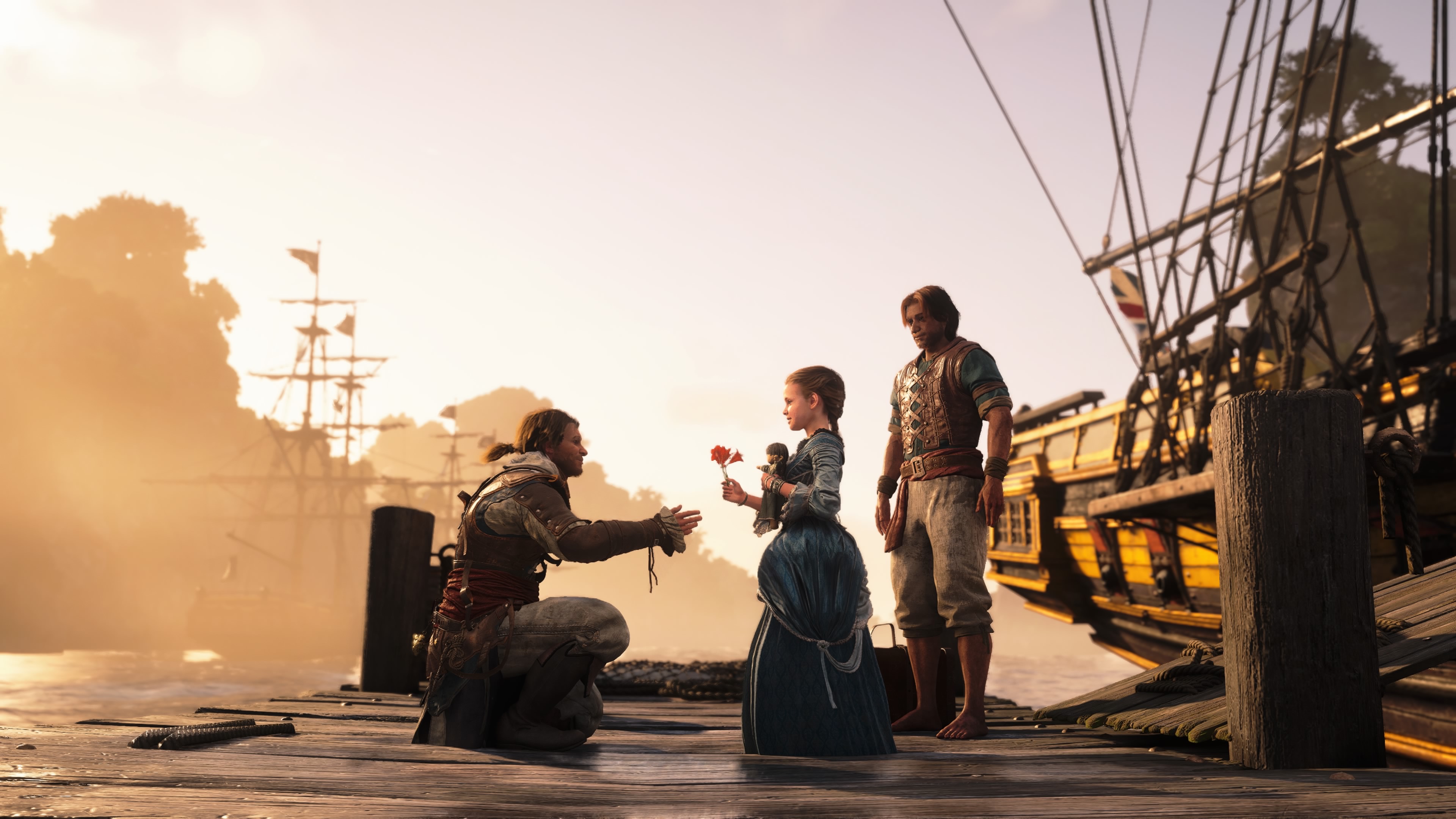
We have all, at one point or another, imagined that another life was waiting for us somewhere. A life in which we would be wealthier, more respected, happier or simply free from whatever was holding us back. I myself have moved around a great deal throughout my life, always searching for a little more, from my beloved Guadeloupe to Ireland, with a lengthy detour through many parts of mainland France. Edward, too, believed he had found that promise on the other side of the Atlantic, just as the pirates of Nassau had believed they could build a society beyond the reach of European crowns. Their stories remind us that the world does not simply disappear because we decide to turn our backs on it. The existence of these men reminds us that dreams are not necessarily meaningless simply because they fail when put into practice. Nassau did not survive, yet its existence continues to make us question how human beings might organise their lives together. Edward never found the happiness he imagined when he left Wales, but that long voyage allowed him to understand what he truly wanted. There may be a certain comfort in the idea that we do not always become the people we hoped we would be, and that this is not necessarily a tragedy. When I think back to Assassin’s Creed IV: Black Flag, it is ultimately neither the Templars, nor the Observatory, nor even the naval battles that first come to mind. I think of Nassau, its muddy streets, its taverns and all those men who still believed they could build something there. I think of Blackbeard, Mary Read, Anne Bonny and that generation of pirates who watched their world disappear within a few short years. And of course, I think of Edward, that young Welshman who had taken to the sea because he refused to settle for the life he had been promised. It would take almost ten years and far too many deaths for him to understand that becoming someone does not necessarily mean becoming an important man in the eyes of the world. It is a fairly simple lesson, in the end, but one the game takes the time to let us experience rather than impose upon us. The emotional power of our final voyage at sea with Edward is palpable. The ocean has not changed. It is still just as vast, and there are still a thousand places Edward could explore. Yet we are unable to stray from our course. This is because, for the first time since leaving Wales, our pirate no longer needs to know what lies beyond the horizon. The Jackdaw sets sail one last time, with Jennifer aboard. Behind him, the Caribbean fades into the distance, carrying with it the last remnants of a dream that lasted far too little time. Ahead of him, there are no more treasures to discover, nor legends to forge. There is simply a life to live.
Of all the money that e’er I had
I spent it in good company
And all the harm I’ve ever done
Alas, it was to none but meAnd all I’ve done for want of wit
To memory now I can’t recall
So fill to me the parting glass
Good night and joy be to you allSo fill to me the parting glass
And drink a health whate’er befalls
Then gently rise and softly call
Good night and joy be to you allOf all the comrades that e’er I had
They’re sorry for my going away
And all the sweethearts that e’er I had
They’d wish me one more day to stayBut since it fell into my lot
That I should rise and you should not
I’ll gently rise and softly call
Good night and joy be to you allFill to me the parting glass
And drink a health whate’er befalls
Then gently rise and softly call
Good night and joy be to you allLa, ra, la, ra, la, la
La, lala, lala, la, la
La, ra, lala, la, la
La, la, la, lala, la, laBut since it fell into my lot
That I should rise and you should not
I’ll gently rise and softly call
Good night and joy be to you allSo fill to me the parting glass
And drink a health whate’er befalls
Then gently rise and softly call
Good night and joy be to you allGood night and joy be to you all
Ressources
- Bandits, by Eric Hobsbawm
- Villains of All Nations: Atlantic Pirates in the Golden Age, by Marcus Rediker
- Between the Devil and the Deep Blue Sea: Merchant Seamen, Pirates, and the Anglo-American Maritime World, by Marcus Rediker
- Under the Black Flag, by David Cordingly
- The Rebel, by Albert Camus
- Republicanism: A Theory of Freedom and Government, by Philip Pettit
- Black Sails, by Jonathan E. Steinberg and Robert Levine
- Pirates of the Caribbean film series
- Treasure Island, by Robert Louis Stevenson